

What is the Right Level of Involvement From Your CEO for a Branding Project?
For member-driven organizations, a brand is among the most complex yet valuable initiatives you can undertake. When navigated successfully, your organization enriches its bond with current members while establishing new connections with the next generation.
However, without the proper support, even the most well-executed branding efforts will fall flat. Your CEO or Executive Director (we’ll use CEO in this article) plays a pivotal role in ensuring a brand rollout is effective and embraced by your members and organization. But what is the right level of involvement from your CEO?
The answer sounds a little like Goldilocks: Not too much, and definitely not too little. Ultimately, you need your leadership engaged with a branding project at specific times for its success and the long-term stability of your organization.
Why Branding Is Essential for Member-Driven Organizations
Even the most recognizable brands in the world shift with the times and their audience’s expectations. Your organization is no different. By 2025, Millennials will make up 75% of the workforce. While your new audience still needs the resources your organization provides, they engage with your brand in distinctively different ways.
Millennials are digital natives who prioritize strong design as a means of evaluating the services they use. Strategic branding ensures you tell the full story of your organization in a way that clearly communicates all you have to offer.
Plus, good branding doesn’t just build a stronger connection with prospective members. It inspires and revitalizes your organization and the membership it serves.
Steps for a Successful Branding Project
Securing just the right level of involvement of your CEO is key to a successful and smooth branding initiative. When you work with a skilled agency partner, a branding project progresses through the following stages:
- Discovery: Collaborative research into your brand, its history, and what it should communicate.
- Design: Conceptualizing your visual identity and bringing it to life.
- Refinement: Collaborating with your design agency to ensure the best possible outcome.
- Execution: Delivery of a new brand system and all related collateral.
- Roll Out: Evanglizing your organization’s new brand internally and externally.
For the best results, you need your CEO to be fully engaged during the discovery phase of the project and then advocate for the branding after the work is complete. Apart from weighing in at key checkpoints, your CEO needs to allow you and your team to do what they do best.
How CEO Involvement Impacts a Branding Project
If your branding process doesn’t strike the right balance with your leadership, it can impact your project in the following ways:
The Disengaged CEO
If your CEO isn’t involved in key points of a branding project, they won’t be invested in its results. Rather than enabling the branding to act as a transformative undertaking that benefits the whole organization, a disengaged CEO will see it as just a marketing project.
As your communications reflect your new branding, members grow confused as your leadership fails to deliver consistent messaging. Soon, your organization is back where it started.
The Over-Involved CEO
CEOs are busy and consistently pressed for time. If they insist on remaining involved with every step of the project, your schedule will slip as meetings are delayed to accommodate your CEO’s crowded schedule. Plus, CEOs are not branding experts and lack the expertise to micromanage each stage of the project.
4 Tips for Striking the Right Balance With Your CEO for a Branding Project
A strong brand acts as a guide for how your organization verbally and visually expresses its identity. With these four tips, you can ensure your CEO remains aligned with your branding project at key steps.

1. Secure CEO Investment Before the Project Starts
Gaining buy-in from your leadership for a branding project encompasses more than budget approval. Underscore that the issues with your brand are an organizational problem — not a marketing issue. Your CEO should understand that a robust brand platform provides the solution by communicating the full story of your organization and its value.
Ultimately, you’re coming to an agency like ours because we solve problems with your brand. We’re not decorators. We’re rebuilding your brand from the ground up so it serves your unique challenges.

2. Ensure Engagement From Leadership as Work Begins
During the Discovery stage, you need to maintain involvement from your CEO, leadership team, and board. These people have passion, history, and vision for your organization that your creative team will translate to the building blocks of an engaging brand platform.
Your CEO needs to feel heard in a way that allows them to feel invested and trust the branding project is in good hands. It is critical that they sign off on all strategy documents, as they will be used as the foundation throughout the process.

3. Consult Your CEO for Key Decision Points
As the project progresses, bring your CEO back to review messaging and concept presentations from your design agency. Make sure you provide the correct context for feedback, buy reviewing the strategy documents from the discovery stage. Incorporating feedback from your leadership is crucial to ensuring the work reflects your organization. Plus, these meetings enable your CEO to remain invested in a focused way throughout the branding process.

4. Bring Your CEO to the Front for the Brand Rollout
As marketing director, you’re responsible for much of the hard work that goes into a successful branding project. To reflect that involvement, your CEO may want you to present the project’s results to your organization. Instead, your CEO should act as the face of the rollout. Enabling your organization’s brand to come from the CEO positions the project as an organization-wide initiative—not a marketing campaign.
Leadership sets the tone for how your internal teams view the results of a branding project. During the rollout of the rebranded Associated General Contractors of California (AGC-CA), the CEO had a vision for breathing new life into the brand to celebrate its centennial. By offering his full support of the project which included presenting the new brand to the organization, AGC maximized the impact of its rebranding effort.
During the rollout of our branding project for Visit Sacramento, the organization’s leadership engaged us to present the new brand to their staff, board, and partners. To emphasize the importance of the initiative, the CEO introduced it as crucial for everyone in the organization to embrace. With that kind of support, the new brand was in the right position to reach its full potential.
Branding Projects Thrive When Organizations are Unified
Your CEO acts as a manifestation of the brand and the organization they are steering. Engaging your leadership throughout a branding project gives you a critical advantage in ensuring its success.
But conversations dictating the right role for your boss can be challenging. As you begin pursuing a branding project, you don’t have to navigate these potentially rough waters alone. When you’re working with the right design agency, you gain an expert third-party opinion on how involved your boss should be to secure a successful project. If this sounds like the kind of work that would benefit your organization and its future, we should talk.
Why Should I Hire an Outside Writer for My Organization’s Website Project?
A successful website brings many moving parts into alignment. While an intuitive and appealing design will look great and enhance the user experience, your brand can’t be captured by visuals alone. To draw the strongest connection with your audience, you need the words on the page to clearly express the value of your organization.
Every component of your website expresses your brand’s voice, but you need a skilled writer who can put all your organization has to offer into words. Even if your background is steeped in communications with extensive experience in public relations, you can’t replace the value of an outside marketing perspective.
I recently had a discussion with one of our messaging experts, Catherine Warmerdam, on the importance of adding a fresh outside voice to a website project. Here is an edited version of that conversation.
Phil Tretheway: I was working on a website project yesterday and lamenting that the client didn’t opt to bring in a writer. It elevates the whole project when we have someone to collaborate with at that level. Do clients often have trouble seeing the value of bringing in an outside writer?
Catherine Warmerdam: Unfortunately, I do run across this issue occasionally. Often a client needs to be convinced that having a writer at the table from the inception of the project will make both the process and the final product stronger. Sometimes the reason is cost: they think they’ll save money by producing website copy in-house.
But in my experience, even if you do save money, internal staff rarely have the bandwidth to focus their attention on such a time-intensive task. So, it ends up slowing down the project.
Phil: Yeah, it’s not uncommon for us to get 75% through a project on time and on budget just to get derailed by missing copy. People consistently underestimate how much time and thought needs to go into developing great written content. Then it gets rushed and doesn’t rise to the occasion. We can design a strategic and beautiful project, but words are a big part of the equation.
Catherine: Lots of projects get stalled when the copy isn’t completed in parallel to the design. One way to resolve this is to integrate the copywriting timeline into the overall project timeline; it shouldn’t be an afterthought. Writers typically have a good sense of how long it will take to research, write, and edit their work. They’re in the best position to suggest realistic deadlines.
In your experience, why do you think writers sometimes get overlooked on these types of projects?
Phil: Hiring a writer is seen as a luxury. Especially if the client has communications, public relations, or marketing experience, they may think they can do it on their own. But writing for a press release and a website are very different skills in my experience. Don’t you think?
Catherine: I agree completely. Press releases, for the most part, follow a certain format and usually strike the same business-y tone. They don’t need much personality. But website content is a different animal. There’s so much more interplay between the words and the design, and that requires a lot of creative dialogue between the writer and the design team. At its best, it’s a very dynamic process that’s enhanced when a writer has a good sense of design.
So, how would you persuade a client to get on board with hiring a copywriter?
Phil: Sometimes it’s a simple reality check of, “Really? You really want to and have the time to write all of this copy yourself?” As you said, website writing is a demanding, time-intensive task.
We push it pretty hard for our clients to be realistic about the resources it will take to plan, write, and revise the copy—especially if the deadline is tight. More important than all of that logistical stuff is the perspective.
An outside writer doesn’t come with all of the internal history and bias a staff writer does. They have the training and time to approach the project with an outside lens, analyze the situation, study the audience, and write with a fresh, strategic perspective. We often use the analogy of trying to read the label from inside the jar.
I love collaborating with professional writers. How does your writing change when working with a designer versus on your own?
Catherine: I’d say that nearly all of my writing for clients gets some sort of design treatment eventually.
The projects usually fall into one of two camps: a back-and-forth process in which I get to interact with the design team as I’m writing and editing, or a linear process where my work gets handed off to a designer and we never talk. The interactive process nearly always yields a better product.
When collaborating with a designer, I can ask questions about the layout, the imagery, and the level of interactivity. All of these things influence how I write, especially the tone I adopt. It’s a beautiful thing when the words and the design help tell a complete story.
Phil: Agreed, our design work is always much stronger and more effective when developed in tandem with the messaging. When the design and messaging are aligned to solve the same problem in a symbiotic way, we get the best results for our clients.
Why Your Website Redesign Project Needs a Copywriter
Bringing on an expert copywriter to create your website copy isn’t an extravagance. It’s a means to optimize how well you express your organization’s value to a crucial audience. Instead of trying to shoehorn your website copy into the rest of your responsibilities, a copywriter allows you to protect your website project’s schedule — and its budget.
Plus, by incorporating an outside perspective, you gain a fresh set of eyes to see what your organization does and express its value in the most effective way. If your website is falling short of showing all your organization does for members, let’s talk. We can help your organization get where it needs to be.
9 Problems Brand Systems Fix
The workforce is changing, and member-driven organizations must evolve their approaches to prove their value to today’s members.
Demonstrating the value of what your organization offers an audience of millennial and Gen Z members requires more than a fresh website or revamped social media strategy. You need to develop your brand to ensure that every aspect of your organization’s story is expressed in a clear and cohesive way.
To resonate with the new generation of members, good branding is not a nice-to-have. It’s not icing on the cake. Your brand is the cake. And to create a compelling brand that connects with your audience, you need to establish a brand system.
In this eBook, you’ll learn:
- The distinction between brand systems and brand guidelines.
- What goes into an effective brand system for member-driven organizations.
- A diagnostic approach to 9 common ways a brand system resolves issues in how organizations like yours tell their story.
- How your brand is your strongest communication tool for connecting with the audiences your marketing needs to attract most.
Download ebook
Why You Need a Creative Perspective at Your Event’s Site Visit
Your members and sponsors have an array of options for how they invest their time and money when it comes to events. They want to be part of an event that attracts high quality attendees and delivers can’t-miss experiences. Long before your event, you meet with your team, tour the venue, and evaluate how it will function to suit your needs. To take your event from good to great, you need your next site visit to maximize the potential of your event.
To draw the richest insights from a site visit, you need the perspective of a creative team on-hand. By viewing the venue through their perspective, they can unlock new opportunities, beyond what you could imagine, for your event.
Successful Events Demand a Balance of Perspectives
A site visit is a crucial early step in planning your event experience. Once planning begins, you meet with your event planner, facility manager, and the AV specialists at the venue site. You’ll likely also have many of your stakeholders in attendance, such as executives, volunteer leaders, and vendors. All of these individuals offer a different perspective that contributes to a successful event.
These tactical conversations are vital to managing the details that make up any event. However, your site visit also presents a key opportunity to incorporate the viewpoint of a creative team. One who will consider all aspects of your event branding and in-person activations through two critical perspectives:
- What do your members need?
- How can the venue better serve your organization’s goals for the event?
Your organization depends on its events to deeply engage members, and form relational bonds, and underscore the value of your membership. A creative agency like ours will view your event’s venue as a blank canvas rich with opportunities and ensure your event delivers an elevated, branded experience. It’s time to incorporate a creative perspective to reimagine your event experience.
Consider the User Experience (UX) Design for Your Event
User experience (UX) design, similar to event design, revolves around tailoring an experience to meet the requirements of its users and ensuring its seamless functionality. It is essentially a problem-solving approach that places the needs of your attendees—the members—at the forefront. Moreover, just like an external design partner would approach your event, UX design principles can be applied effectively to enhance your event experience.
In both virtual and physical spaces, UX designers define the audience and empathize with what they need to do. Then they identify problems and eliminate any barriers standing in your audience’s way. The UX process challenges pre-existing assumptions about your event to open the door for new ideas to solve those problems.
You need to apply the same well-honed approach of UX design to your event location. Considering every moment from your attendees arrival through the entire event experience, your external design partner should stand in your members’ shoes and recognize potential challenges. The right creative partner will see details about your event during a site visit that would go unnoticed by merely viewing a venue’s website or photo gallery.
3 Key Considerations for Every Site Visit
A positive user experience at your event allows your members to stay focused on your organization’s message without distractions or negative impressions. These three important details are just the start of what your design partner will consider when touring your event site.
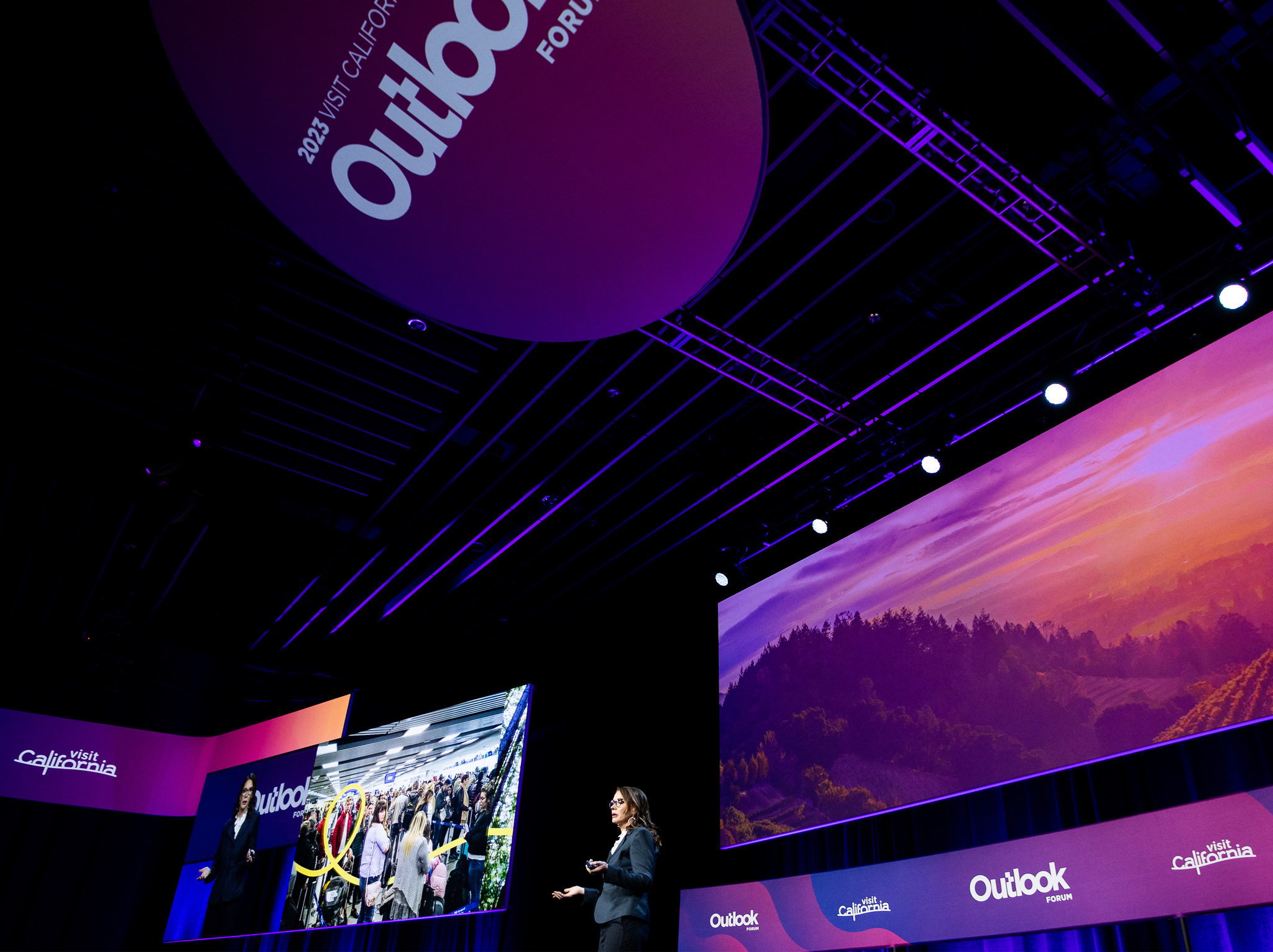
1. You need to understand your space from every angle.
To make the most of your site visit, your team should tour the space at the same general time that your event will take place. Does the venue stand on its own from a visual standpoint, or does it need additional elements so your members immediately recognize they’ve come to the right place? Is the décor highly ornate in a way that will clash with your on-site branding? Adding branded graphics or redirecting attention from elements that don’t align with your brand will create an environment that’s cohesive and consistent with the goals of your event.
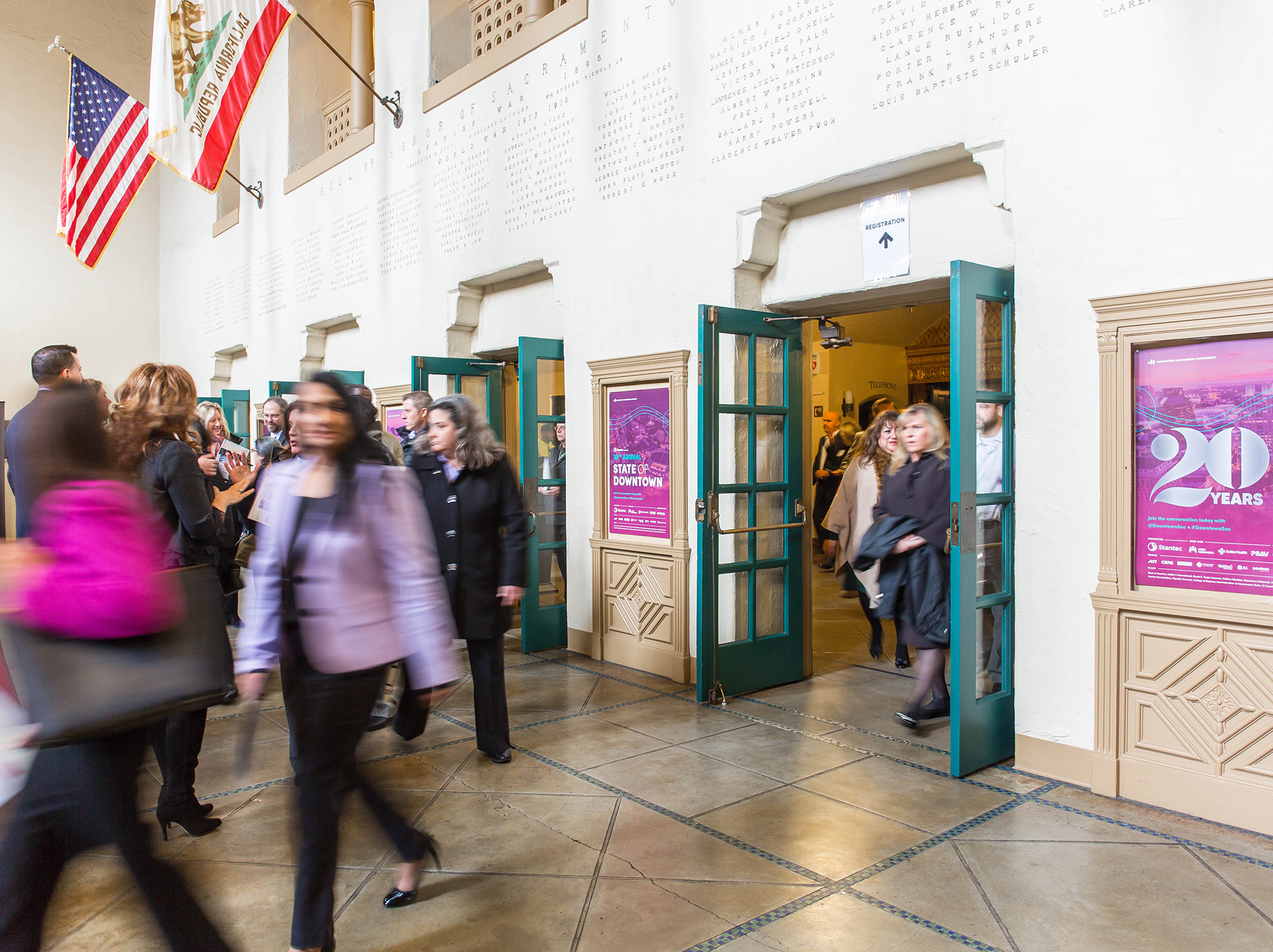
2. Remember no one wants to feel lost or confused.
In the same way website users shouldn’t question what they need to do when they arrive on a page, your attendees should always understand where they should go next. Whether your event begins once they arrive at the hotel or convention center, the addition of impactful branding gives your members the confidence they’re on the right path.
Your event planner will resolve any issues of wayfinding. But your design partner builds upon those guiding details in a branded, elevated way that’s impactful and creates a sense of place.
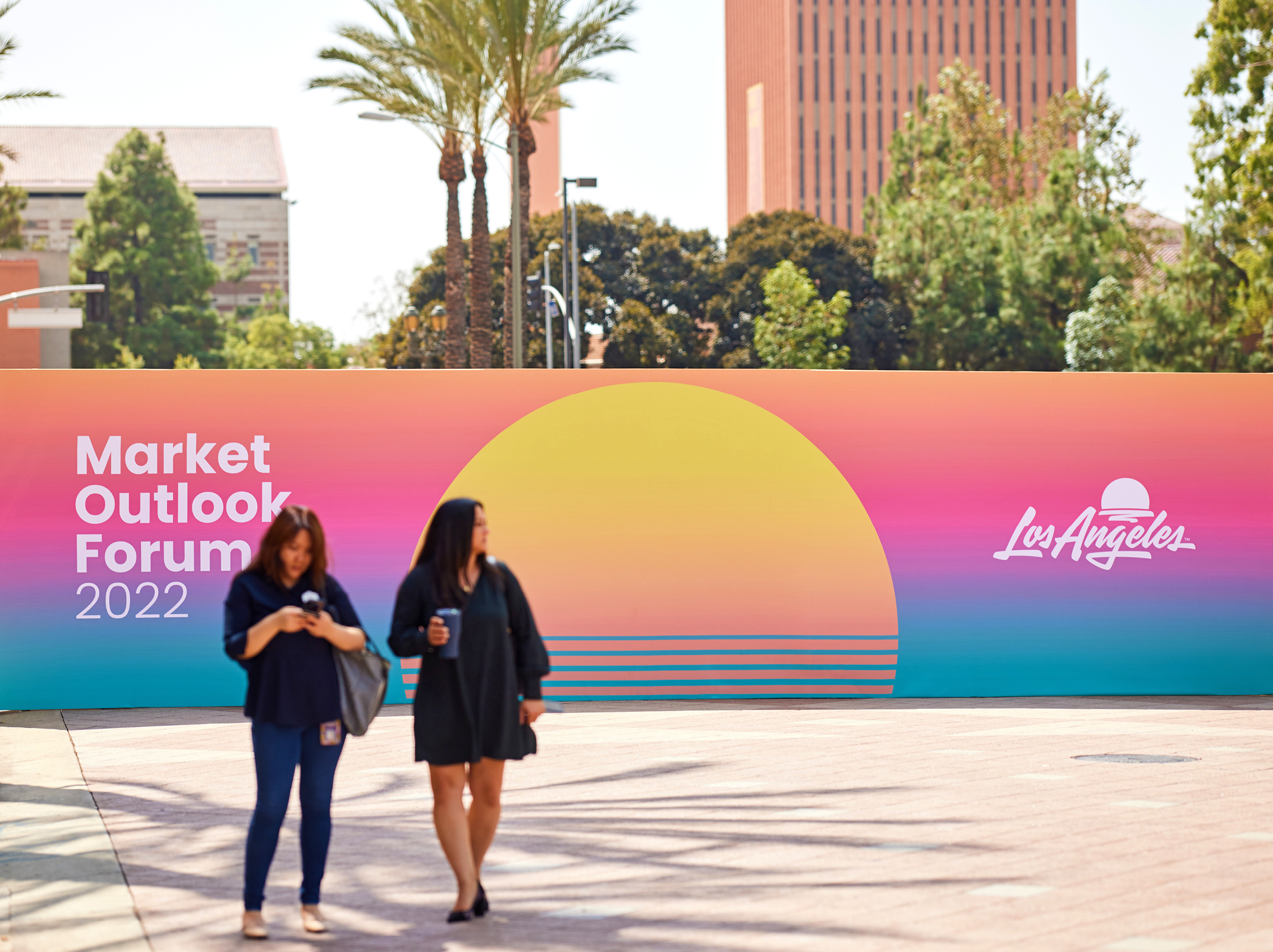
3. Welcoming your guests — in a big way — is crucial.
Your event needs a meaningful moment to underscore that your members have arrived. This is your chance to surprise and energize your most valuable audience with an experience that’s unmistakably representative of your organization — and your brand.
Whether you’re trying to create a sense of place or generate excitement upon your guest’s arrival, first impressions are everything.
How a Well-Branded Event Creates FOMO for Your Next Event
Bringing a creative team to your site visit does more than ensure your organization seizes every opportunity to create an innovative experience. It also results in events that generate the kind of buzz that improves attendance and boosts sponsorship rates for the following year.
Your members should view your organization’s event with a sense of FOMO — the fear of missing out. Creative details will establish that your organization has placed its distinct stamp on the event venue. Branded giveaways that connect your brand to the event experience offer another means of creating a positive buzz.
FOMO isn’t easy to generate, but when every aspect of your event experience combines to deliver that special feeling, your event becomes much more attractive for members. Plus, your sponsors take notice when attendance and the surrounding experience becomes more elevated, which leads to greater financial opportunities.
Bringing your creative team on a site visit constitutes an additional investment. But in the context of engaged, excited members and a more profitable event for subsequent years, it’s an investment in a brighter future for your organization.
What Goes into Creating an Elevated Branded Event — and How to Stay on Schedule
Conventions, annual conferences and galas are make-or-break deadlines on your calendar. These events provide a pivotal connection point between the services you provide and the members you serve. Each aspect of your event presents an opportunity to make a positive impression on your most important audience.
A memorable, impactful event doesn’t happen by accident. The amount of time and resources required to create an elevated event will vary depending on your goals. What remains consistent is your need to produce the kind of branded experience that delivers value for your members.
Organizations Need a Head Start on Planning Branded Events
You need to incorporate enough time in your schedule to create the kind of branded event that boosts attendance, increases sponsorship, and secures a sustainable future for your organization. An event created with a cohesive design delivers an elevated experience that fosters engagement, loyalty, and trust among members and energizes them for the year ahead.
Rushed, disjointed events are as stressful to host as they are to attend. Along with missing the chance to nurture a vital connection with current and prospective members, there is also the very real risk of burning out your staff when working under too tight a schedule.
How Long Does It Take to Successfully Brand an Event
Branded events require anywhere from three to six months to plan and produce. And that’s only after the procurement process with vendors is complete, and the contract is signed. This means you should get started on your procurement process up to a month or two in advance of your desired project start date.
It is crucial to allow sufficient time to deliver the assets needed for an elevated event experience. To put it simply, a branded event takes time to create because so much goes into its development.
A successful event branding project incorporates the following elements:
- Strategy
What are your goals for the event? What does your audience need? What resources are available at the venue? You and your team need to answer core questions like these to uncover the strategy for branding your event. - Messaging
A successfully branded event functions as an extension of your organization and its mission. Your event’s marketing and experience need to reinforce the core message of its purpose and your goals. - Visual design
Every visual touchpoint—before, during, and after the event—should tell a cohesive story. From logos and signage to digital assets and presentations, the design must communicate a message that reflects your brand and engages attendees. - Collaboration
From your internal team to the event planner and the venue’s AV staff, everyone needs to work together to maximize the attendee experience. Collaboration is crucial to transforming branded events from good to great.
Throughout your event’s branding process, you can’t forget to keep your internal stakeholders informed about its progress. Otherwise, you run the risk of disrupting your timeline as your board or executive leadership may demand last-minute changes.
When you’re working with the right partner, an advance site visit provides a crucial view into your event’s possibilities. Are there areas of the venue you can utilize to create a more engaging experience for your members? Even if your organization has used the same space before, a creative partner adds a fresh perspective to recognize new potential for your event’s branding.
Developing a Look & Feel That Serves Your Brand
You need more than a kitschy theme for your signage and programs to deliver a branded event that makes an impression on your members. Too often, organizations leave elements such as colors and themes up to arbitrary preferences or what approaches have been used in the past.
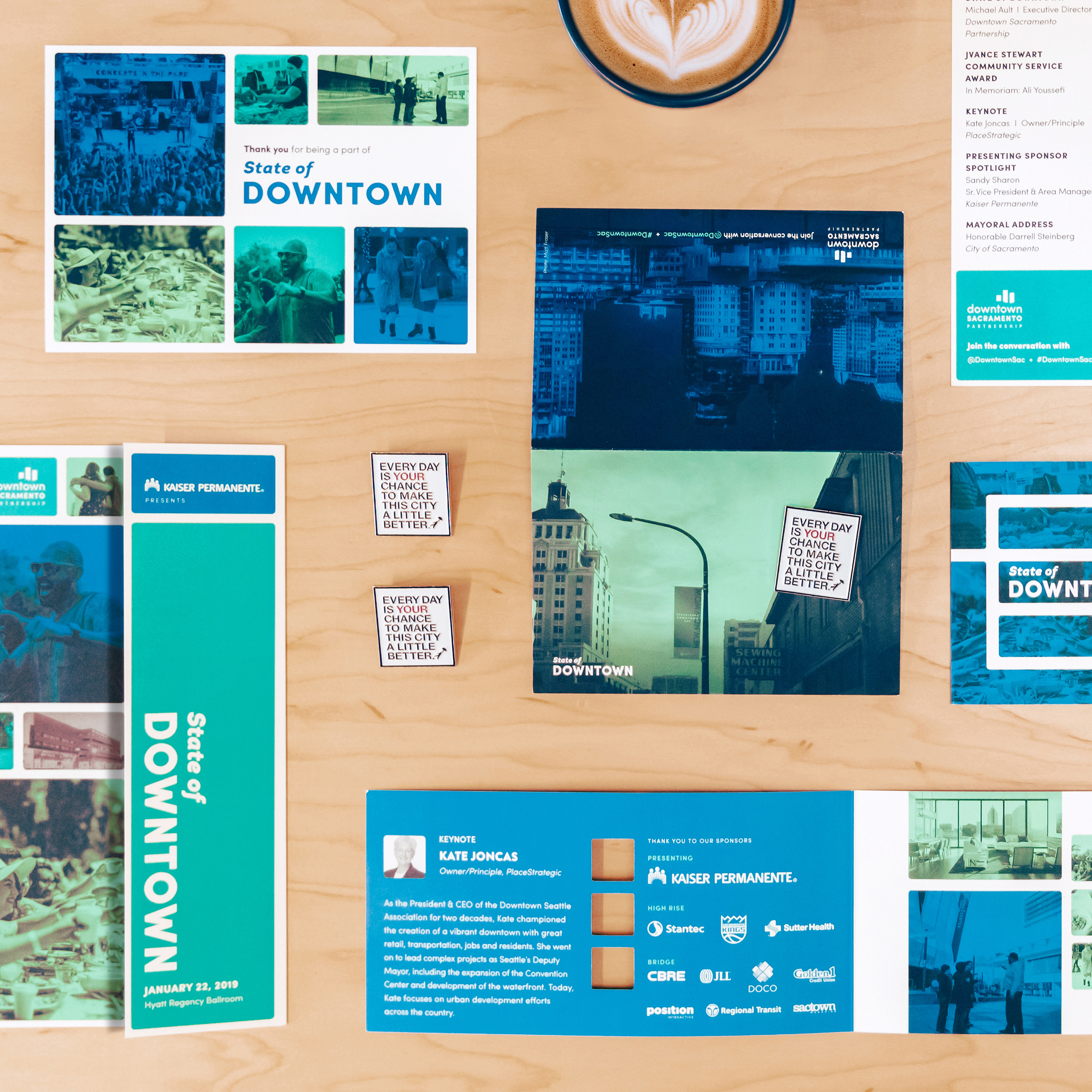
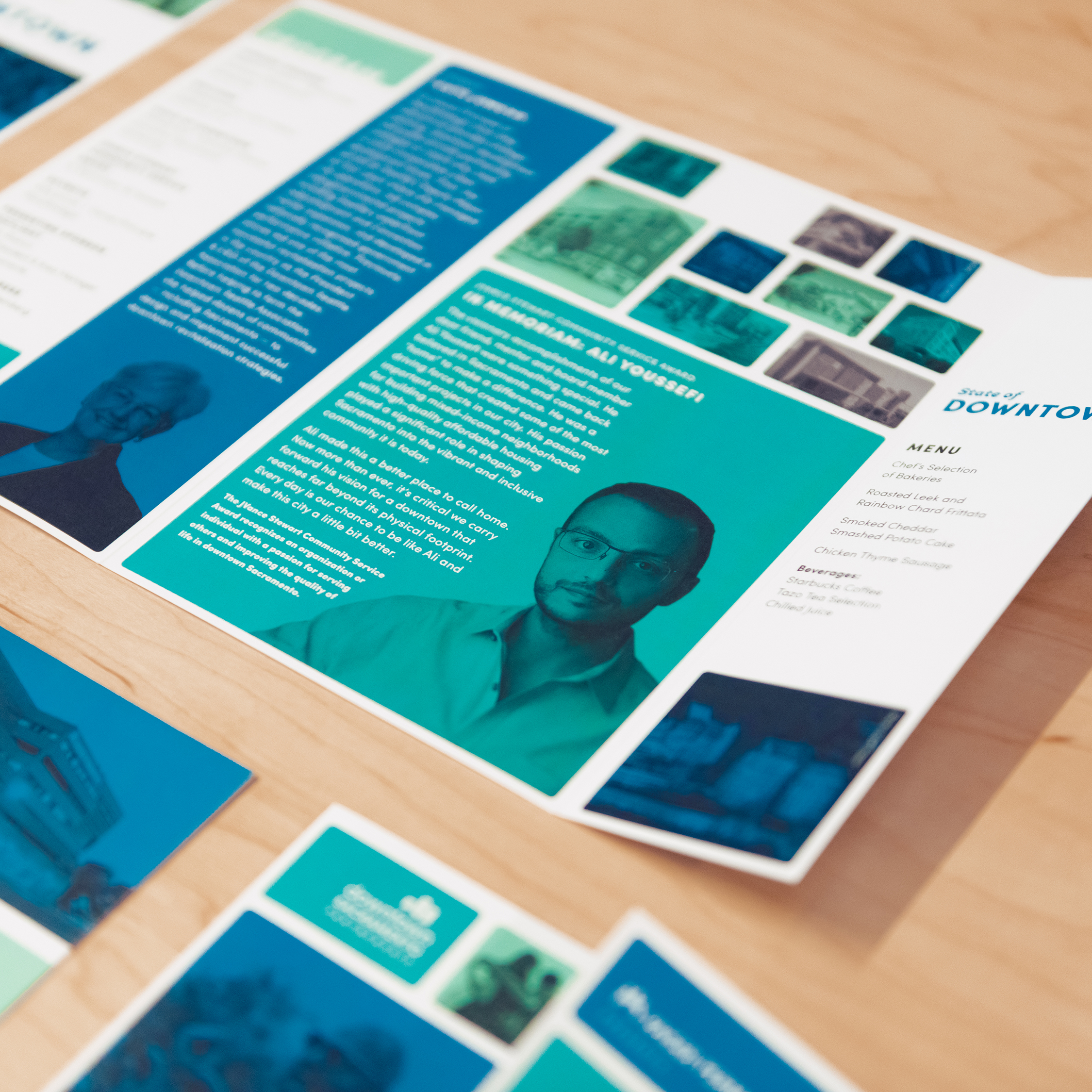
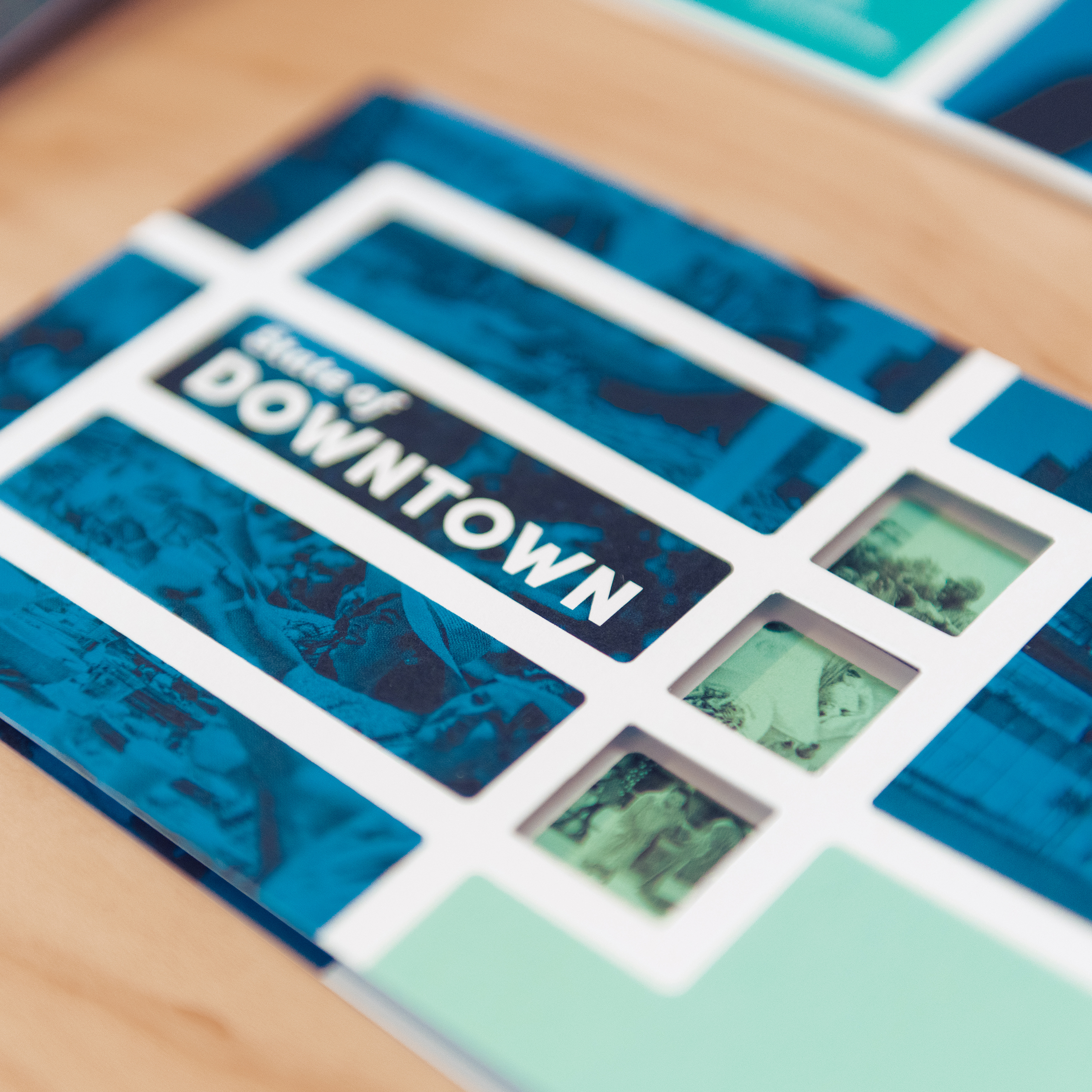

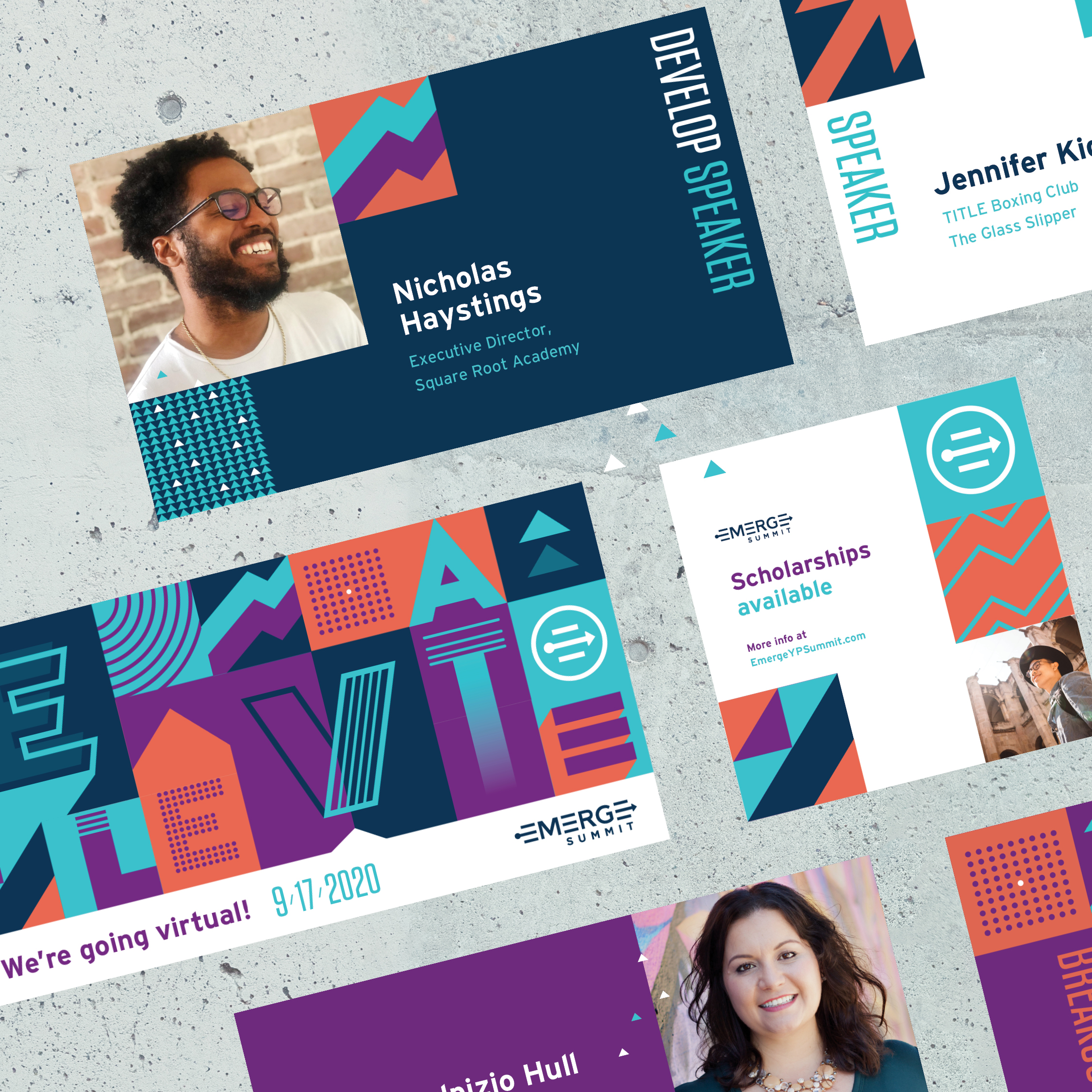
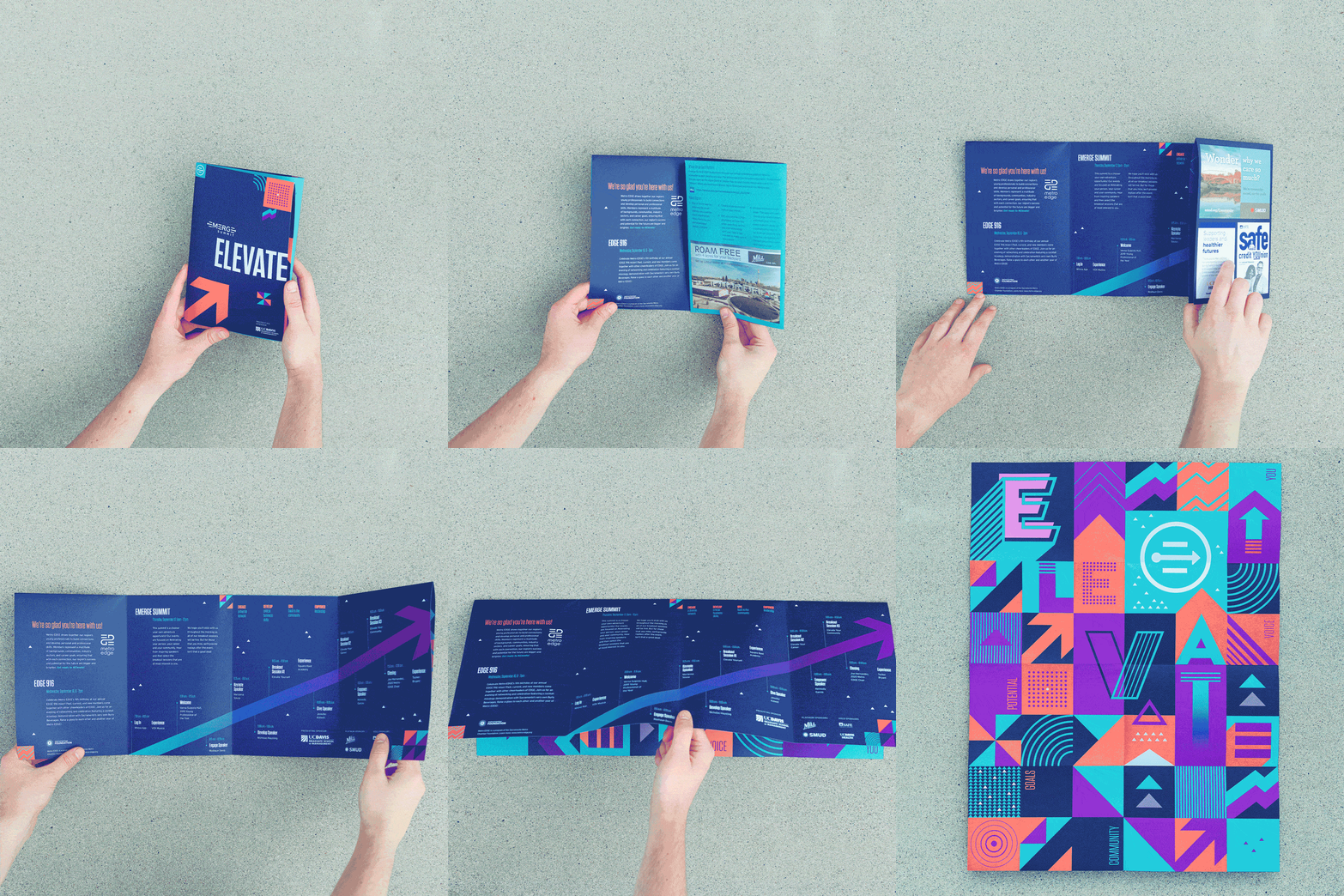
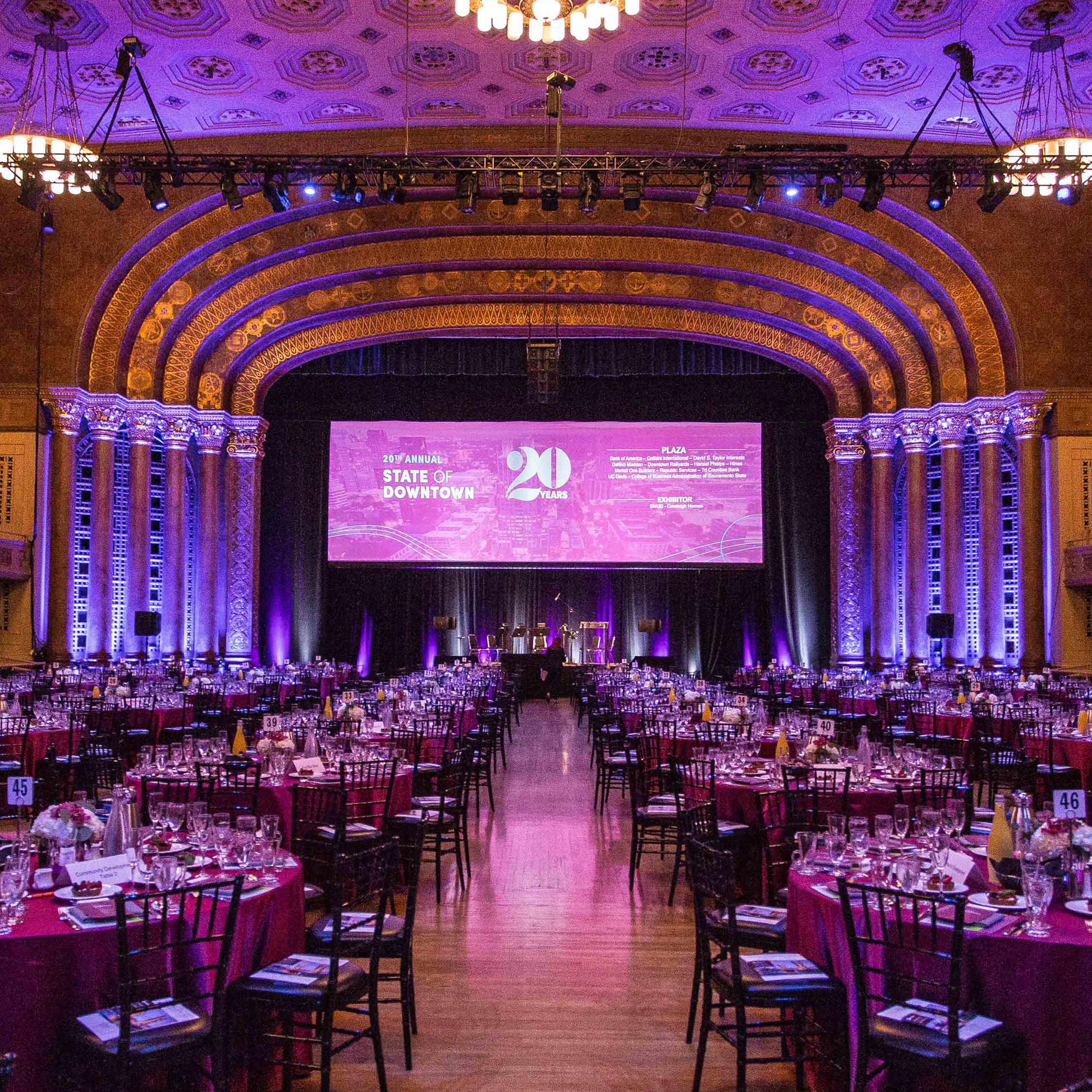
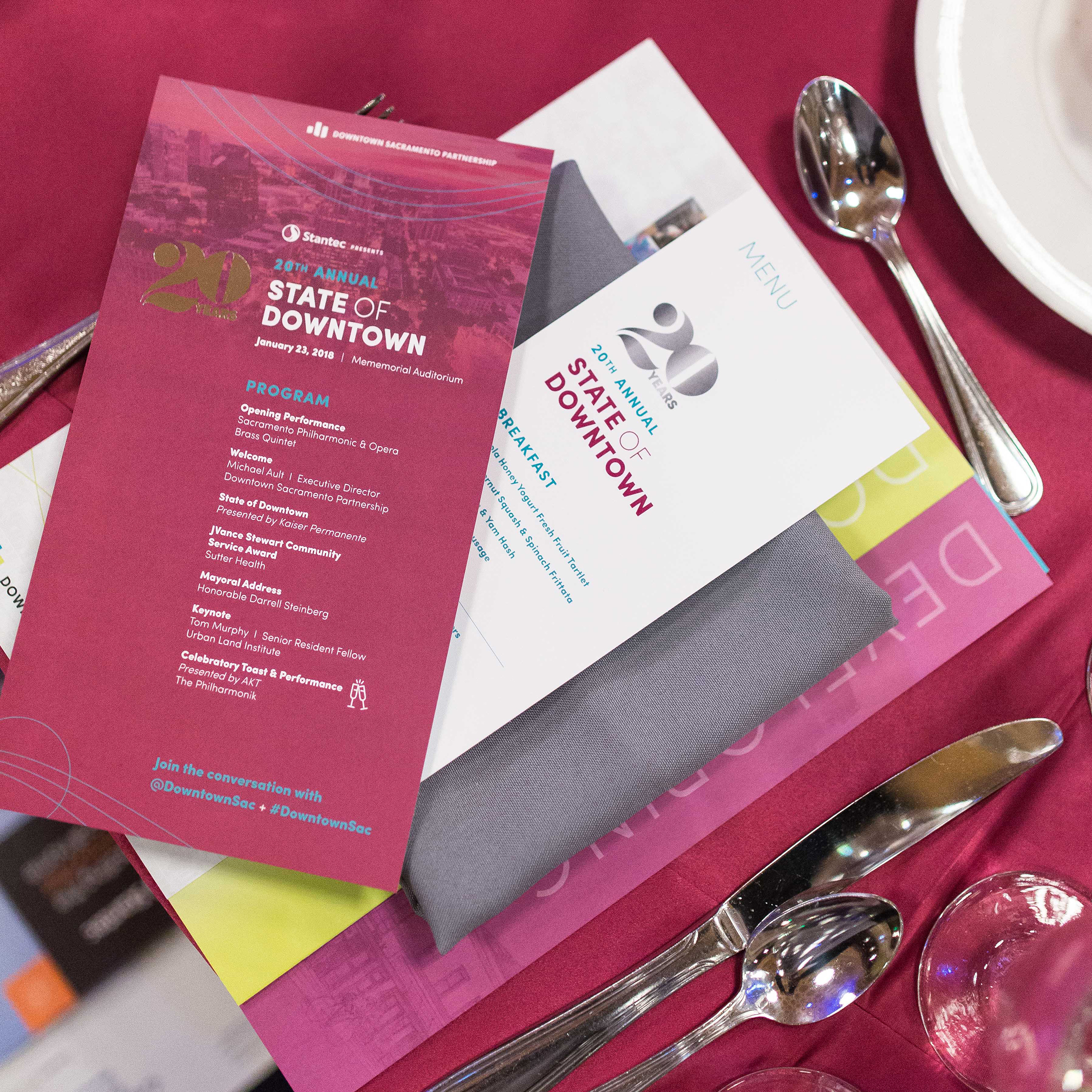
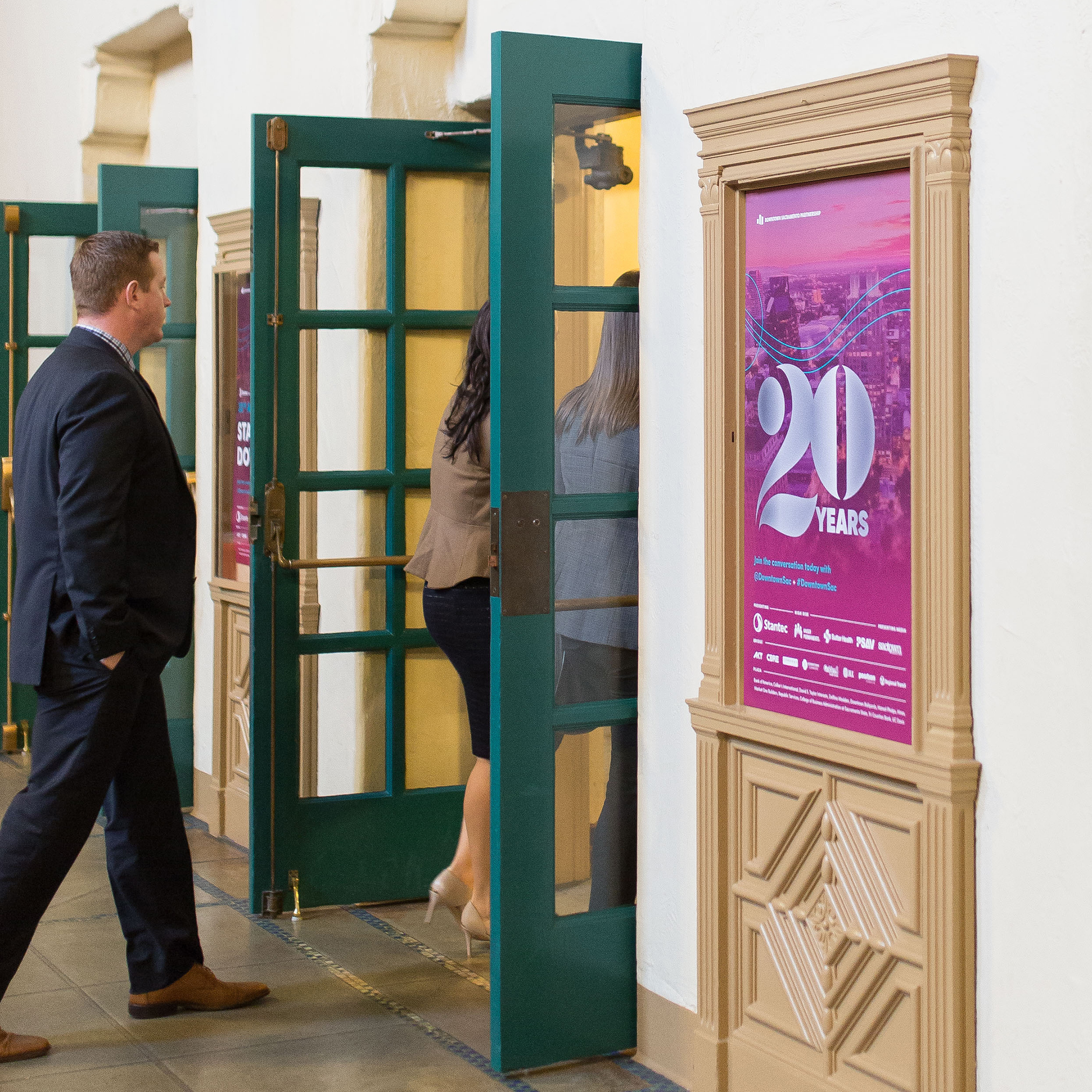
Your event should be designed in a way that’s consistent with your organization’s needs. You can’t just pull your event’s visual aesthetic out of a hat. You and your internal team can explore your options by brainstorming and concepting the framework for a branded event experience.
Designing Deliverables to Create an Elevated Event Experience
Your organization’s event can’t use a one-size-fits-all solution. The deliverables required for your annual fundraising gala won’t be the same for a three-day conference. As you and your agency collaborator develop the strategy for your event, you’ll gain a clearer view of its assets.
The right agency will also help guide your investment by figuring out the most impactful deliverables to benefit your brand. The deliverables specific to your branded event may incorporate the following:
- Sponsor sheets
- Custom invitations
- Social promotion assets
- Digital and printed signage
- Menus, dinner tickets, table numbers
- Save the date reminders
- Promotional ads
- Programs
- Presentation deck, video, & animation
- Giveaway items
Factors Impacting the Timeline for Any Branded Event Project
At the beginning of a project your agency will develop a custom plan and timeline based on your needs and availability.
The following common factors can potentially increase (or decrease) the time needed to ensure your event delivers an elevated, branded experience:
- Sponsorship deadlines
Holding back event deliverables in the hopes of landing one last sponsor creates massive headaches and unnecessary stress for your staff and vendors. Instead, include deadlines for each deliverable in your sponsor packet. This way, you’ll be able to pick up late sponsors with the understanding that they won’t be recognized in certain deliverables if they are past the deadline. - Changes in scope or your organization’s goals after discovery
Every stakeholder should be informed about the project and its progress to prevent disruptions in the timeline. Sudden shifts in requirements can easily derail your team’s progress. - Complexity in deliverables
Complex and custom branded assets and activations require more time to plan and execute, yet deliver a bigger impact. Make sure to plan accordingly and get started earlier than you think you need to get them done in a timely manner. - Lack of availability of your team or vendors
Successful branded events demand ongoing involvement from your internal team. You need to be an engaged participant to ensure your project stays on schedule. In addition, being proactive in coordinating with outside vendors to secure any assets your event needs will also protect your timeline.
5 Tips for Keeping Your Branded Event Plan on Schedule
Creating an elevated event for your organization shares the same DNA as developing a new website or any other project. Except, the stakes can be higher when it comes to your final deadlines. When your venue is booked and your members have paid for their travel and accommodations, you have no options. Your event kicks off whether all its branded elements are in place or not.
You can protect your schedule by following the following 5 tips:
- Maintain consistency in communication.
Your agency partner depends on your organization to deliver timely feedback. You should appoint a liaison that will prioritize the project and ensure that lines of communication remain open between your organization and the agency. - Stick to agreed-upon timelines.
As your project begins, carefully review the timeline and share any concerns. Conflicts such as vacations or major initiatives scheduled at the same time as the run-up to your event should be addressed to keep the project on track. - Be the leader of your team.
As the head of marketing or communications, your organization’s event is your responsibility. You should take ownership of the project by consistently thinking about the requirements before each deadline. Whether it’s sending feedback or ensuring it’s consolidated to eliminate conflicting information, you have to ensure your team plays its part. - Get buy-in from stakeholders early.
Identify project stakeholders and engage them in the discovery phase, so they feel heard and aligned with your event’s goals. Additionally, regular check-ins and progress reports can help ensure that everyone is on the same page and that any potential issues or roadblocks are addressed early on. - Create a list of critical priorities if timing is tight.
You can adjust the scope of your branded event if your organization is short on time. For example, if you’re short on time to send Save the Date announcements, you can base their designs on your corporate corporate brand rather than rushing the branding of your entire event.
Of course, without gathering all the details, your organization can’t really know the time required to transform your event into an elevated branded experience that will better serve your goals, and your members. If you’re looking to get started, we should talk about the next steps.