

Member-First Websites: Putting Users at the Heart of Your Website Redesign
For organizations considering a website redesign, functionality and technology are often among the top items on any wishlist. After all, your next generation of members are digital natives, and you need to secure the best tools to deliver the kind of standout experience that reflects the value of your organization. However, focusing primarily on the technical aspects of your website such as its CMS platform neglects the most important part of any redesign project: Your users. Naturally, a great CMS is essential — but it’s also no guarantee of delivering the kind of experience that connects with members and captures your brand’s story. As you consider your next steps in a redesign project, you need to ensure your website users are the first priority. In this eBook, you’ll learn:
- Why a good CMS is the baseline, a great user experience is what sets you apart
- How user-centered design benefits associations.
- Core elements of user experience.
- How to develop a member-focused website design.
Download ebook
6 Design and Content Best Practices to Improve Your Association’s Email Marketing
In an overcrowded media landscape, associations must build a strong connection with their members. But many of the marketing tools at your disposal have a barrier between you and your audience. Social media outreach requires time, talent, and financial investment to navigate complex algorithms. Advertising offers a potentially broad reach, but it requires considerable investment for the right exposure.
Of all the communication strategies available to you, email holds great potential because it is a direct line to your audience. In effect, members and those curious to hear more about your association have invited you in. But what does your association have to offer once you arrive?
Inboxes are competitive spaces with an array of voices vying for the audience’s attention. However, with a strategic approach to content and design, you can break through the noise and deliver a standout experience that nurtures your connection with members now and in the future.
Why Mastering Email Is Vital to Your Association’s Health
Email offers a wealth of opportunities for associations, but it can feel like walking a tightrope. Send too much clutter and your members will unsubscribe or, even worse, flag your messages as spam. Send irrelevant content, and your messages won’t be seen as useful and will become part of the noise.
You need to ensure that the content and design of the emails you send allow your audience to see the value of a direct connection with your association. Factor in the changing demographics of the workplace and the stakes grow even higher. A recent study showed 73% of millennials prefer communicating with brands through email than any other medium.
Email marketing presents a golden opportunity to nurture a connection with members. But it’s a two-way street. Your members signed up to receive messages from your organization because they want curated information from a trusted source to help them succeed.
To ensure you meet these expectations, we’ve assembled the following best practices:
1. Provide a Seamless Experience with Every Email
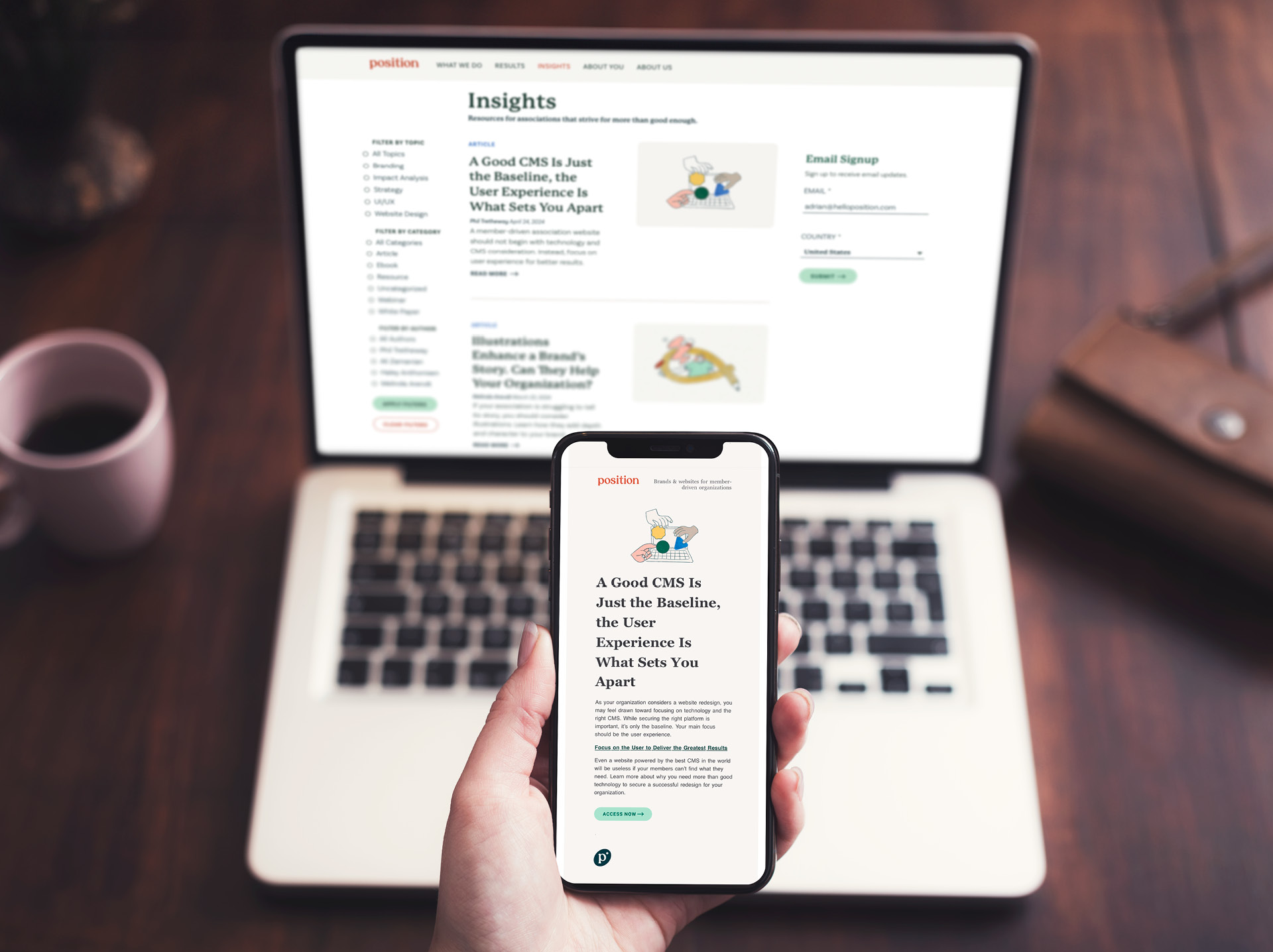
Much like your association’s website, every email should positively reflect and expand upon your brand story. The visual design should be consistent with your organization’s overall brand ecosystem. Your emails will include links that send readers to your website, and what they see on one should function as a fluid extension of the other. A consistent experience will enhance the perception of your brand and build a sense of trust among readers.
2. Understand Your Audience and Their Needs
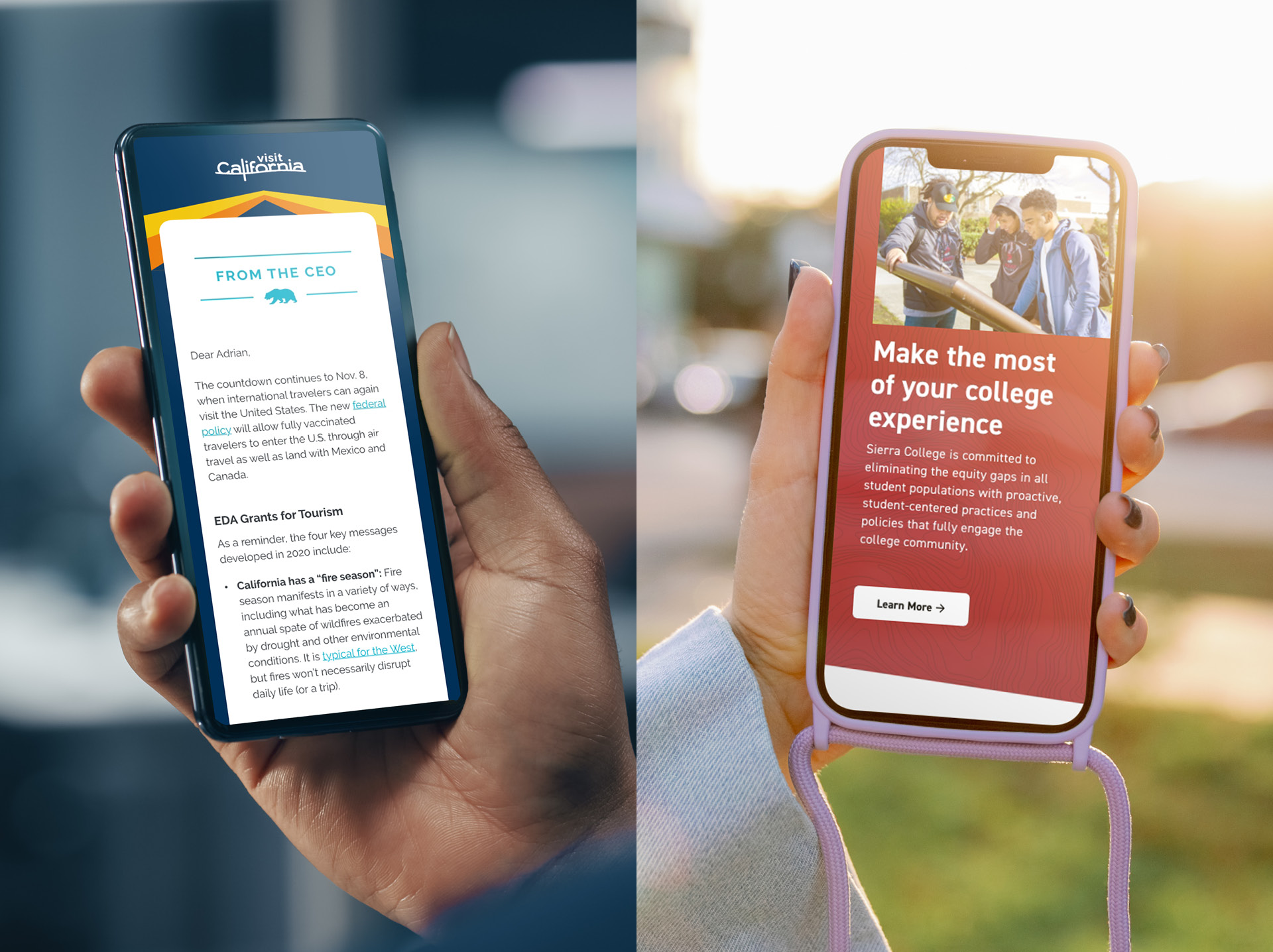
Your current and prospective members give you their time and attention when they read an email. You have a responsibility to deliver on that investment and make it worthwhile.
Your organization should survey its members about the content they want to receive and consult analytics to track user behavior. That way, you develop a sense of what your audience wants and respond appropriately. Applying personalization, such as using a member’s first name from your database, will help increase email engagement and ensure your members feel valued and seen.
You should also avoid trying to serve every audience with a single newsletter. Comprehensive newsletters quickly become irrelevant if their content doesn’t resonate, and they’re often too long. Instead, create multiple audience segments and deliver customized content for each to ensure subscribers only receive relevant content.
3. Optimize Your Association’s Content for Reality

Emails should be short, scannable, and mobile-friendly. More than 46% of all emails are first opened on mobile devices. You need to ensure your designs are responsive to these screen sizes and remain lightweight so they load quickly.
You should never include the full text of a message in a newsletter unless it’s a one-off announcement or update. Instead, give your content an engaging headline with a one- or two-sentence description, followed by a button guiding readers to read more. Along with providing a digestible amount of content, you also gain analytics data on what is resonating with your audience.
4. Leverage Effective Design
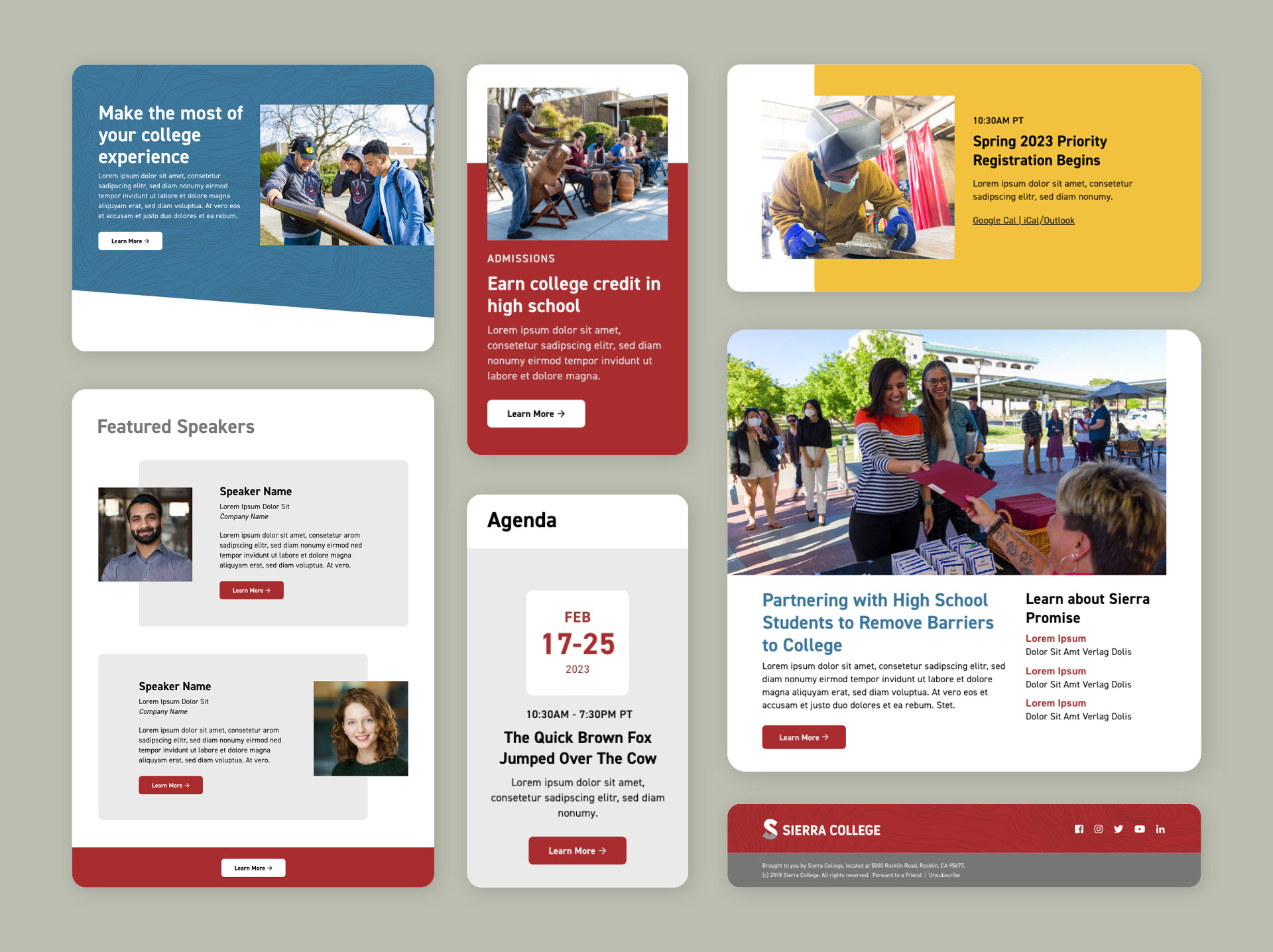
Email design isn’t a one-size-fits-all endeavor. Creating templates with multiple modules optimized for different content types, such as articles, event announcements, news, etc, helps your messages stand out.
Whatever type of email you send, the content must be useful and easy to read. Design practices such as retaining an appropriate amount of white space in each message will ensure your emails appear light, airy, and inviting.
5. Use Strong Visuals Appropriately
Images enhance the storytelling in your email and engage your readers. Infographics provide engaging opportunities to express information in a persuasive, scannable way. Animated GIFs will also catch your reader’s eye, but they should be used sparingly and primarily as header images, as they can be overwhelming.
However, your email should not be one large image. Services like Gmail will identify these messages as spam and block your visuals by default. You should avoid putting text in images when possible, as images are often turned off by default in many email programs. When you can’t avoid it, be sure to add alternative text to those images — this ensures you are compliant with accessibility guidelines, and your message will still be understood if they don’t load properly.
6. Send Useful, Actionable Messages That Meet Legal Standards
Email is a powerful tool, but that power is effectively a double-edged sword. Don’t send enough, and you’ll be forgotten. Send too many, and you’ll likely annoy and eventually lose the audience you need most.
Worse yet, your IP address may be blacklisted for not complying with CAN-SPAM requirements, which is difficult to resolve and could also lead to legal action. You should always make the unsubscribe link easy to find to avoid alienating your members and being marked by readers as SPAM.
Whether inviting members to a gala, encouraging a renewal, or sharing professional resources, you should never email your members without a clear and compelling purpose. Before sending an email, ask the following question: What’s in it for your members? If you apply this simple guideline to your email marketing, you’ll nurture a lasting connection that will continue to serve your association’s goals.
A Good CMS Is Just the Baseline, the User Experience Is What Sets You Apart
Planning a redesign of your association website can feel like one of the most stressful projects of your year. After all, websites are expensive, high-stakes projects that will impact how your organization connects with members for years to come. Given how much of your time, budget, and resources it demands, you’re under considerable pressure to get it right.
Marketing executives often gravitate first toward technology decisions when tackling a website redesign. The assumption is that the design will be done right, and the CMS decision is what needs your attention.
Building an effective website isn’t that simple. A good CMS is essential, but it should be the baseline when selecting a good agency. To see the greatest results from your investment in a redesign, you have to stay focused on what’s most important: Your members.
Why a Good CMS is Only the Baseline
If you talk to five different agencies on your way to planning a redesign, you may get five different answers to the CMS question. Everyone has a preference (here’s ours, for example).
However, a CMS isn’t a magic bullet. Choosing Drupal, WordPress, or another top-tier platform can’t guarantee an effective website. As website technology has evolved over the years, your organization can gain many of the features you need from the majority of the top-tier CMS platforms.
Baseline Requirements for a Modern CMS
Fundamentally, a good CMS will deliver the following five features:
- Expandability and flexibility: The platform should be customizable to serve all the technical requirements of your organization.
- User-friendly editing experience: Editing and publishing should be easy and intuitive.
- Scalable: The CMS should expand over time to fit your organization’s current and future goals and needs.
- Consistent updates: Your CMS should be open-source and supported by an active community. This means that along with addressing shifting security standards, your CMS will also be in a state of constant improvement.
- SEO-friendly: The platform adheres to best practices to ensure your site is visible to search engines.
With these core elements in place, be weary of proprietary systems. When you use a proprietary CMS, you not only are limited to very specialized agencies and developers that can work on your website, but your organization is also at the mercy of the private software company’s development schedule for new feature releases and cost increases. By contrast, popular open-source systems ensure the platform remains in a state of constant improvement and is easy for almost any agency or developer to work on. Otherwise, choosing a CMS is no different from the debate between major automakers like Ford and Chevy. At that level, either brand provides a reliable way forward. However, your greatest priority is ensuring members have all they need to reach their destination.
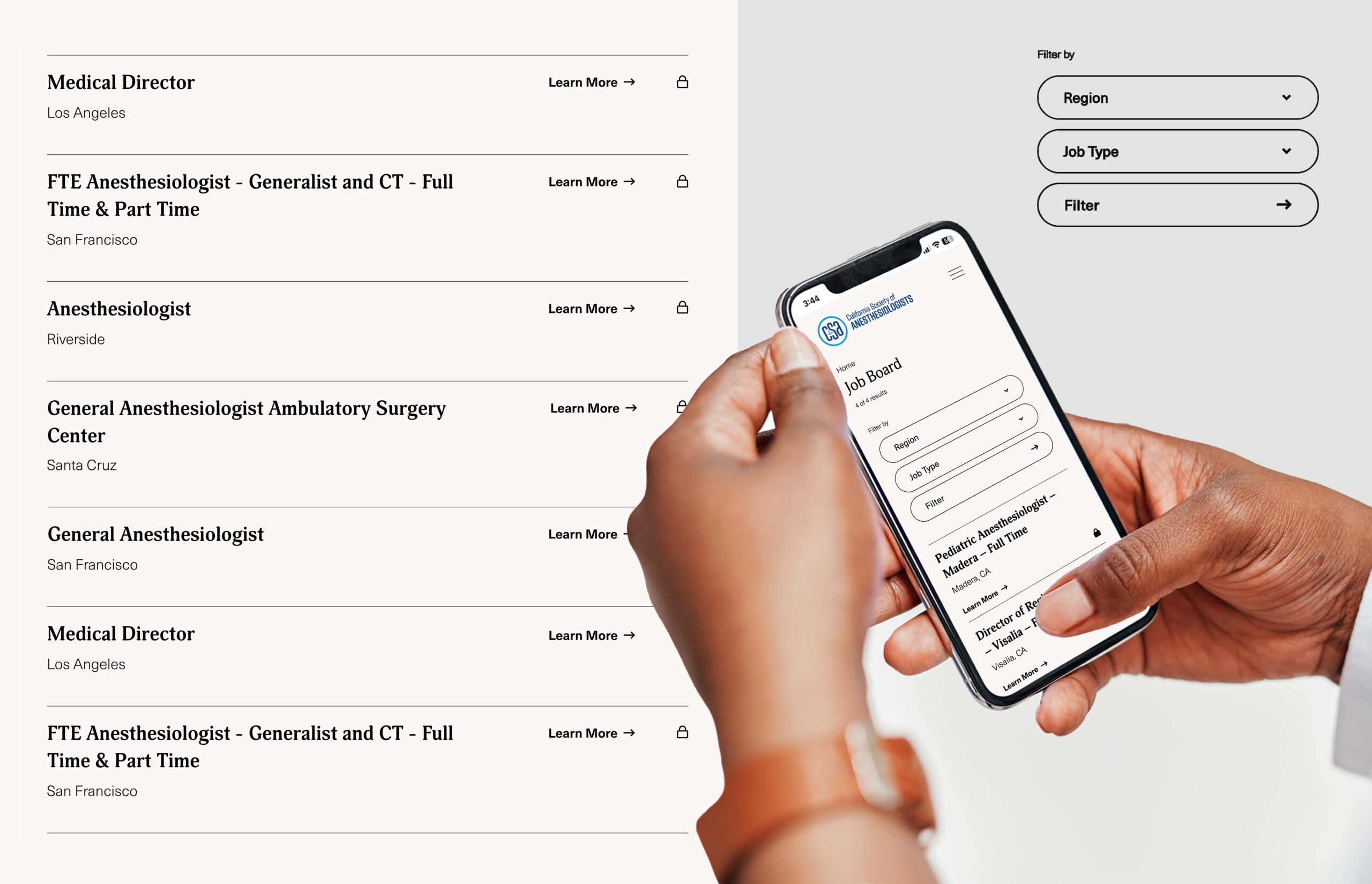
User Experience is Your Website’s Differentiator
A good CMS will supply the right technical tools to generate an impact on your organization. But the greatest difference-maker comes down to how that technology is applied to create an intuitive and engaging user experience.
How you strategize your association website’s design, content, and navigation makes up its user experience. Much like your organization’s brand, a strong user experience communicates to members who you are and what you offer.
Your CMS is important, but it’s invisible to your users. Think of the user experience as the gateway to how your members will access your website’s functionality. Everything on the front end of your website (what your members see and experience in their browser) should be designed to guide users toward the resources they need. If members can’t find or understand what your organization offers, then all that impressive technology is useless.
You can have the best CMS in the world, but your website will still be ineffective if the user experience and interface don’t resonate with your users and serve their needs.

Member-Driven Organizations Need a Design-First Website Approach
Associations have specific needs when it comes to creating a positive member experience, and each website should incorporate certain elements to be effective.
However, you must ensure that your agency partner has the right experience level in all the areas your website requires. For example, a marketing or PR-focused agency may understand how to develop a clear messaging strategy for your website, but they may lack the design and user experience expertise to create a website that resonates with your members.
An organization may also take the wrong path by focusing solely on its website’s CMS and backend technology. A tech-first or SaaS-oriented company may specialize in creating functionality for association websites. However, skills in development and databases can’t compensate for lacking marketing and design skills essential to creating an engaging user experience. When you prioritize technology, you often end up with a cookie-cutter website that doesn’t adequately reflect your organization.
Ultimately, your organization needs a design-first agency with strong development skills that are informed by years of association experience and marketing expertise.

How to Find the Right Web Design Agency for Your Organization
For many associations, the RFP process is the first step toward finding an agency partner for a redesign. Unfortunately, RFPs typically lead to finding one-size-fits-all solutions that won’t address your organization’s real problems.
You need an agency partner that will design a user experience specific to your organization and its members. You should present the objectives for your project and evaluate how well an agency communicates with your team and demonstrates that their experience aligns with your needs.
Have they solved similar problems for associations like yours? Are the services and resources on the websites they produced organized in an intuitive way? Do their designs tell a cohesive and compelling story about the organizations they serve? Good design ensures a website works seamlessly.
When you’re working with the right agency, you don’t need to start with technology questions. Any qualified candidate should offer a strong, stable CMS. What matters most is finding a partner who will expertly plan and design the website to cater to your members. Ensuring your members will find what they need in a way that also communicates what’s unique about your organization.Does this sound like a website to carry your organization into the future? If so, we should talk.
Illustrations Enhance a Brand’s Story. Can They Help Your Organization?
For member-driven organizations, your brand has to tell your story and set you apart from the competition. Targeted visuals and messaging help to communicate the value of membership, and engage your audience. As you aim to connect with the next generation of members, you need to ensure that the story is consistent, unique, and memorable.
The logo, design elements, and messaging are critical building blocks of your identity. In this article, we’ll explore a potential visual component of your brand.
Populating your website or any marketing asset with predictable images or generic stock photos adds nothing to your brand’s story. Custom photography, captured to represent your brand and your members, is much more effective. But even that may only get you so far. There are many situations where you should consider illustrations to set your organization apart.
Leveraging Illustrations
One of the biggest challenges for any organization is finding a way to distinguish yourself from competitors in an overcrowded digital landscape. When strategically planned in a way that aligns with your brand, the right illustrations deliver much more than just a visual companion to your content. They add personality and character to the message your brand delivers.
Of course, illustrations are not appropriate for every organization or scenario, and you should use illustrations in a way that’s cohesive and enhances your identity. When applied correctly, illustrations offer two advantages over conventional photos:

1. Create a Distinct Visual Experience for Your Brand
Illustrations provide a way to add character to your overall brand. The personality, color, and texture they add to a marketing piece go above and beyond what a photo or design element can provide. Each illustration is a unique and custom piece of art that has been thoughtfully composed to embody the distinct characteristics of your brand and communicate the idea at hand. The possibilities are endless with illustrations and, best of all, they are completely custom to your organization, so they are highly ownable. For an organization serving doctors or other medical professionals, a suite of clean illustrations can add a note of professionalism, trust, and humanizing compassion. Or, alternatively, more expressive and loose illustrations add welcoming warmth and whimsy to a brand.
Illustrations are available through stock websites and clip art libraries, but that’s not what we’re talking about here. If you are going to make illustration a part of your brand it needs to be consistent and custom to your needs and brand characteristics. Your organization is unique — you need to establish an illustration style for your brand and work with one or more professionals to create unique illustrations.

2. Capture Complex or Abstract Ideas Specific to Your Needs
Stock images exist because they depict common scenarios organizations like yours need in their communications. But what if you need an image of a concept specific to your audience or a more abstract idea? You’re inevitably left with a generic photo that falls short of and looks indistinguishable from any other organization.
However, the right illustrator can capture the most esoteric concepts without being constrained by the limits of photography. For example, imagine you needed to depict loyalty or perhaps the idea of someone juggling multiple priorities. A custom illustration can cleverly capture these ideas without resorting to clichés or predictable images from a widely available and overused stock library.
Better still, an illustration allows your organization to own the images you use. It becomes part of your brand and adds to a distinctive style your audience won’t see elsewhere.
Are Illustrations Right for Your Organization?
Like any other design element, your organization can’t start arbitrarily incorporating illustrations to enhance your content. You have to first understand your brand to ensure the visuals you choose will make the right impression on your audience.
To gain a clear picture of your organization’s brand, consider who you are, what you’re trying to say, and who you are trying to reach. If illustration is the right format for your organization, you should assess what style is appropriate to communicate your brand’s characteristics and values.
The illustrations should retain a consistent style and fit your overall brand system. Your goal is for each visual to feel cohesive, and tailored specifically to your organization and members.
Incorporating the Right Illustration Style to Tell Your Story
Finding the right illustration style to suit your brand is ultimately a strategic decision. Style isn’t everything — but it goes a long way toward enhancing your brand. The following options are just a few approaches at your disposal:

Character-driven
If your visual presentation lacks a human element, your audience may subconsciously feel your organization is emotionally distant. Relatable depictions of characters or other figures engage your audience and open new avenues for connection.

Minimalist
A less-is-more approach transforms complex ideas into the simplest, most efficient visuals. These illustrations retain the focus on their subject with clean lines and clear images.

Big & Bold
A form of minimalism, this style uses outsized representations of shapes, forms, figures, and even letters. Applying exaggerated designs and bold, colorful lines is another way to capture your audience’s attention.

Retro
Influenced by the shapes and textures from a bygone era, throwback illustrations connect with the viewer by provoking nostalgia.

3D
Challenging the limits of two-dimensional design, 3D illustrations increase user interest by adding depth and a sense of the unexpected to environments, characters, and styles.
Cohesive Illustrations Enhance Brand Identity
Finding the right illustrator to work with your brand is an art, and you should make sure the visuals they create are flexible enough to suit your needs. When you’re working with the right agency partner, you gain access to a rolodex of illustrators and a creative professional who can translate your business needs.You don’t have to tackle it on your own. If you’re looking for a visual approach to your brand that will resonate with your members, we should talk.
Understand the Meaning of Colors in Design
The visual language of your brand is a powerful storytelling tool for illustrating key attributes of who you are as an organization. And though everyone has color preferences, you must choose color in an intentional, strategic way.
The colors you associate with your brand in your marketing collateral communicate vital details to your current and future members. Review this chart to gather more information about the meanings associated with colors, how they’re used, and more.