

User Interface is Key to Stronger Association Websites
Your association’s website is the digital face of your organization. It’s often the first point of contact for prospective members, and it sets the tone for every subsequent interaction.
Your website’s user interface (UI) — its visual appearance, interactivity, and overall feel — plays a crucial role in shaping that first impression. How your website looks, what it says, and how it’s organized all express details about your association to its audience. Even the images on your website underscore your identity and help potential new members see themselves in your association.
These visual elements aren’t the product of aesthetic preferences. They’re strategic design decisions that impact your association’s ability to communicate with its audience. A thoughtfully designed UI elevates your brand, enhances your messaging, and creates a stronger connection with your audience.
The Power of a Comprehensive Brand System
Before you determine the visuals that make up the core of an engaging and intuitive UI, you need to develop the right tools. A well-developed brand system forms the bedrock of an effective user interface design.
A brand system provides more than a recipe for your association’s logo, color, and text specifications. It’s a comprehensive framework encompassing your brand’s visual and verbal identity and how you express those details to your audiences. A brand system includes the specifics of your association’s voice and tone, messaging, values, and more.
When applied to your website’s user interface, the elements of your brand system create a toolbox to express the character of your organization. Fonts, patterns, and color palettes set the tone for your website’s content. The right design elements communicate your organization’s personality, for example, that your organization is warm and people-driven, or perhaps that it’s more clinical and academic.
A brand system ensures your website’s user interface does more than look appealing and function in an intuitive way. It also expresses who you are as an organization.
Key Elements of a Strong User Interface
Your audience of current and future members will perceive a lot of information from how your website’s user interface functions. An appealing UI draws your members toward what they need and builds affinity with your association and its website.
The visual aesthetic of your website’s UI expresses the character of your organization. Each of the following elements plays a vital role in creating an engaging and intuitive experience.
Visual Hierarchy: Guiding the User Journey

A well-organized design enables your members to explore your website to find the information they need. However, a strong visual hierarchy clearly indicates the most important information on every page to create an intuitive user experience.
Strategic use of scale, contrast, white space, and color create visual order to your website. This visual hierarchy reduces cognitive load for your users while enabling them to find information quickly and easily.
Design Consistency: Building Trust and Credibility
With a brand system, your association gains a valuable framework for expressing its story through design. A consistent execution of visual details across your website communicates trust and reliability to your users.
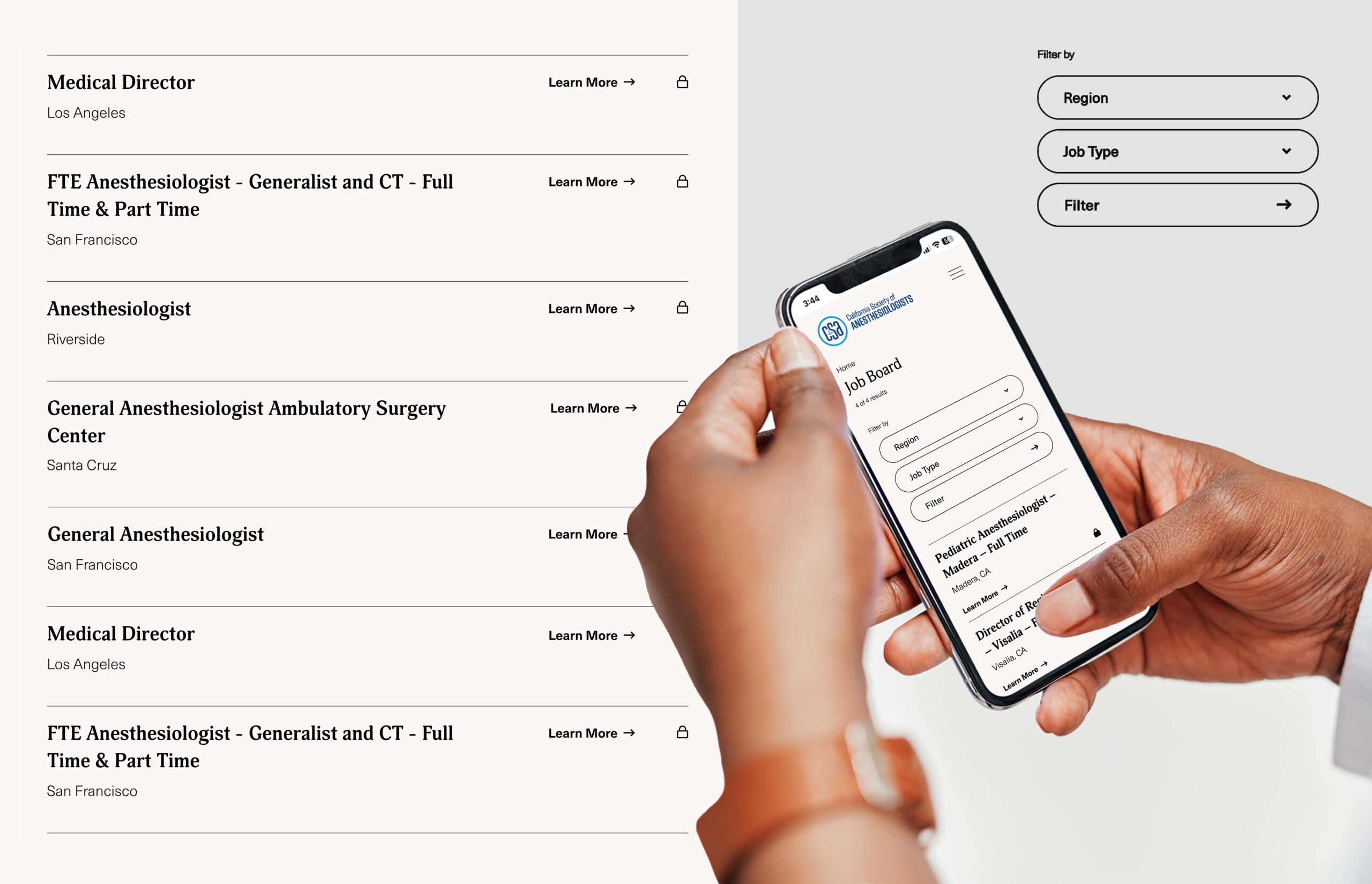
This should extend to resources like job boards or event calendars, which may incorporate external functionality. Maintaining a consistent, cohesive UI throughout your site enhances your organization’s credibility.
Rhythm and Flow: Enhancing User Engagement

A well-designed layout creates a flow that promotes the right behavior, whether guiding users to complete a specific objective or encouraging further browsing. For example, a page guiding users to submit a form should minimize the steps needed to complete the action and eliminate distractions. Pages meant for browsing and education should create a clear layout of information for users and lead them to the next action you would like them to take.
Users also grow fatigued seeing monotonous layouts while navigating longer pages. Balancing text-heavy sections with scannable content keeps users engaged, while varied design elements on the page maintain interest and guide the eye.
Photo and Video: Bringing Your Story to Life

Professional photos and videos are powerful tools for building engagement and enhancing your website’s narrative. Plus, they enable prospective members to see themselves in your organization based on who appears on screen.
Member-driven associations are often tempted to use candid photos and videos taken by staff to create an authentic reflection of their identity. This inclusion of members in your website’s visuals is an effective way to connect with current and prospective members. However, professional-quality photos and videos will better reflect your organization’s professionalism and respect your members by portraying them in the best light possible.
Download Ebook
Elevating Your Association’s Communication Through Thoughtful UI Design
A well-crafted user interface is essential to creating a successful, member-first website. When designed thoughtfully, the visuals making up your UI are a powerful tool that enhances your association’s messaging while forming a stronger bond with the next generation of members. By working with a partner who understands the specific needs of associations and has years of elevated design experience, you’ll create a user experience that seamlessly serves members and your organization. If this sounds like the kind of approach that will help your organization extend its digital reach, we should talk.
10 Tips to Attract, Retain, and Engage Members
As an association leader, your communication priorities vary from day to day. But each initiative serves a central goal: To attract, retain, and engage your organization’s membership. Along with ensuring your existing membership remains active, engaged, and connected to your mission, you need to drive interest from the next generation. If you can’t meet these goals, you’re placing your association’s long-term health at risk.
Fear not. You have an assortment of options to leverage your brand and website toward meeting these priorities. Here are a few tips on how to effectively deploy each to your advantage.

Attracting New Members
According to a 2023 study, nearly half of the workforce is now made up of Millennials or Generation Z. As Baby Boomers continue to retire at a rate of 10,000 people per day, you must ensure your association and its marketing is set up to connect with a younger population of digital natives. The following tips will help your organization do just that.

Audit Your Brand Promise
The next generation of members won’t join your association simply because one of their older coworkers did, or it has been a tradition in your industry. These new members are drawn to organizations and brands whose values align with theirs. Engage with your board and internal departments to review your brand’s identity, core values, and how they are expressed to ensure they capture who you are and what you do.
Ensure Your Visuals Reflect Your Audience
Photos on your website and brand collateral help prospective members visualize themselves in your organization. If your association aims to attract a younger and more diverse membership, the images must reflect those goals to help your target audience feel seen and welcomed.
Just as importantly, design elements such as color choices communicate subtle signals about your brand. Make sure these visual cues accurately reflect your identity to prospective members.
Express Your Association’s Value with an Animated Explainer
Your organization needs to capture the attention of prospective members, and video enables you to communicate the value of your association in a more powerful and engaging way. You can take these videos to the next level. It’s a great way to communicate complex or abstract concepts and help your brand stand out from your competitors. At Position, we’ve applied animation in projects for our clients to express information in a compelling and easy-to-understand way.
Leverage Social Proof
Members want external validation of your association’s value by hearing outside perspectives. Testimonials, case studies, and member success stories allow you to demonstrate the impact of your mission and build trust with your audience by showing that your association knows how to walk the talk. Consider leveraging photos or videos to make these assets more engaging.

Retaining Existing Members
Your current membership is your organization’s most precious resource. You can’t afford to rest on history or past accomplishments and expect automatic renewals. The following tips provide options for expressing the importance of retaining an ongoing membership.
Segment Email Outreach
Email is one of your biggest opportunities to communicate consistently and directly with your most valued audience. Given that an individual’s inbox is precious real estate, you have to justify this investment by providing your members with compelling, meaningful communication.
Instead of sending overwhelming newsletters that attempt to capture the full range of your organization’s activities, divide your content into distinct, interest-based emails (e.g., events, resources, advocacy, etc.) and segment your audience to ensure you’re delivering concise and relevant information. Survey your members and track their behavior through analytics to ensure you’re always delivering useful and engaging content.
Deliver Memorable, Branded Events
Galas, conventions, and conferences are key opportunities to connect with your membership and build enthusiasm for your association. Make the most of this opportunity by presenting an elevated experience that’s aligned with your brand and reflects its core identity.
A thoughtfully branded event, signage, digital programs, and microsites are just a few ways to ensure your next event will make members feel inspired and excited about your association. A professionally designed event that embodies your brand will ensure your members (and sponsors) remain engaged year after year.
Organize and Elevate Your Website
Your website acts as the front door and an ongoing resource for your association. You need to ensure every element is designed to engage members and serve their needs.
A cohesive, well-organized website will clearly express the benefits of membership and connect members with valuable resources. A member portal provides a great way to deliver exclusive content and underscore the benefits of joining your association.

Engaging New and Current Membership
Active and energized members aren’t just more likely to renew. They’re also better equipped to act as advocates for your association. Consider these tips for building a stronger connection with your members.
Provide Intuitive and Useful Member Experiences
Keep members coming back to your website by supplying a valuable resource of industry knowledge. Review how you’re filtering content in your resource library while also ensuring every aspect of your website’s user experience is clear and easy to navigate. Members should be at the center of how you design and curate your association website.
Seek Outside Expertise to Enhance Your Next Event
Conferences or galas that replicate the same old experience each year will grow stale among your membership. Inviting a fresh creative perspective to your event site visit will allow you to unlock new opportunities to maximize your location’s potential and keep your members engaged with your association.
Improve and Automate Member Onboarding
Attracting new members is part of your organization’s mission — but your work doesn’t stop there. Developing an engaging onboarding process that’s smooth and welcoming to new members lays the foundation for a positive and lasting partnership.
Set up a drip email campaign to guide members through onboarding by providing clear instructions for the next steps. Offering orientations, welcome packets, and personalized messages will help your newest members feel part of your association’s community from the start.
Want to know more about how your association’s brand and website could do more to connect with members? We’re ready to get started.
Design for All Users: 3 Keys to Accessibility for Your Association’s Website
Your website is your association’s most powerful communication tool. Delivering a vital and engaging resource to current and prospective members is your top priority in a digital-first landscape. But you also have to ensure your website will connect with all of your visitors.
Diversity, Equity, Inclusion, and Accessibility (DEIA) initiatives aren’t just trending topics. They’re core priorities that enable your website to connect with audiences of all abilities. Whether you’re considering a new website for your association or a refresh of its current look, accessibility must be a key consideration in how it’s designed, built, and maintained.
If you aren’t factoring accessibility into your website priorities, you’re limiting the audience for your association’s message. Worse yet, you could be at risk of costly legal action if it falls short of compliance with current regulations. But more than avoiding potential consequences, having an accessible website is simply the right thing to do.
Why Accessibility Matters In Association Website Design
A website designed to accommodate accessibility simply ensures that users with disabilities have access to the same information as everyone else. In the same way, a building with stairs at its entrance prevents those with differing physical capabilities from entering, a poorly designed website restricts access for people with limited vision, hearing, or other impairments.
For example, screen readers allow users who are visually impaired to navigate a website, interact with it, and consume the information. Design, coding, and management best practices allow accessibility tools to work with a well-built website. If your agency partner doesn’t view accessibility as a core priority in their website designs, your association will turn away users reliant on these tools.
Plus, an inaccessible website violates the ADA/Americans with Disabilities Act. Dating back to 1996, the government has ruled websites are subject to the same requirements as physical locations. If your website falls out of compliance with ADA standards, you’re a target for legal action that can lead to fines and a costly effort to update your website to accommodate all users.
3 Core Considerations in Evaluating Website Accessibility
Applying empathy toward the user is a fundamental trait of good website design. While the full breadth of digital accessibility standards may seem overwhelming to consider, the right website design agency will focus on key areas of accessibility to ensure your association is compliant. Here are three top areas to consider:
1. Design Principles and Best Practices
Website users who are visually impaired depend on screen readers to find what they need. To accommodate screen readers, the information on every page should be arranged in a clear hierarchy. Using things like heading tags, ordered and unordered lists, and tables appropriately enables these tools to help the users intuitively navigate the website and find what they’re looking for.
Along with accommodating the visually impaired, website designs should take into account users with limited vision or other visual sensitivities. The right agency partner will factor in the following design elements as they create a website for your association:
- Color: Ensure sufficient contrast between text and background colors to improve readability for all audiences. The color of each element should also not be the sole consideration for delivering information. Your designers should incorporate additional visual cues as well as text to accommodate users with visual impairments.
- Motion Graphics and Video: Some users find animations, flashing graphics, and other content with motion effects disorienting. If your videos are set to play automatically, users should have control over pausing or stopping them.
2. Development Standards
You and your marketing team won’t be writing the code for a new website design—that’s why you have an agency partner. However, the technical elements of your website’s design are crucial to enabling accessibility features and maintaining ADA compliance.
You should ensure your design incorporates accessibility best practices. This checklist provides an easy-to-digest rundown of coding and content standards that will protect website compliance. One easy way to check surface-level accessibility is to verify that you can navigate the website using a keyboard alone. But don’t stop there; make sure you find a partner with experience meeting WCAG2 compliance requirements.
3. Website Maintenance Principles and Best Practices
Choosing a design agency that prioritizes accessibility is the first step to securing a website that complies with current standards. However, accessibility is not a one-and-done responsibility. It’s an ongoing area of focus for you and your team.
As you update your website with landing pages and other content, you have to be vigilant about ensuring your website remains accessible. A few guidelines for content creation include:
- Adding alt tags to images and captions to videos that are not simply for decoration ensures they are understood by people using screen readers.
- Use headings (H1, H2, H3, etc.) to help the user understand how the page’s content is organized and the order in which to consume it. Heading tags should introduce all content.
- Providing a unique title for each page.
- Ensuring each button and its label element are unique and descriptive. This is especially important when your page includes multiple links with the same text (such as “read more” or “learn more”)
- Using appropriate tags (ordered list, i.e., numbers or unordered lists, i.e., bullets) for listed content to ensure a screen reader will accurately identify whether items in a series are ordered or unordered.
Your Association Can’t Afford to Ignore Accessibility
By law, every organization providing information to the public must deliver an accessible experience for every user. Whether you are new to accessibility or have been thinking about it for a while, it needs to be part of your next website project budget and scope.
Designing, developing, and testing an accessible website does take more time and effort. But in the end, it’s not a dramatic increase in either, and it is far easier to design an accessible website from the beginning than to remediate it to comply with ADA standards later on.
If this sounds like an approach that will benefit how your association reaches its audience, we should talk.
Member-First Websites: Putting Users at the Heart of Your Website Redesign
For organizations considering a website redesign, functionality and technology are often among the top items on any wishlist. After all, your next generation of members are digital natives, and you need to secure the best tools to deliver the kind of standout experience that reflects the value of your organization. However, focusing primarily on the technical aspects of your website such as its CMS platform neglects the most important part of any redesign project: Your users. Naturally, a great CMS is essential — but it’s also no guarantee of delivering the kind of experience that connects with members and captures your brand’s story. As you consider your next steps in a redesign project, you need to ensure your website users are the first priority. In this eBook, you’ll learn:
- Why a good CMS is the baseline, a great user experience is what sets you apart
- How user-centered design benefits associations.
- Core elements of user experience.
- How to develop a member-focused website design.
Download ebook
A Good CMS Is Just the Baseline, the User Experience Is What Sets You Apart
Planning a redesign of your association website can feel like one of the most stressful projects of your year. After all, websites are expensive, high-stakes projects that will impact how your organization connects with members for years to come. Given how much of your time, budget, and resources it demands, you’re under considerable pressure to get it right.
Marketing executives often gravitate first toward technology decisions when tackling a website redesign. The assumption is that the design will be done right, and the CMS decision is what needs your attention.
Building an effective website isn’t that simple. A good CMS is essential, but it should be the baseline when selecting a good agency. To see the greatest results from your investment in a redesign, you have to stay focused on what’s most important: Your members.
Why a Good CMS is Only the Baseline
If you talk to five different agencies on your way to planning a redesign, you may get five different answers to the CMS question. Everyone has a preference (here’s ours, for example).
However, a CMS isn’t a magic bullet. Choosing Drupal, WordPress, or another top-tier platform can’t guarantee an effective website. As website technology has evolved over the years, your organization can gain many of the features you need from the majority of the top-tier CMS platforms.
Baseline Requirements for a Modern CMS
Fundamentally, a good CMS will deliver the following five features:
- Expandability and flexibility: The platform should be customizable to serve all the technical requirements of your organization.
- User-friendly editing experience: Editing and publishing should be easy and intuitive.
- Scalable: The CMS should expand over time to fit your organization’s current and future goals and needs.
- Consistent updates: Your CMS should be open-source and supported by an active community. This means that along with addressing shifting security standards, your CMS will also be in a state of constant improvement.
- SEO-friendly: The platform adheres to best practices to ensure your site is visible to search engines.
With these core elements in place, be weary of proprietary systems. When you use a proprietary CMS, you not only are limited to very specialized agencies and developers that can work on your website, but your organization is also at the mercy of the private software company’s development schedule for new feature releases and cost increases. By contrast, popular open-source systems ensure the platform remains in a state of constant improvement and is easy for almost any agency or developer to work on. Otherwise, choosing a CMS is no different from the debate between major automakers like Ford and Chevy. At that level, either brand provides a reliable way forward. However, your greatest priority is ensuring members have all they need to reach their destination.
User Experience is Your Website’s Differentiator
A good CMS will supply the right technical tools to generate an impact on your organization. But the greatest difference-maker comes down to how that technology is applied to create an intuitive and engaging user experience.
How you strategize your association website’s design, content, and navigation makes up its user experience. Much like your organization’s brand, a strong user experience communicates to members who you are and what you offer.
Your CMS is important, but it’s invisible to your users. Think of the user experience as the gateway to how your members will access your website’s functionality. Everything on the front end of your website (what your members see and experience in their browser) should be designed to guide users toward the resources they need. If members can’t find or understand what your organization offers, then all that impressive technology is useless.
You can have the best CMS in the world, but your website will still be ineffective if the user experience and interface don’t resonate with your users and serve their needs.

Member-Driven Organizations Need a Design-First Website Approach
Associations have specific needs when it comes to creating a positive member experience, and each website should incorporate certain elements to be effective.
However, you must ensure that your agency partner has the right experience level in all the areas your website requires. For example, a marketing or PR-focused agency may understand how to develop a clear messaging strategy for your website, but they may lack the design and user experience expertise to create a website that resonates with your members.
An organization may also take the wrong path by focusing solely on its website’s CMS and backend technology. A tech-first or SaaS-oriented company may specialize in creating functionality for association websites. However, skills in development and databases can’t compensate for lacking marketing and design skills essential to creating an engaging user experience. When you prioritize technology, you often end up with a cookie-cutter website that doesn’t adequately reflect your organization.
Ultimately, your organization needs a design-first agency with strong development skills that are informed by years of association experience and marketing expertise.
How to Find the Right Web Design Agency for Your Organization
For many associations, the RFP process is the first step toward finding an agency partner for a redesign. Unfortunately, RFPs typically lead to finding one-size-fits-all solutions that won’t address your organization’s real problems.
You need an agency partner that will design a user experience specific to your organization and its members. You should present the objectives for your project and evaluate how well an agency communicates with your team and demonstrates that their experience aligns with your needs.
Have they solved similar problems for associations like yours? Are the services and resources on the websites they produced organized in an intuitive way? Do their designs tell a cohesive and compelling story about the organizations they serve? Good design ensures a website works seamlessly.
When you’re working with the right agency, you don’t need to start with technology questions. Any qualified candidate should offer a strong, stable CMS. What matters most is finding a partner who will expertly plan and design the website to cater to your members. Ensuring your members will find what they need in a way that also communicates what’s unique about your organization.Does this sound like a website to carry your organization into the future? If so, we should talk.