

The Branding Process: How We Approach Building a Successful Brand
When organizations start thinking about branding, the conversation often begins with the visible parts. The logo feels dated. The colors feel tired, the materials feel inconsistent, or the brand no longer seems to connect with the people it needs to reach.
Those concerns are legitimate. The visible parts of a brand matter because they shape first impressions and influence how people perceive the organization. But in most cases, they are pointing to something deeper.
The organization may have evolved while the brand stayed in place. The audience may have changed. The things people value most about the organization may no longer be reflected in how it presents itself. Internally, teams may be describing the organization in different ways or emphasizing different aspects of its value. What looks like a design problem is often a sign that the brand no longer reflects the organization’s identity, audience, or future direction.
The goal is not simply to create a better-looking brand. It is to create a brand that accurately reflects who the organization is today and where it is headed next.
That is why our branding process is not just about crafting a new aesthetic. It is about uncovering what makes an organization valuable, distinct, and meaningful to the people it serves, then building the strategy, messaging, visual language, and tools needed to express that clearly and consistently. The goal is not simply to create a better-looking brand. It is to create a brand that accurately reflects who the organization is today and where it is headed next.

Start With Clarity
Every organization already has a perceived brand. People are always forming opinions about whether the organization feels credible, relevant, trustworthy, modern, approachable, or valuable.
A rebranding process helps shape that perception with more intention.
Before we begin to design a logo, we need to understand the current state of the brand and where it is going. That means listening to leadership, staff, members, customers, partners, or other stakeholders. It means reviewing current materials, studying the competitive landscape, and identifying where the brand is creating strength, confusion, or missed opportunity.
This stage is important because it defines the problem before the creative team starts solving it. Strategy does not replace creative thinking. It focuses it. A clearly defined problem gives design more meaning and gives the entire process a stronger foundation.
Create Organizational Alignment
The best branding projects are not simply marketing projects. They are organizational projects.
Leadership involvement matters because the brand should reflect the direction of the organization, not just the preferences of a marketing team. When leadership is engaged, the brand is more likely to feel true to the organization’s vision and future direction. It also signals that the work is important and worthy of support across the organization.
But leadership buy-in alone is not enough. A successful brand requires broader organizational alignment. Staff, board members, volunteers, and other stakeholders all play a role in shaping how the organization is experienced. When they understand the reasoning behind the brand and see themselves reflected in it, adoption becomes much easier.
When they understand the reasoning behind the brand and see themselves reflected in it, adoption becomes much easier.
Without that alignment, even strong creative work can struggle. The brand may launch, but may face adoption challenges. Teams keep using old language, departments interpret the brand differently, and the brand system slowly fragments. When alignment is strong, the brand becomes more than a set of guidelines. It becomes a shared understanding of who the organization is and where it is headed.
Build a Shared Language
Visual identity often gets the most attention, but messaging is one of the most important parts of a brand system.
A strong messaging system gives people a consistent way to explain who the organization is, what it does, why it matters, and how it creates value. It does not force everyone to speak from the same script. It gives them a shared source of truth they can draw from in different situations.
This is especially important for organizations with multiple departments, audiences, chapters, programs, partners, or member segments. Without shared language, everyone starts improvising. The website says one thing, the sponsorship deck says another, and leadership may describe the organization in a completely different way.
When messaging works, people may use different words, but the underlying story feels consistent. That consistency builds trust.

Give the Brand Form
Once the strategy and messaging are clear, the visual identity has something meaningful to express.
This is where creative work matters deeply. A brand needs to be recognized, felt, and remembered. It needs character, emotion, and a point of view. Without that, a brand may be attractive, but it will not be resonant.
A strong visual identity is not decoration layered on top of strategy. It is strategy made visible.
A strong visual identity is not decoration layered on top of strategy. It is strategy made visible. The logo, typography, color palette, imagery, patterns, icons, and supporting design elements all work together to communicate something before a person reads a single word.
The goal is not simply to stand out. Campaigns are often built to stand out. Brands need to resonate and stand the test of time. They need to feel believable, human, and true to the organization.
People do not build relationships with positioning statements. They build relationships with personalities, values, beliefs, and experiences. That emotional connection is what helps create loyalty.

Make the Brand Useful
A brand system should make work easier.
This is one of the biggest lessons we learned from years of designing within other organizations’ brands. Some brands are inspiring at launch, but difficult to apply. Others are clear, flexible, and practical enough that teams actually want to use them and do so effectively.
A useful brand system gives people tools. It includes the reasoning, guidance, examples, assets, and systems that help teams produce consistent work without having to start from scratch every time.
This matters because brands live across many touchpoints: websites, presentations, campaigns, emails, social media, signage, events, reports, recruitment materials, and everyday communications. A logo and color palette cannot carry that much weight on their own.
A complete brand system gives the organization more range. It creates consistency without making everything feel the same. It helps internal teams and outside partners build from the same foundation.

Help People Carry It Forward
The internal rollout is often one of the most overlooked parts of branding, and one of the most important.
A brand is not successful because the guidelines are approved or the website launches. It is successful when the people inside the organization understand it, believe in it, and know how to express it.
Staff, leadership, board members, and key stakeholders need to understand why the changes were made and how to start using the new brand. They need practical guidance, but they also need context. They need to see how the brand connects to the organization’s direction and their role in bringing it to life.
The people inside the organization are the ones who live the brand. Their cumulative actions shape perception. Every conversation, presentation, email, event, member interaction, and leadership decision contributes to how the brand is experienced.
When those people are aligned and equipped, adoption happens faster. The brand has more energy behind it. It feels less like a mandate and more like something the organization can carry forward collectively.
When the Process Works
A successful brand is not just something people recognize. It is something people understand, believe, and use.
You can see it working when a volunteer at your conference describes the organization in a way that aligns with the sponsor deck. When a board member talks about the value of membership in the same spirit as the new member orientation and the annual gala welcome speech. When leadership, staff, vendors, and partners are not repeating the same exact words, but are clearly expressing the same underlying idea.
That is when the brand becomes more than a visual identity. It becomes an aligning force.
That is when the brand becomes more than a visual identity. It becomes an aligning force.
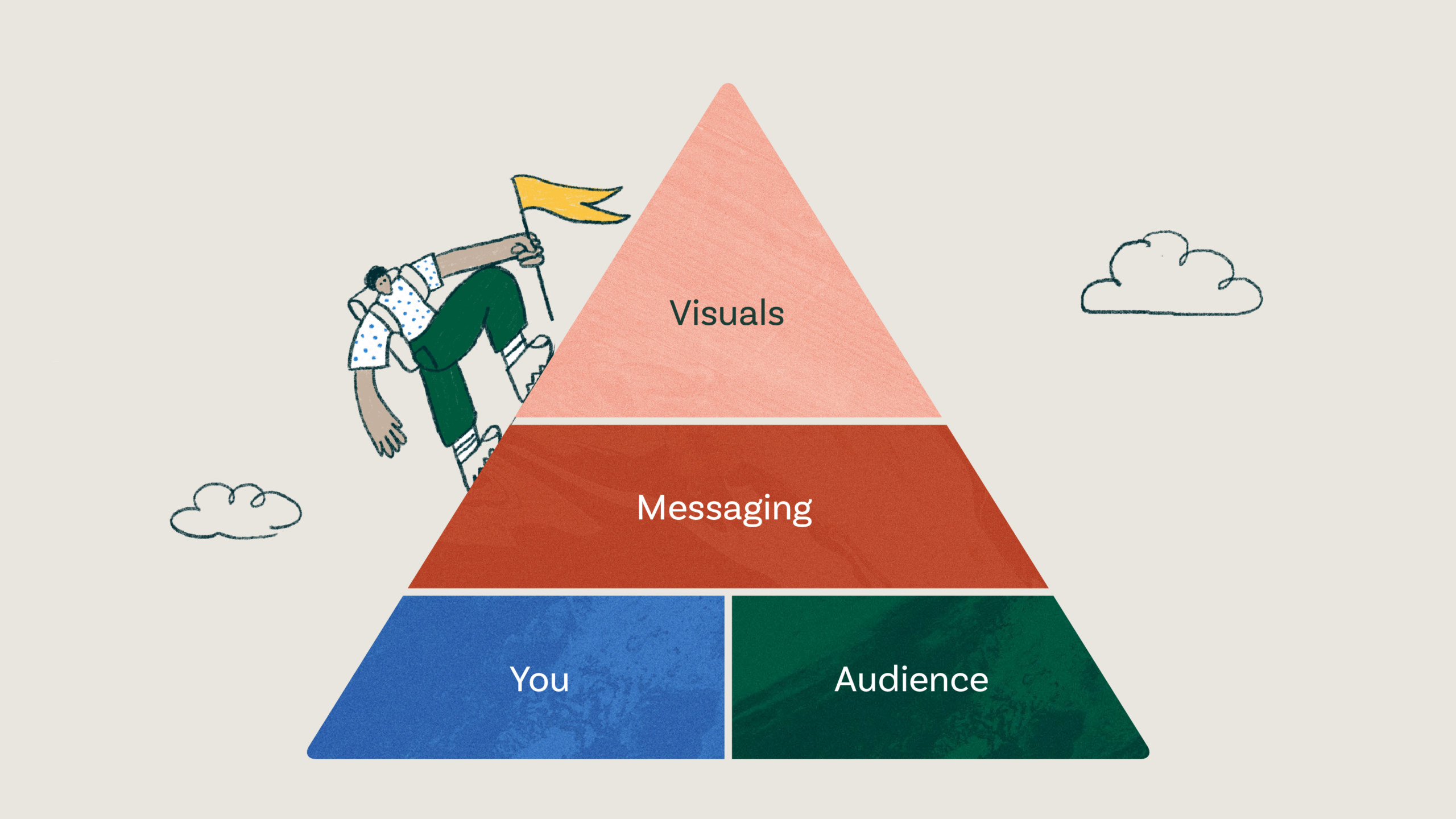
The visible parts of branding will always get the most attention because they are easiest to see. But the success of a brand depends on the work underneath: the clarity, messaging, visual language, tools, and internal adoption that allow an organization to show up with consistency and confidence.
Handled well, branding does not just change how an organization looks. It helps the organization better understand itself, express itself, and move forward with more focus.
Modernizing a Legacy Brand Without Losing Your Roots
The Tension is Real, and it’s Justified
There’s a particular kind of tension that shows up when an association starts talking about a rebrand. Leadership can see the gap. The brand hasn’t kept up, it feels dated, and it no longer reflects the quality of the organization or resonates with newer members the way it once did. At the same time, there’s a real hesitation to touch it. The logo has often been around for decades, and it carries meaning. For many members, it is not just a visual mark. It represents a long-standing relationship with the organization and, in some cases, is a part of their professional identity.
Rebranding a legacy organization, then, is not just a design exercise. It is a strategic decision that influences how people perceive the organization, how they connect with it, and whether they continue to feel a sense of ownership. Most of the concern is not about whether the new design will be good. It is about whether it will be accepted.
What often gets overlooked in that hesitation is the assumption that there’s no real cost to waiting.
If the brand isn’t working, it is already affecting the organization. It shows up in member attraction, retention, and engagement, but often in ways that are hard to see or measure directly. The organization becomes less relatable. It starts to feel out of touch.
Over time, that compounds. Organizations that avoid evolving their brand don’t stay relevant. They fade away. They become easier to ignore, harder to connect with, and less relevant to the people they need to reach. And when that happens, it raises a more practical question. Who wants to join, get involved, or associate their own personal or organizational brand with something that feels stale or neglected?
Those concerns about change are valid. But avoiding it comes with risks of its own.
Our Take on Branding
At Position, we define a brand simply: “A brand is a consolidation of what people think – their perception of you, your product, or service.”
“A brand is a consolidation of what people think – their perception of you, your product, or service.”
It’s not just a logo or a tagline. The contents of your brand guidelines do not define your brand. They are tools used to guide, shape, and inform how your organization shows up in the real world, in a well-informed attempt to influence perception.
That distinction matters because it changes how you approach the work. We believe, “Branding is the process of discovering and articulating your identity.”
“Branding is the process of discovering and articulating your identity.”
Crafting the verbal and visual language of a brand is about translating who you are into a language that speaks to your audience. It’s about identifying what makes the organization meaningful and expressing that clearly and consistently.
When a brand is thought of as just a logo, it becomes a conversation about taste. People debate what they like instead of what the organization needs. That usually leads to safer, more subjective decisions, and in the end, the brand may change visually without improving how it connects or performs.
For legacy organizations, that risk is amplified. You’re not starting from scratch. You’re working with decades of brand equity, reputation, and trust. When decisions are driven by preference instead of purpose, it becomes easy to overlook what made the brand meaningful in the first place. The goal is not to replace that. It’s to better express it in a way that resonates with the audience you need to reach today.
There are Three Reasons to Rebrand
Once the definition is clear, the next question becomes whether a rebrand is actually needed, and if so, why.
In most cases, the reasons tend to fall into three categories.
- Something fundamental has changed. The “what, why, or how” of the organization is different. Services have evolved. Delivery has changed. In some cases, the organization has fundamentally redefined its role. A brand built for the past version of the organization can’t accurately represent what it has become.
- Who you serve has changed. The audience is different, or it behaves differently. Longtime members may be retiring, while newer generations come in with different expectations. They are digital natives. They’ve grown up with well-designed products and experiences. The bar for how organizations communicate and present themselves has been raised.
- The brand is no longer performing. It may feel dated, unclear, or disconnected from the organization it represents. It can struggle to function across modern channels or communicate effectively in a competitive environment. Over time, incremental changes and iterations often drift away from a shared strategy, leading to confusion.
In our work, this third scenario is the most common, and it’s usually diagnosed correctly. Organizations can feel when the brand isn’t holding up, even if they can’t always articulate why.
Sometimes it shows up in practical ways. When we worked with the California Society of Anesthesiologists, the logo was designed for a simpler time. It didn’t scale well, didn’t reduce cleanly, and didn’t function in digital environments. The issue wasn’t strategic. It was practical.
In other cases, the change is more structural. Downtown Sacramento Partnership was undergoing a significant shift, refocusing from serving a more traditional base of property owners to attracting younger, more entrepreneurial residents seeking an active, urban lifestyle. That required a full rebrand, not just an update.

And sometimes it’s a combination. Visit Sacramento had expanded its audience and its marketing of the destination. The existing brand was well-liked, but it no longer reflected who they were trying to reach or how they were positioning themselves. The “what” and the “who” had evolved, and the brand needed to follow.
When one or more of these conditions are present, the brand is no longer doing its job. The question is not whether to change, but how.
Cleanup vs. Evolution vs. Redesign
Modernizing your brand is not a single, fixed approach. There are different levels of change, and choosing the right one depends on what the organization actually needs.
Redesign
In some cases, a full redesign is the right move. This typically happens when there has been a fundamental shift in the organization or its audience, and the existing brand can’t stretch to accommodate it. Here, you are rebuilding the brand as a system, including positioning, messaging, and visual identity.
Evolution
In legacy organizations, the right approach is often brand evolution. This is where the core ideas of the brand are still strong, but it isn’t firing on all cylinders. The goal is to modernize, refine, and expand what exists without throwing away the equity that has been built over time. This doesn’t necessarily mean the work is quicker or easier. In many cases, it is more challenging because you are working within inherited constraints while trying to move the brand forward.
Cleanup
At the most tactical level, there is brand clean-up. This is focused on functionality rather than strategy. A logo needs to function across modern environments, scale cleanly, and meet accessibility standards. These are practical considerations that can be addressed without rethinking the brand visuals at a strategic level.
The challenge is that organizations often default to the simplest option, even when the problem is deeper, or they jump to a full redesign without understanding what should be preserved. The right decision is usually made after the discovery process, when there is clarity on what is working, what isn’t, and where the opportunity lies.
Everything but the Brand
When working with a legacy brand, the process around the work is as important as the work itself, and in many cases, it matters more.
A legacy brand should be handled with care. It represents years, sometimes decades, of accumulated equity and trust. For members, it can feel personal.
Where rebrands tend to struggle is not just in the design, but in how the organization approaches the work. When branding is treated as a marketing initiative instead of an organizational one, it often doesn’t get the level of attention or alignment it requires. The right people aren’t involved. The perspective is too narrow. And the outcome reflects that.
That usually shows up early. Before any design work begins, there’s already a lack of clarity around why the rebrand is happening and what it needs to accomplish.
Because of that, the first step is not design. It’s alignment.
You need to clearly explain why the organization is undertaking a rebrand. This is not about dismissing the existing brand or suggesting it is “bad.” It is about positioning the organization for the future and making sure it can continue to connect with members in a changing environment.
From there, involving members and stakeholders in discovery becomes critical. Discovery is not just about developing a deeper understanding of the organization, the audience, and the challenge. It is also about giving people a voice.
Surveys, focus groups, and interviews create space for different perspectives to shape the direction. When people feel like they have been heard and that their input has contributed, they are far more likely to support the outcome and, in many cases, help champion it.
Nailing the Brand
When it comes to crafting the brand, there is a level of balance and finesse that is difficult to get right without experience.
How much of the organization’s history should be retained? How far should the brand be pushed to better reflect the future? What elements should carry over, and which should be left behind? These decisions define the work, and they are rarely straightforward.
In branding, we are looking for “what has always been true, is true today, and will be true in the future.”
“what has always been true, is true today, and will be true in the future.”
When you can identify this core truth and articulate it in a way that feels native to the organization and relevant to the audience, you have the foundation for a strong brand. With legacy organizations, there is added importance placed on understanding what has always been true. That history need not be a constraint. It should be an asset.
A common mistake at this stage is assuming those answers are already known. Teams often come in with an idea of which elements to carry forward, based on assumptions or a handful of conversations. In practice, those decisions require more rigor and should be informed by research, not just assumptions and recollections.
The messaging system needs to speak to the current audience without losing the values that have carried the organization forward. Visually, the same balance applies. Carrying forward one or two intentional elements can create continuity while allowing the brand to evolve in a meaningful way.
Avoiding the Half-Step
One of the most common ways rebrands fall short is by only addressing part of the problem.
The most common version of this is launching a new campaign rather than addressing the brand itself. Organizations know something isn’t working, but a full rebrand feels like too much risk, so they try to reframe the organization through a campaign. It creates a shallow, temporary lift, but the underlying issues remain.
The second common half-step is redesigning the logo without addressing the messaging behind it. The visual changes, but it’s not backed by meaning and narrative. The brand may look more current, but it doesn’t connect any better.
A brand works as a system. Its effectiveness comes from the alignment between how it looks, how it sounds, and how it shows up across touchpoints. If the goal is to modernize in a meaningful way, the work needs to be cohesive and complete enough to resolve the issue it aims to address.
A More Grounded Way to Move Forward
One of the most common misunderstandings in a rebrand is treating it as a marketing initiative instead of an organizational one.
As a reminder, “A brand is a consolidation of what people think – their perception of you, your product, or service.”
That perception is shaped by more than messaging or design. It comes from how the organization operates, what it prioritizes, and how leadership shows up. If the rebrand isn’t aligned with that reality, it struggles to hold up over time.
At the same time, avoiding the work or only addressing part of it carries its own risk. Brands that aren’t evolving don’t stay in place. They become less relevant, less relatable, and harder to connect with.
Modernizing a legacy brand is not about abandoning what made the organization successful. It’s about understanding it well enough to carry it forward. Whether the right approach is a full redesign, an evolution, or a clean-up, the decision should be grounded in a clear understanding of what has changed and what hasn’t.
Handled well, modernizing a legacy brand doesn’t break from the past. It builds on it, aligning what has always been true with what the organization needs to become.
10 Tips to Attract, Retain, and Engage Members
As an association leader, your communication priorities vary from day to day. But each initiative serves a central goal: To attract, retain, and engage your organization’s membership. Along with ensuring your existing membership remains active, engaged, and connected to your mission, you need to drive interest from the next generation. If you can’t meet these goals, you’re placing your association’s long-term health at risk.
Fear not. You have an assortment of options to leverage your brand and website toward meeting these priorities. Here are a few tips on how to effectively deploy each to your advantage.

Attracting New Members
According to a 2023 study, nearly half of the workforce is now made up of Millennials or Generation Z. As Baby Boomers continue to retire at a rate of 10,000 people per day, you must ensure your association and its marketing is set up to connect with a younger population of digital natives. The following tips will help your organization do just that.

Audit Your Brand Promise
The next generation of members won’t join your association simply because one of their older coworkers did, or it has been a tradition in your industry. These new members are drawn to organizations and brands whose values align with theirs. Engage with your board and internal departments to review your brand’s identity, core values, and how they are expressed to ensure they capture who you are and what you do.
Ensure Your Visuals Reflect Your Audience
Photos on your website and brand collateral help prospective members visualize themselves in your organization. If your association aims to attract a younger and more diverse membership, the images must reflect those goals to help your target audience feel seen and welcomed.
Just as importantly, design elements such as color choices communicate subtle signals about your brand. Make sure these visual cues accurately reflect your identity to prospective members.
Express Your Association’s Value with an Animated Explainer
Your organization needs to capture the attention of prospective members, and video enables you to communicate the value of your association in a more powerful and engaging way. You can take these videos to the next level. It’s a great way to communicate complex or abstract concepts and help your brand stand out from your competitors. At Position, we’ve applied animation in projects for our clients to express information in a compelling and easy-to-understand way.
Leverage Social Proof
Members want external validation of your association’s value by hearing outside perspectives. Testimonials, case studies, and member success stories allow you to demonstrate the impact of your mission and build trust with your audience by showing that your association knows how to walk the talk. Consider leveraging photos or videos to make these assets more engaging.

Retaining Existing Members
Your current membership is your organization’s most precious resource. You can’t afford to rest on history or past accomplishments and expect automatic renewals. The following tips provide options for expressing the importance of retaining an ongoing membership.
Segment Email Outreach
Email is one of your biggest opportunities to communicate consistently and directly with your most valued audience. Given that an individual’s inbox is precious real estate, you have to justify this investment by providing your members with compelling, meaningful communication.
Instead of sending overwhelming newsletters that attempt to capture the full range of your organization’s activities, divide your content into distinct, interest-based emails (e.g., events, resources, advocacy, etc.) and segment your audience to ensure you’re delivering concise and relevant information. Survey your members and track their behavior through analytics to ensure you’re always delivering useful and engaging content.
Deliver Memorable, Branded Events
Galas, conventions, and conferences are key opportunities to connect with your membership and build enthusiasm for your association. Make the most of this opportunity by presenting an elevated experience that’s aligned with your brand and reflects its core identity.
A thoughtfully branded event, signage, digital programs, and microsites are just a few ways to ensure your next event will make members feel inspired and excited about your association. A professionally designed event that embodies your brand will ensure your members (and sponsors) remain engaged year after year.
Organize and Elevate Your Website
Your website acts as the front door and an ongoing resource for your association. You need to ensure every element is designed to engage members and serve their needs.
A cohesive, well-organized website will clearly express the benefits of membership and connect members with valuable resources. A member portal provides a great way to deliver exclusive content and underscore the benefits of joining your association.

Engaging New and Current Membership
Active and energized members aren’t just more likely to renew. They’re also better equipped to act as advocates for your association. Consider these tips for building a stronger connection with your members.
Provide Intuitive and Useful Member Experiences
Keep members coming back to your website by supplying a valuable resource of industry knowledge. Review how you’re filtering content in your resource library while also ensuring every aspect of your website’s user experience is clear and easy to navigate. Members should be at the center of how you design and curate your association website.
Seek Outside Expertise to Enhance Your Next Event
Conferences or galas that replicate the same old experience each year will grow stale among your membership. Inviting a fresh creative perspective to your event site visit will allow you to unlock new opportunities to maximize your location’s potential and keep your members engaged with your association.
Improve and Automate Member Onboarding
Attracting new members is part of your organization’s mission — but your work doesn’t stop there. Developing an engaging onboarding process that’s smooth and welcoming to new members lays the foundation for a positive and lasting partnership.
Set up a drip email campaign to guide members through onboarding by providing clear instructions for the next steps. Offering orientations, welcome packets, and personalized messages will help your newest members feel part of your association’s community from the start.
Want to know more about how your association’s brand and website could do more to connect with members? We’re ready to get started.