

Why You Need a Creative Perspective at Your Event’s Site Visit
Your members and sponsors have an array of options for how they invest their time and money when it comes to events. They want to be part of an event that attracts high quality attendees and delivers can’t-miss experiences. Long before your event, you meet with your team, tour the venue, and evaluate how it will function to suit your needs. To take your event from good to great, you need your next site visit to maximize the potential of your event.
To draw the richest insights from a site visit, you need the perspective of a creative team on-hand. By viewing the venue through their perspective, they can unlock new opportunities, beyond what you could imagine, for your event.
Successful Events Demand a Balance of Perspectives
A site visit is a crucial early step in planning your event experience. Once planning begins, you meet with your event planner, facility manager, and the AV specialists at the venue site. You’ll likely also have many of your stakeholders in attendance, such as executives, volunteer leaders, and vendors. All of these individuals offer a different perspective that contributes to a successful event.
These tactical conversations are vital to managing the details that make up any event. However, your site visit also presents a key opportunity to incorporate the viewpoint of a creative team. One who will consider all aspects of your event branding and in-person activations through two critical perspectives:
- What do your members need?
- How can the venue better serve your organization’s goals for the event?
Your organization depends on its events to deeply engage members, and form relational bonds, and underscore the value of your membership. A creative agency like ours will view your event’s venue as a blank canvas rich with opportunities and ensure your event delivers an elevated, branded experience. It’s time to incorporate a creative perspective to reimagine your event experience.
Consider the User Experience (UX) Design for Your Event
User experience (UX) design, similar to event design, revolves around tailoring an experience to meet the requirements of its users and ensuring its seamless functionality. It is essentially a problem-solving approach that places the needs of your attendees—the members—at the forefront. Moreover, just like an external design partner would approach your event, UX design principles can be applied effectively to enhance your event experience.
In both virtual and physical spaces, UX designers define the audience and empathize with what they need to do. Then they identify problems and eliminate any barriers standing in your audience’s way. The UX process challenges pre-existing assumptions about your event to open the door for new ideas to solve those problems.
You need to apply the same well-honed approach of UX design to your event location. Considering every moment from your attendees arrival through the entire event experience, your external design partner should stand in your members’ shoes and recognize potential challenges. The right creative partner will see details about your event during a site visit that would go unnoticed by merely viewing a venue’s website or photo gallery.
3 Key Considerations for Every Site Visit
A positive user experience at your event allows your members to stay focused on your organization’s message without distractions or negative impressions. These three important details are just the start of what your design partner will consider when touring your event site.
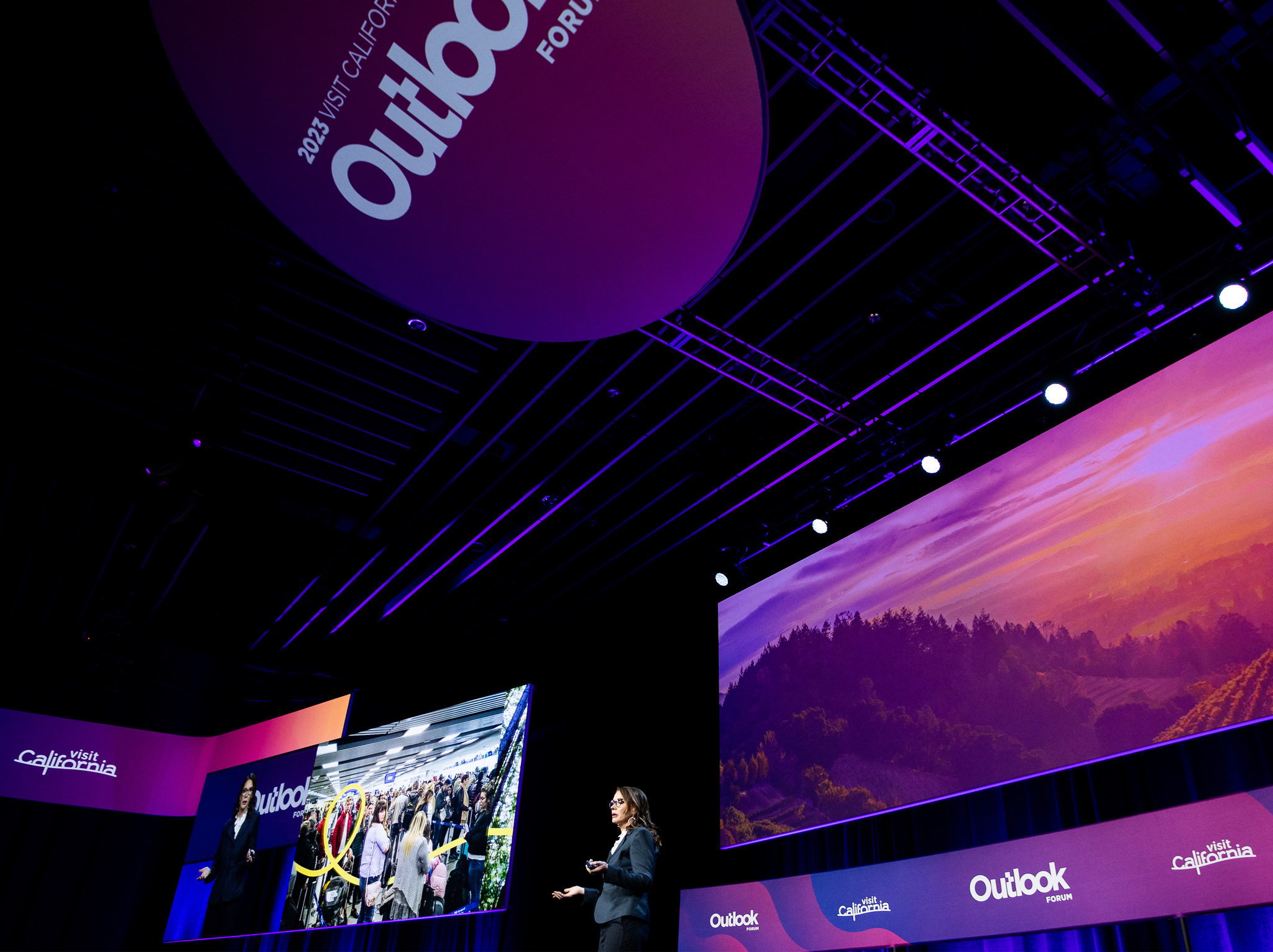
1. You need to understand your space from every angle.
To make the most of your site visit, your team should tour the space at the same general time that your event will take place. Does the venue stand on its own from a visual standpoint, or does it need additional elements so your members immediately recognize they’ve come to the right place? Is the décor highly ornate in a way that will clash with your on-site branding? Adding branded graphics or redirecting attention from elements that don’t align with your brand will create an environment that’s cohesive and consistent with the goals of your event.
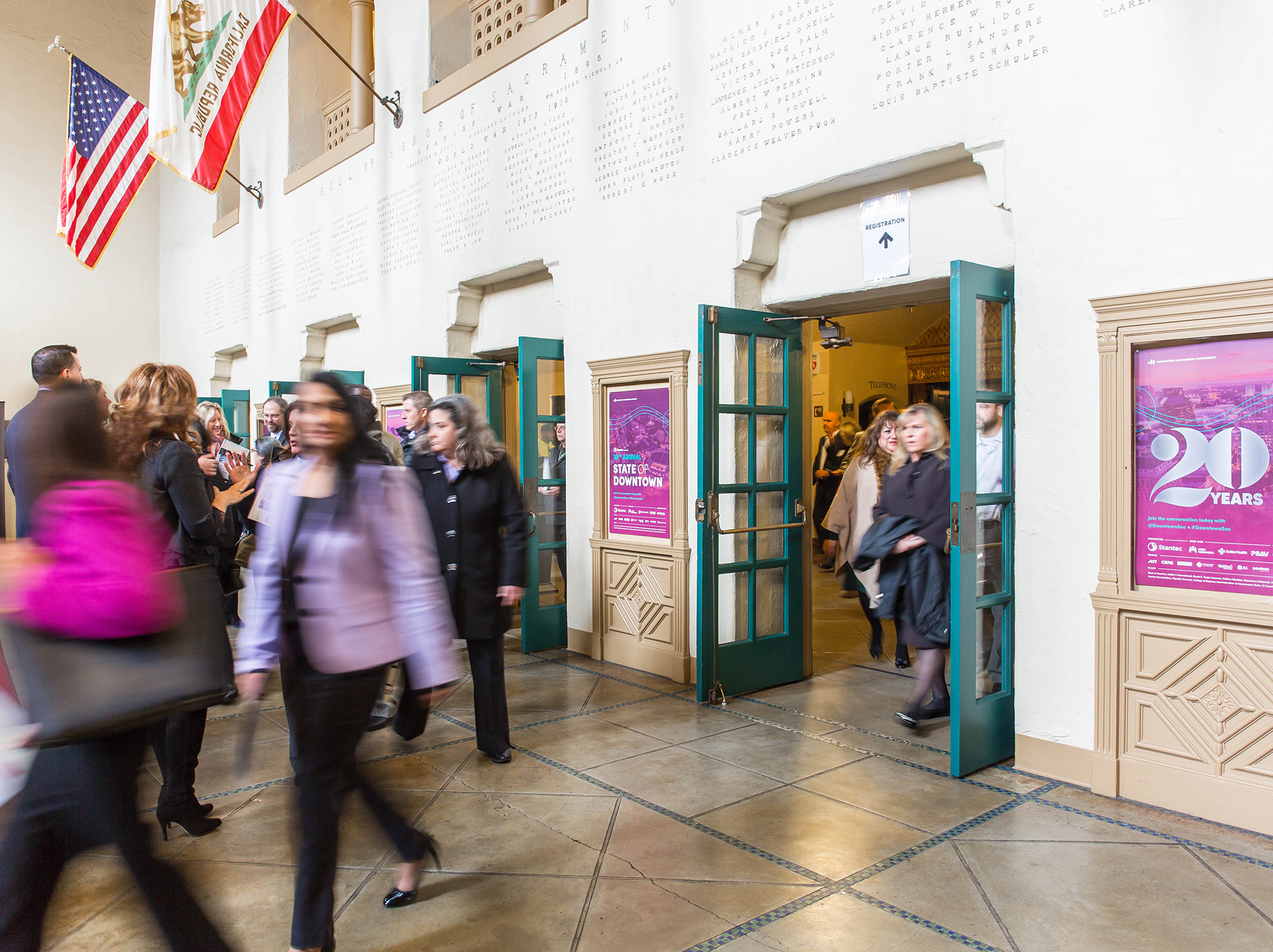
2. Remember no one wants to feel lost or confused.
In the same way website users shouldn’t question what they need to do when they arrive on a page, your attendees should always understand where they should go next. Whether your event begins once they arrive at the hotel or convention center, the addition of impactful branding gives your members the confidence they’re on the right path.
Your event planner will resolve any issues of wayfinding. But your design partner builds upon those guiding details in a branded, elevated way that’s impactful and creates a sense of place.
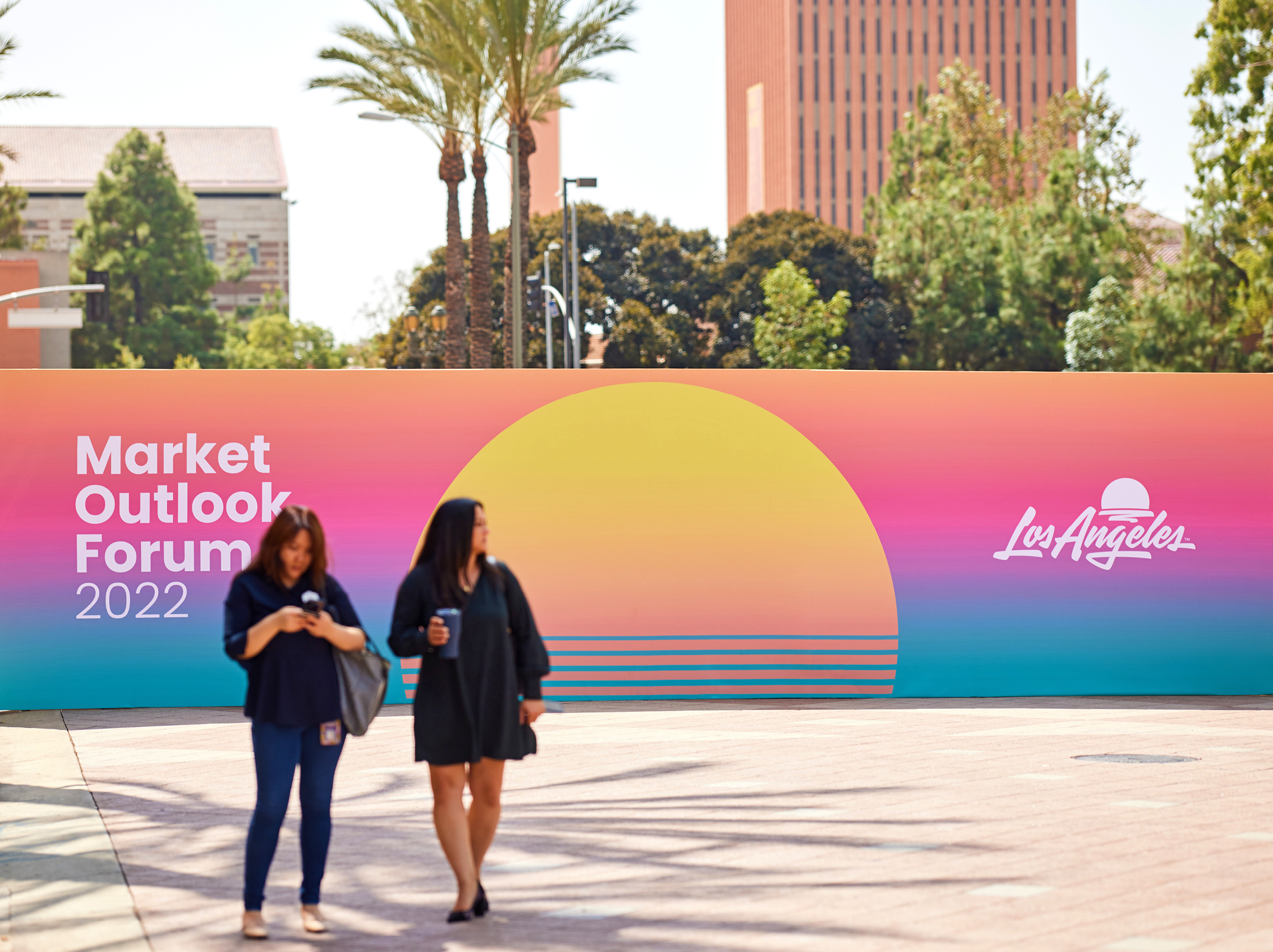
3. Welcoming your guests — in a big way — is crucial.
Your event needs a meaningful moment to underscore that your members have arrived. This is your chance to surprise and energize your most valuable audience with an experience that’s unmistakably representative of your organization — and your brand.
Whether you’re trying to create a sense of place or generate excitement upon your guest’s arrival, first impressions are everything.
How a Well-Branded Event Creates FOMO for Your Next Event
Bringing a creative team to your site visit does more than ensure your organization seizes every opportunity to create an innovative experience. It also results in events that generate the kind of buzz that improves attendance and boosts sponsorship rates for the following year.
Your members should view your organization’s event with a sense of FOMO — the fear of missing out. Creative details will establish that your organization has placed its distinct stamp on the event venue. Branded giveaways that connect your brand to the event experience offer another means of creating a positive buzz.
FOMO isn’t easy to generate, but when every aspect of your event experience combines to deliver that special feeling, your event becomes much more attractive for members. Plus, your sponsors take notice when attendance and the surrounding experience becomes more elevated, which leads to greater financial opportunities.
Bringing your creative team on a site visit constitutes an additional investment. But in the context of engaged, excited members and a more profitable event for subsequent years, it’s an investment in a brighter future for your organization.
What Goes into Creating an Elevated Branded Event — and How to Stay on Schedule
Conventions, annual conferences and galas are make-or-break deadlines on your calendar. These events provide a pivotal connection point between the services you provide and the members you serve. Each aspect of your event presents an opportunity to make a positive impression on your most important audience.
A memorable, impactful event doesn’t happen by accident. The amount of time and resources required to create an elevated event will vary depending on your goals. What remains consistent is your need to produce the kind of branded experience that delivers value for your members.
Organizations Need a Head Start on Planning Branded Events
You need to incorporate enough time in your schedule to create the kind of branded event that boosts attendance, increases sponsorship, and secures a sustainable future for your organization. An event created with a cohesive design delivers an elevated experience that fosters engagement, loyalty, and trust among members and energizes them for the year ahead.
Rushed, disjointed events are as stressful to host as they are to attend. Along with missing the chance to nurture a vital connection with current and prospective members, there is also the very real risk of burning out your staff when working under too tight a schedule.
How Long Does It Take to Successfully Brand an Event
Branded events require anywhere from three to six months to plan and produce. And that’s only after the procurement process with vendors is complete, and the contract is signed. This means you should get started on your procurement process up to a month or two in advance of your desired project start date.
It is crucial to allow sufficient time to deliver the assets needed for an elevated event experience. To put it simply, a branded event takes time to create because so much goes into its development.
A successful event branding project incorporates the following elements:
- Strategy
What are your goals for the event? What does your audience need? What resources are available at the venue? You and your team need to answer core questions like these to uncover the strategy for branding your event. - Messaging
A successfully branded event functions as an extension of your organization and its mission. Your event’s marketing and experience need to reinforce the core message of its purpose and your goals. - Visual design
Every visual touchpoint—before, during, and after the event—should tell a cohesive story. From logos and signage to digital assets and presentations, the design must communicate a message that reflects your brand and engages attendees. - Collaboration
From your internal team to the event planner and the venue’s AV staff, everyone needs to work together to maximize the attendee experience. Collaboration is crucial to transforming branded events from good to great.
Throughout your event’s branding process, you can’t forget to keep your internal stakeholders informed about its progress. Otherwise, you run the risk of disrupting your timeline as your board or executive leadership may demand last-minute changes.
When you’re working with the right partner, an advance site visit provides a crucial view into your event’s possibilities. Are there areas of the venue you can utilize to create a more engaging experience for your members? Even if your organization has used the same space before, a creative partner adds a fresh perspective to recognize new potential for your event’s branding.
Developing a Look & Feel That Serves Your Brand
You need more than a kitschy theme for your signage and programs to deliver a branded event that makes an impression on your members. Too often, organizations leave elements such as colors and themes up to arbitrary preferences or what approaches have been used in the past.
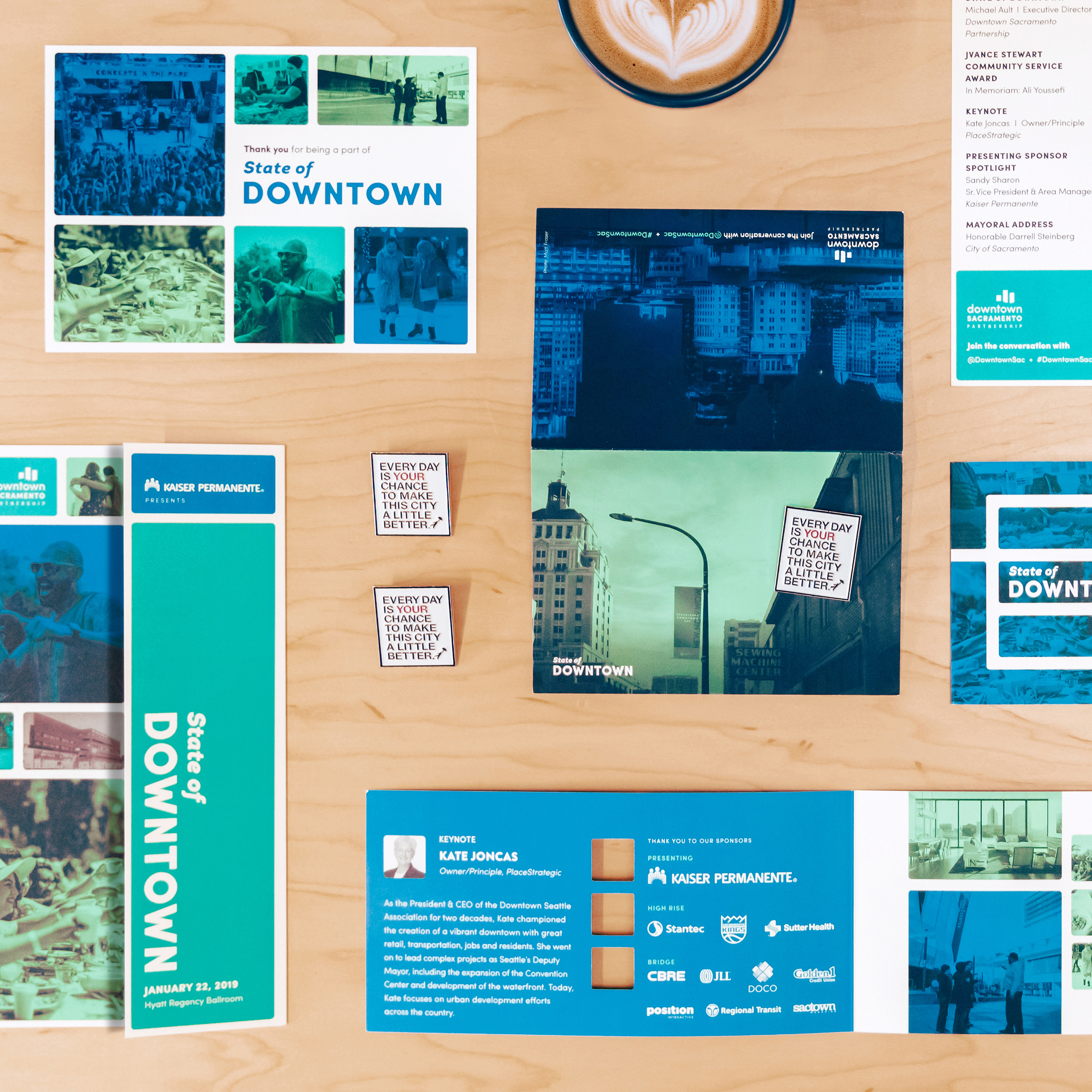
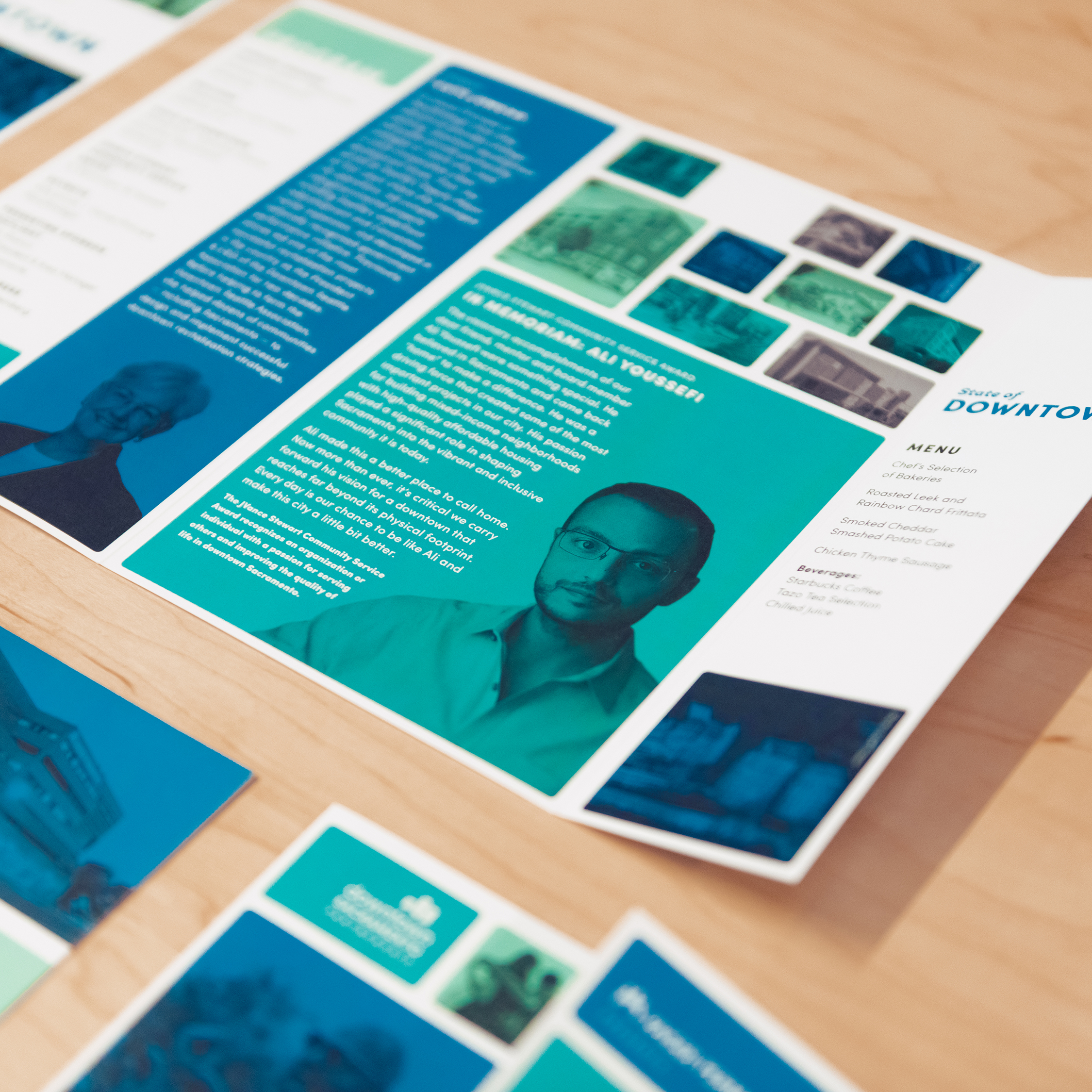
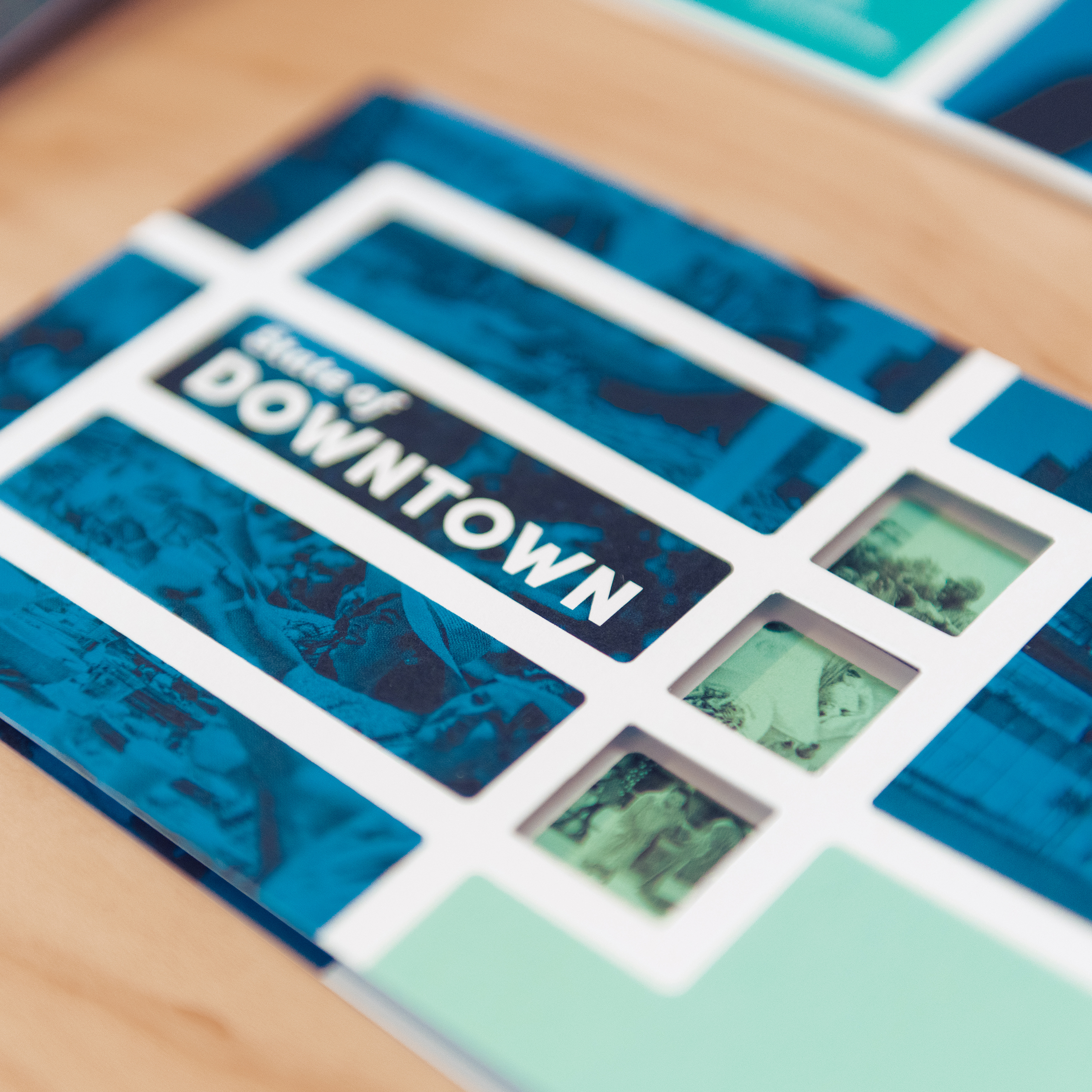

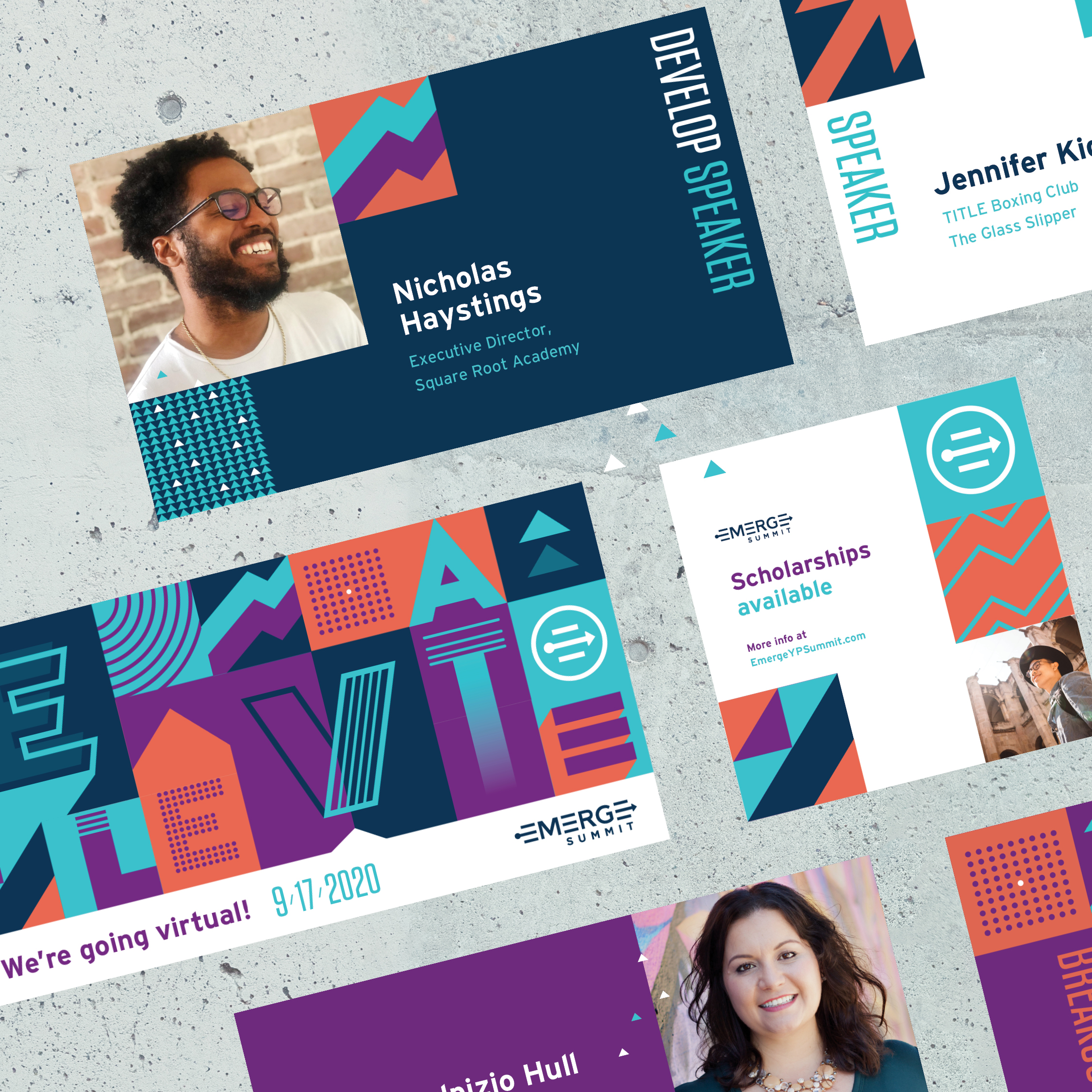
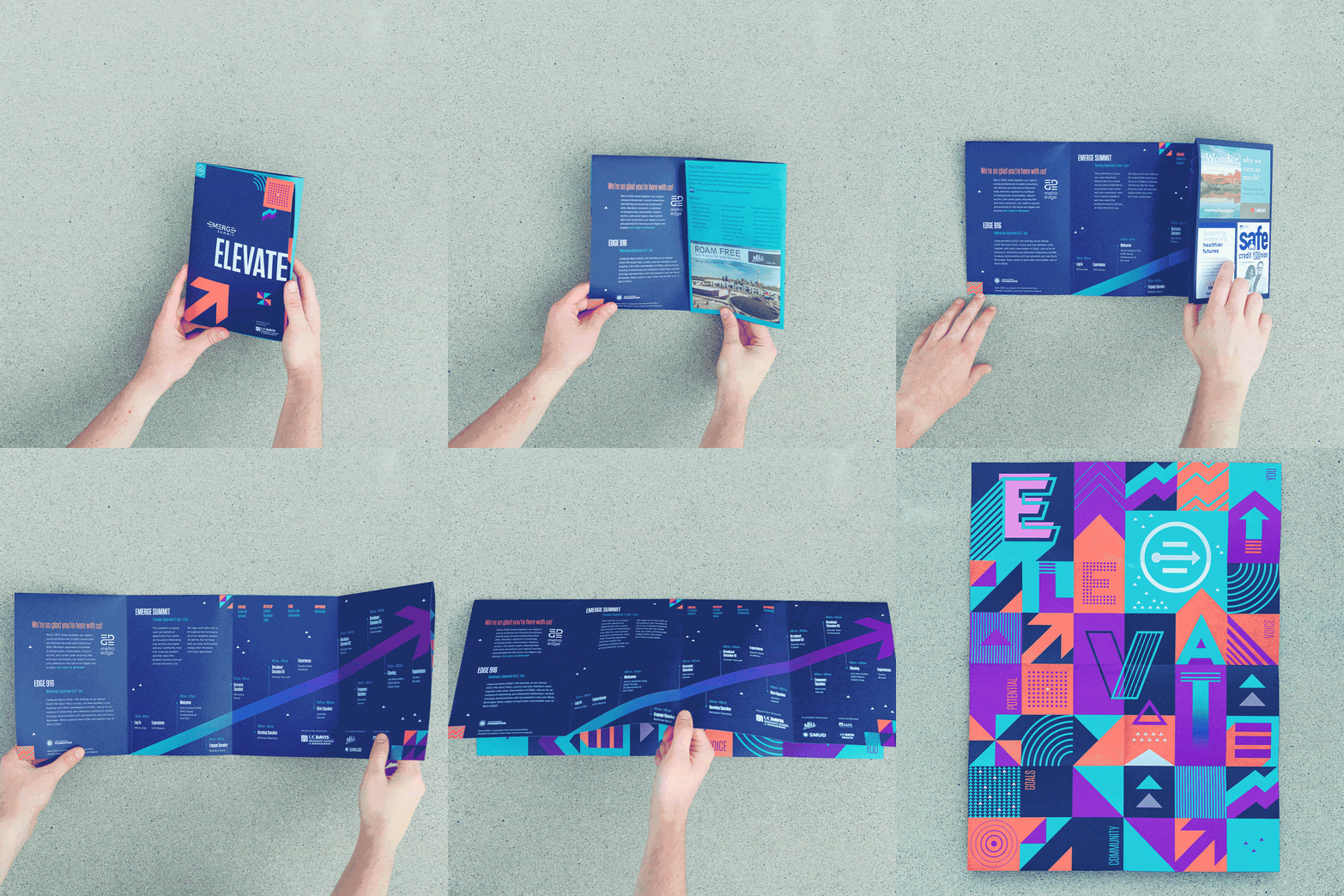
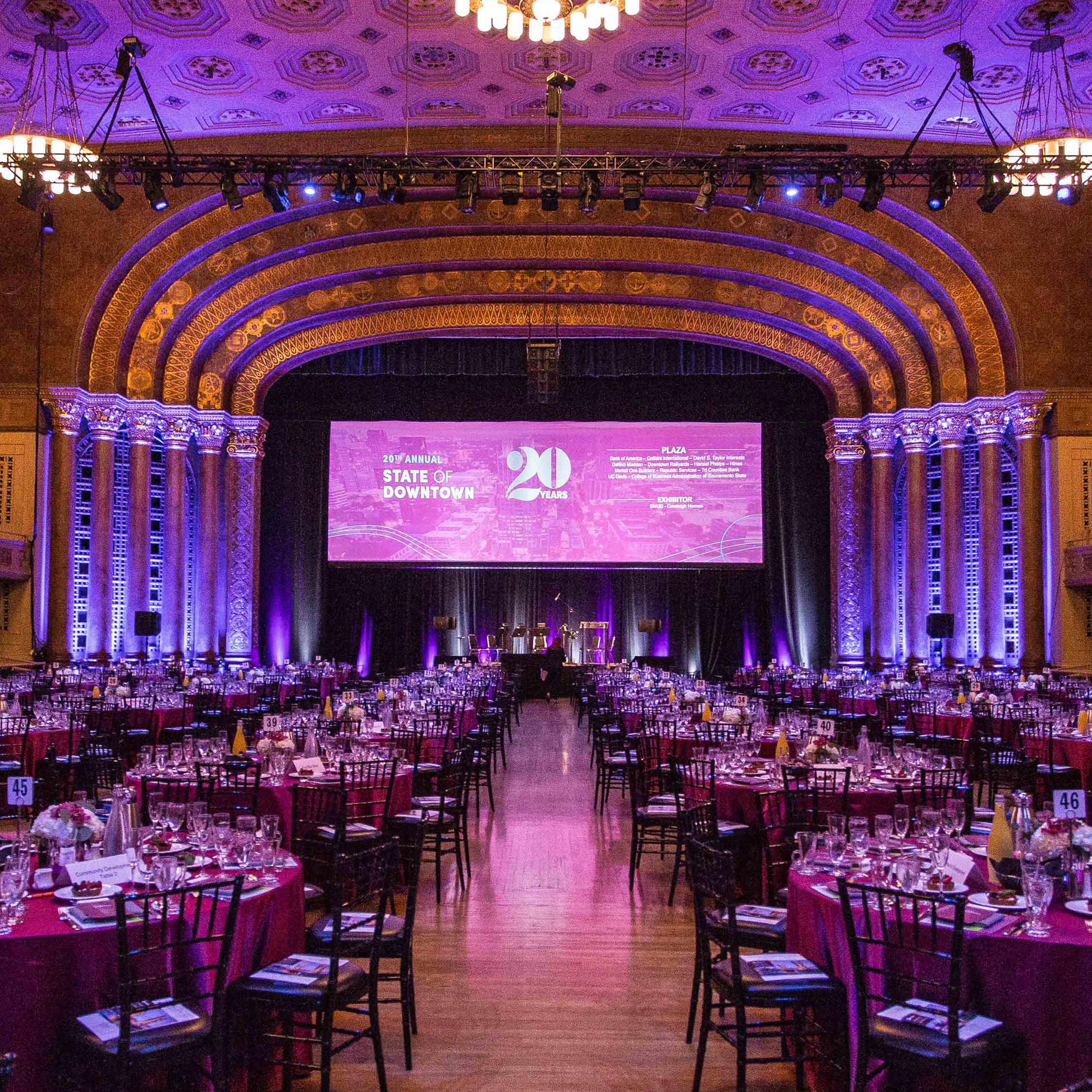
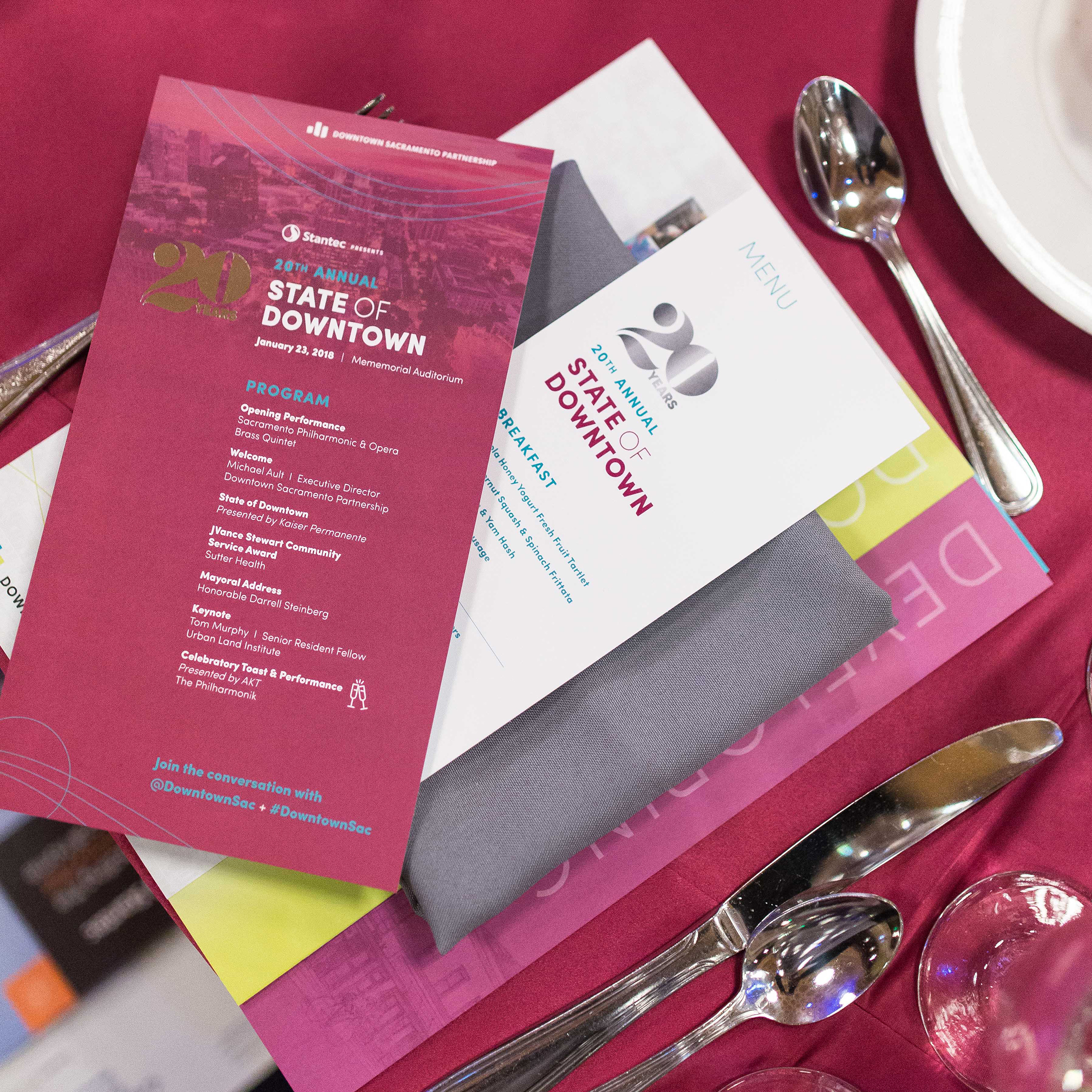
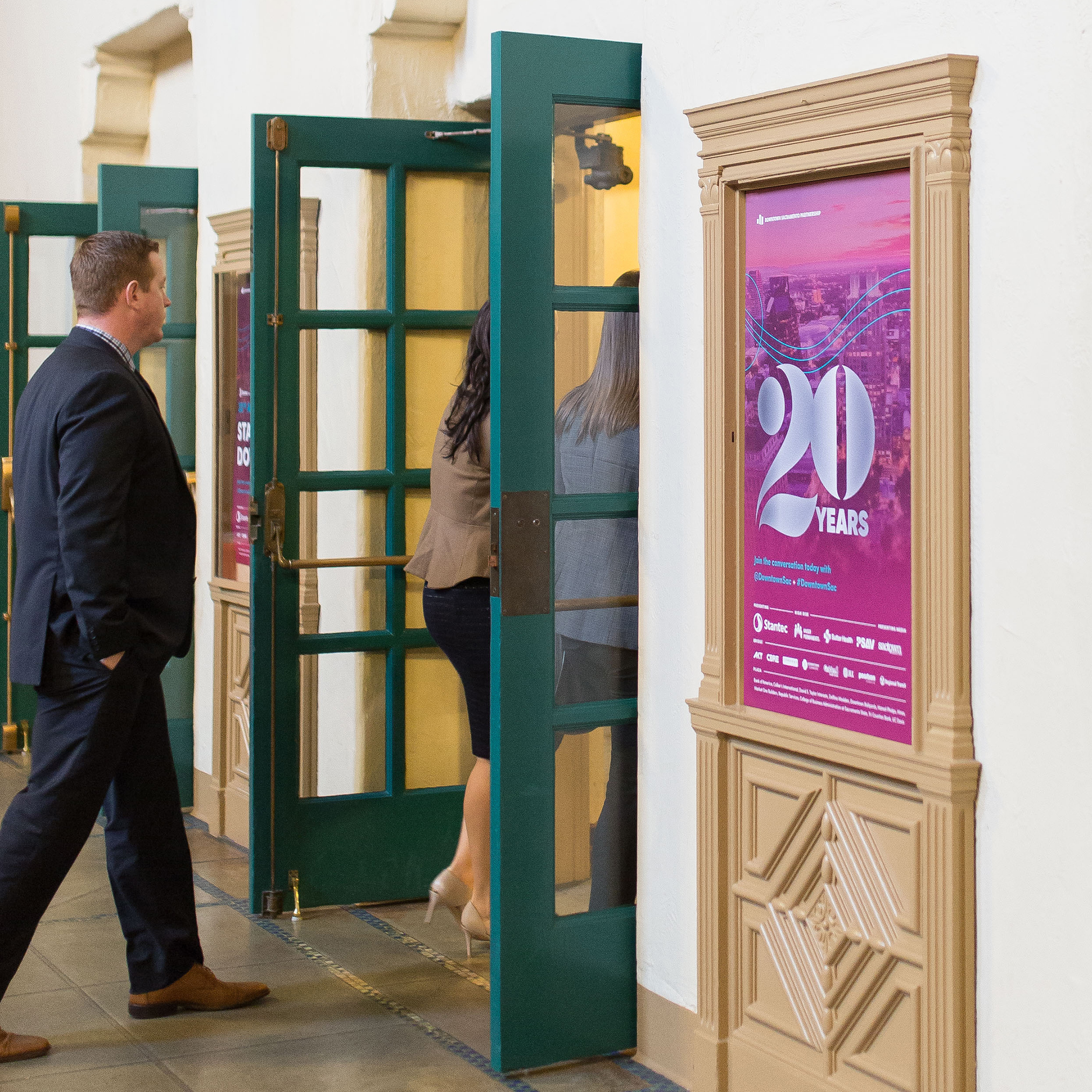
Your event should be designed in a way that’s consistent with your organization’s needs. You can’t just pull your event’s visual aesthetic out of a hat. You and your internal team can explore your options by brainstorming and concepting the framework for a branded event experience.
Designing Deliverables to Create an Elevated Event Experience
Your organization’s event can’t use a one-size-fits-all solution. The deliverables required for your annual fundraising gala won’t be the same for a three-day conference. As you and your agency collaborator develop the strategy for your event, you’ll gain a clearer view of its assets.
The right agency will also help guide your investment by figuring out the most impactful deliverables to benefit your brand. The deliverables specific to your branded event may incorporate the following:
- Sponsor sheets
- Custom invitations
- Social promotion assets
- Digital and printed signage
- Menus, dinner tickets, table numbers
- Save the date reminders
- Promotional ads
- Programs
- Presentation deck, video, & animation
- Giveaway items
Factors Impacting the Timeline for Any Branded Event Project
At the beginning of a project your agency will develop a custom plan and timeline based on your needs and availability.
The following common factors can potentially increase (or decrease) the time needed to ensure your event delivers an elevated, branded experience:
- Sponsorship deadlines
Holding back event deliverables in the hopes of landing one last sponsor creates massive headaches and unnecessary stress for your staff and vendors. Instead, include deadlines for each deliverable in your sponsor packet. This way, you’ll be able to pick up late sponsors with the understanding that they won’t be recognized in certain deliverables if they are past the deadline. - Changes in scope or your organization’s goals after discovery
Every stakeholder should be informed about the project and its progress to prevent disruptions in the timeline. Sudden shifts in requirements can easily derail your team’s progress. - Complexity in deliverables
Complex and custom branded assets and activations require more time to plan and execute, yet deliver a bigger impact. Make sure to plan accordingly and get started earlier than you think you need to get them done in a timely manner. - Lack of availability of your team or vendors
Successful branded events demand ongoing involvement from your internal team. You need to be an engaged participant to ensure your project stays on schedule. In addition, being proactive in coordinating with outside vendors to secure any assets your event needs will also protect your timeline.
5 Tips for Keeping Your Branded Event Plan on Schedule
Creating an elevated event for your organization shares the same DNA as developing a new website or any other project. Except, the stakes can be higher when it comes to your final deadlines. When your venue is booked and your members have paid for their travel and accommodations, you have no options. Your event kicks off whether all its branded elements are in place or not.
You can protect your schedule by following the following 5 tips:
- Maintain consistency in communication.
Your agency partner depends on your organization to deliver timely feedback. You should appoint a liaison that will prioritize the project and ensure that lines of communication remain open between your organization and the agency. - Stick to agreed-upon timelines.
As your project begins, carefully review the timeline and share any concerns. Conflicts such as vacations or major initiatives scheduled at the same time as the run-up to your event should be addressed to keep the project on track. - Be the leader of your team.
As the head of marketing or communications, your organization’s event is your responsibility. You should take ownership of the project by consistently thinking about the requirements before each deadline. Whether it’s sending feedback or ensuring it’s consolidated to eliminate conflicting information, you have to ensure your team plays its part. - Get buy-in from stakeholders early.
Identify project stakeholders and engage them in the discovery phase, so they feel heard and aligned with your event’s goals. Additionally, regular check-ins and progress reports can help ensure that everyone is on the same page and that any potential issues or roadblocks are addressed early on. - Create a list of critical priorities if timing is tight.
You can adjust the scope of your branded event if your organization is short on time. For example, if you’re short on time to send Save the Date announcements, you can base their designs on your corporate corporate brand rather than rushing the branding of your entire event.
Of course, without gathering all the details, your organization can’t really know the time required to transform your event into an elevated branded experience that will better serve your goals, and your members. If you’re looking to get started, we should talk about the next steps.
What Goes into Building Your Next Association Website — and How to Stay on Schedule
Securing approval to redesign your association’s website typically comes down to two questions: How much will this cost and how soon can it launch?
The answers for both questions vary, and they’re ultimately determined by your organization’s needs. But no matter how much you’re planning to spend, website projects require a considerable investment in time and effort — and you have to be realistic about both if you want a new website that will serve your association’s goals.
If your association wants a new website by a specific date, you have to understand what goes into its production. At the same time, you should know what factors impact the time required to generate the kind of website your association needs to be successful.
How Long Does It Take to Create an Association Website?
With so many factors in play, successful websites take time. Most well-executed websites require at least six to nine months to produce. And that’s only after the procurement process is complete and the contract is signed. This means you should get started on your project up to a year in advance of your desired launch date.
Hearing your new website project will take so long to design and develop can be frustrating, especially if you hoped to pair the launch with an upcoming event. But your agency needs a minimum of several months because so much planning and effort goes into creating a website.
Successful association website projects typically incorporate the following:
- Full strategy services: What are your association’s goals for the website? What does your audience need? You and your agency need to answer core questions like these to uncover the best strategy for your new website and how it’s built.
- Messaging: Your website offers members their first impression of your association and sets the standard for how you operate. You need to ensure every element of your site — navigation, design, color, and content — tells a unified and compelling story of your brand.
- Custom design: every page on your site needs a unique design that takes into account the goal of that page and aligns it with your audience and organization.
- Custom development and AMS integration: Features like single sign on, member directory, and integrations with your AMS all take time to develop and test. Similar to custom design, each page of your site needs to be built to load quickly and function as it should.
- Customized CMS: Depending on your current site and your goals, your association may be best served by a platform like WordPress. Tailoring a CMS to suit your publishing needs also requires time and effort.
Although six to nine months is an average timeline to research, strategize, wireframe, design, develop, build, test, and launch a new website, the range isn’t set in stone. There are always plenty of factors that can change your time to launch.
Factors Impacting the Project Timeline for Any Website Project
At the beginning of a project your agency will develop a custom plan and timeline based on your needs and availability.
Sample timeline
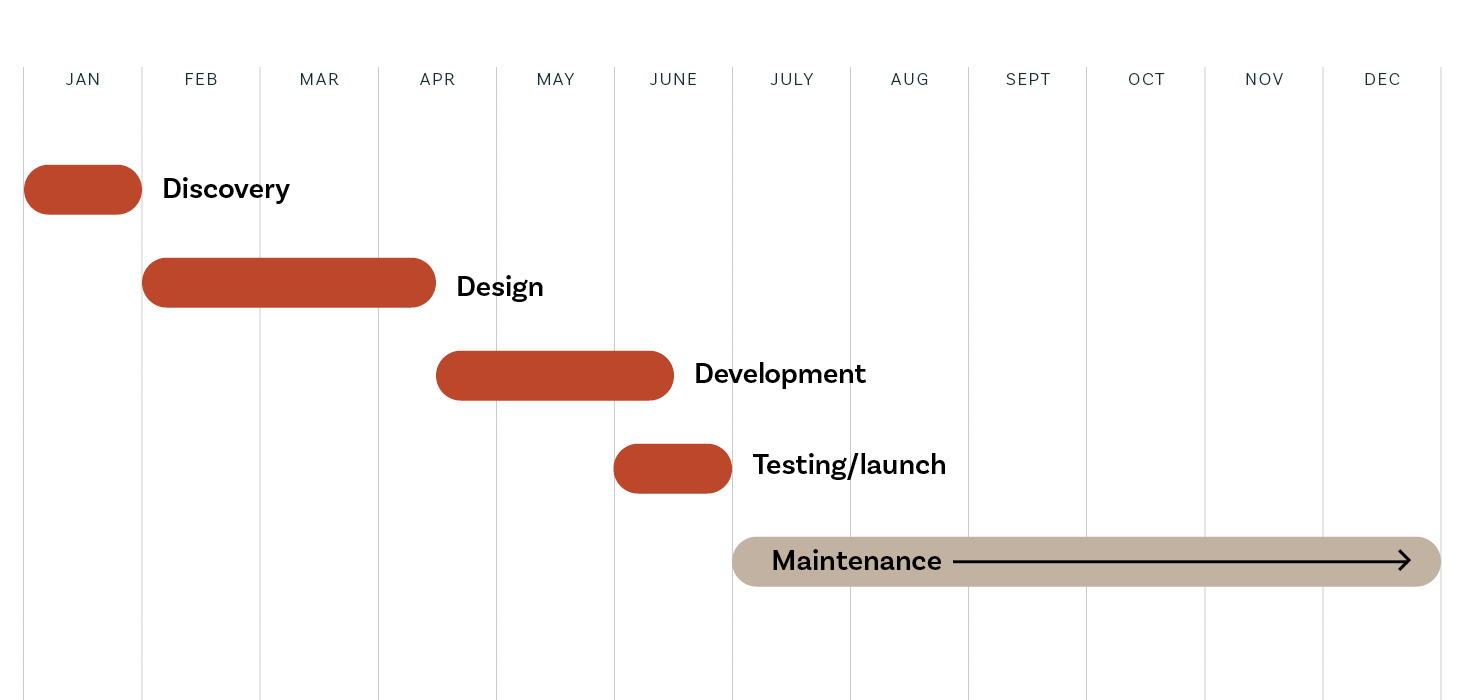
The following common factors can potentially increase (or decrease) the time needed to launch a website:
- Changes in scope or your organization’s goals after discovery: Every stakeholder should be informed about the project and its progress to prevent disruptions in the timeline. Sudden shifts in website requirements can easily derail your team’s progress.
- Complexity in custom-designed pages: If your association needs more involved assets like custom illustrations, videos or animations, those take more time to produce.
- Functionality: Complex features such as single-sign-on (SSO) functionality, AMS integration, or searchable libraries for member resources contribute to a longer project timeline.
- Lack of availability of your team or vendors: Successful website projects demand ongoing involvement from your internal team. You need to be an engaged participant to ensure your project stays on schedule. In addition, being proactive in coordinating with outside vendors to secure the assets your project needs will also protect your timeline.
5 Tips to Ensuring Your Association’s Website Launches on Schedule
Member-driven association websites require a strong strategy, user-focused design, and the flexibility to connect with external systems. And very often, that only scratches the surface of what goes into a successful launch.
If your association has a firm deadline for a site launch, you need to be realistic about what’s required. Along with allowing enough time for you and your agency to collaborate, you have plenty of other ways to protect your timeline.
You can protect your project launch date by following the following 5 tips:
- Maintain consistency in communication. Your agency partner depends on your organization to deliver timely feedback about the project. You should appoint a liaison that will prioritize the project and ensure that lines of communication remain open between your organization and the agency.
- Stick to agreed-upon timelines. As your project begins, carefully review the timeline and share any of your concerns. Conflicts such as vacations, events, or major initiatives scheduled at the same time as your website project should be addressed to keep the project on track.
- Be the leader of your team. As the head of marketing or communications, the website is your responsibility. You should take ownership of the project by consistently thinking about the requirements before each project deadline. Whether it’s sending feedback or ensuring it’s consolidated to eliminate conflicting information, you have to ensure your team plays its part.
- Get buy-in from stakeholders early. Identify project stakeholders and engage them in the discovery phase, so they feel heard and aligned with the goals of the project. Additionally, regular check-ins and progress reports can help ensure that everyone is on the same page and that any potential issues or roadblocks are identified and addressed early on.
- Create a list of launch-critical priorities if timing is tight. By considering your most important needs for launch, you can launch with your core priorities addressed and then work toward subsequent improvements post-launch.
Of course, without gathering all the details, your association can’t really know the time required to take your website from where it is now to where it needs to be. If you’re looking to get started, we should talk about the next steps.
3 Questions You Should Answer Before Launching a Capital Campaign
Major fundraising campaigns for special initiatives are too important to treat as a rush job. They deserve the same care as any of your organization’s marketing projects. By dedicating the right amount of time and strategic focus to a capital campaign, your organization, and its fundraising have much stronger chances of reaching your goals.
3 Keys to a Successful Fundraising Strategy
Often, these initiatives are integral to your organization’s ongoing success and, in some cases, survival. However, before you approach a single prospective donor, you have to dedicate the right resources to creating a plan.
Your plan needs to address the following 3 questions to be effective:
1. How Will You Tell Your Organization’s Story in This Context?
Prior to starting any work on a capital campaign, you need to set the right foundation. Your audience has to understand where their money is going and why your organization needs their support. Then, you can focus on creating a specific request for a donation.
From the beginning, you need to identify the goals for your campaign and the specific audience you’re targeting for help. Once those details are established, you can define the messaging and tactics that will deliver the results you need.
For example, an organization of farmers was working on an advocacy campaign. Their work involved a wealth of details that drew a connection between agriculture and the food supply of local salmon.
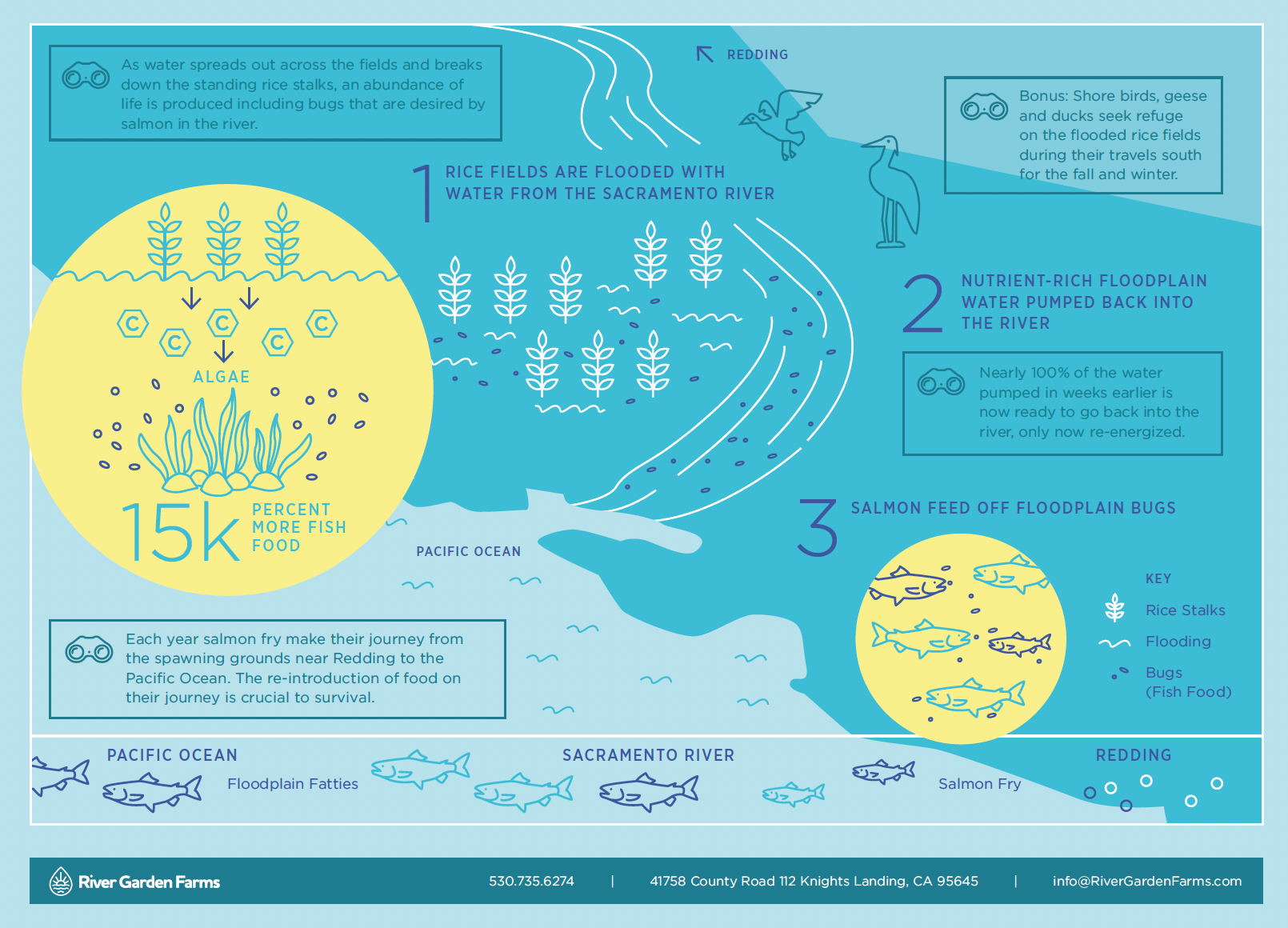
Legislators aren’t a technical audience, and the disjointed nature of their day-to-day work limits their attention span. Rather than attempting to communicate every detail of the issue to these lawmakers, the organization worked with Position to create a simple illustrative leave behind visually communicating their point.
Defining what you’re trying to say and then crafting your message in a compelling way is crucial to any fundraising initiative. With a critical fundraising goal approaching, your nonprofit or member-driven organization may be best served by bringing in an outside marketing perspective. This can ensure the story of your campaign is told in a unique and compelling way.
2. What Are the Right Tools to Support This Fundraising Goal?
The right assets will tell your campaign’s story in a way that’s unique and memorable. Each asset serves as a way for your organization to build a case for giving at every step of the way.
Your capital campaign should help the audience imagine the results of their involvement and investment. Architectural renderings are the cornerstone of any capital campaign for a new building, but how do you take them to the next level? Adding your prospective sponsor or donor’s name/logo to the renderings helps make their investment tangible. Including the renderings in an immersive animated video, takes it to the next level. Weaving storytelling and renderings into a game-changing tool.
The right assets form the foundation of a donation conversation. Capital Public Radio effectively used this animated video in their fundraising campaign for new headquarters and performance facilities.
For a video asset, your organization can cut multiple versions for several purposes, such as creating a shorter clip for an email campaign, social media or paid ads. Then, you can use a longer, more detailed video to accompany fundraising meetings.
After asking for a donation, you can incorporate other assets that will work passively on your organization’s behalf. Inspirational microsites or leave-behind brochures are just two ways for your organization to continue the conversation.
When you’re working with the right agency partner, your choices of deliverables don’t simply come down to generating a suite of well-designed deliverables. Ultimately, the goal is to figure out how to maximize your efforts and make your fundraising more effective.
3. Does Your Budget Reflect the Level of Impact You’re Looking to Achieve?
Whether your organization is planning a capital campaign to support new facilities, political advocacy, or another mission-specific goal, the initiatives are often outside your marketing budget. Consequently, you may view the expenses associated with its promotion as a cost that needs to be minimized. Instead, you should view your fundraising marketing as an investment in your organization’s future.
The right level of investment for your capital campaign depends on what your organization is trying to achieve. Ultimately, you should invest in a marketing strategy that’s consistent with how much you need to raise. As discussed in this popular TED Talk by Dan Pallotta, “Too many nonprofits, he says, are rewarded for how little they spend — not for what they get done. Instead of equating frugality with morality, he asks us to start rewarding nonprofits for their big goals and big accomplishments (even if that comes with big expenses).”
If your organization is looking to raise a significant sum of money with a capital campaign, your marketing budget isn’t a cost — it’s an investment in your goal.
Fundraising Marketing Should Be Strategic and Intentional
Investing in your campaign is important, but effective fundraising initiatives aren’t defined by the flashiest designs or fancy brochures. Success comes down to clearly conveying your organization’s story to the right audience in a compelling way.
Regardless of what fundraising initiative may be in your organization’s future, each campaign should have its own budget. That way, you’ll be in the best position to generate the impact needed to achieve your goals. Thinking strategically to uncover how to generate the greatest impact from your organization’s efforts is the most important investment you can make. If this sounds like the kind of work you need to deliver success for your organization’s next campaign, we should talk.
Each element of your website needs to work hard to tell your story
Before any new, current, or prospective member connects with your association, their experience with your website provides a powerful first impression.
Everything on your website builds towards the perception of your organization. Along with delivering information about who you are and what you do, your website presents a standard for how you operate and engage with members.
A strong website simplifies your marketing by creating a compelling narrative. Alternatively, a weak, outdated, or cumbersome website delivers one of two messages. You either don’t care about your members, or you don’t have the resources to serve them. Both are damaging to your association.
Your website is typically the first point of contact for your members and sets the standard for every interaction with them going forward. When you want your relationship to start off right, you need to focus on your association’s messaging.
Messaging Tells the Story of Your Association
Everything your site says—and, just as importantly, what it doesn’t say—adds up to tell your brand’s story. Along with expressing the details of your association’s identity, messaging communicates your value to members.
However, you need a specific approach to write for digital channels like your website. Digital audiences are pressed for time and often prone to distraction. So you have to tell your association’s story in layers, starting with short digestible bits and working up to longer more robust content.
Initially, users will rely on the most prominent text to look for what they need. Headlines, subheads, pull quotes, captions, and small blurbs provide primary entry points into your brand’s story. If your messaging captures user interest, they will dig in and engage with deeper content and pages.
3 Tools to Create Successful Messaging for Associations
Associations working to tell their brand’s story often apply a linear approach to website messaging. You start the story from the beginning with your homepage, and it then progresses through various landing pages and articles to create a narrative for members.
However, navigating a website is a non-linear experience. Given the role search engines, social media, and email play in driving web traffic, we often see 60% or more of the website visitors enter via a page other than the homepage. Consequently, your messaging needs to be created in a way that can be consumed in smaller chunks that add up to a greater story as members engage across your site.
Effective messaging incorporates 3 tools:
Content: Each Element Must Confirm Your Brand Identity
The content your website prioritizes tells as much of a story as what’s written on the page. While your content needs to support your brand’s story, you need to be selective. Bringing too much content to the surface can overwhelm users and make your association appear unfocused.
Ensuring your site’s content is written to clearly communicate your brand’s story is obviously crucial. But just as important is how your content priorities support your association’s narrative.
Imagine your association’s mission is to provide advocacy, education, and networking for members. You can’t just say that your organization provides value in these areas, you need to prove it. For example, if your association promises a strong education program, your site should prioritize content like a robust resource library. Those resources sould be teased in multiple instances throughout your website. You can take a similar approach to your networking value by emphasizing your job board or events. Prioritizing content that proves your value is far more impactful to users than marketing statements.
Navigation: Express What’s Most Important to Your Brand
The topic areas highlighted on your website navigation do more than provide a set of links. They’re often the first words a user sees — the first impression of a first impression, if you like.
What you include in your site navigation (and in what order) tells current and prospective members what’s most important to your association. If “Resources” is your first navigation item, then users are meant to believe education and knowledge is your top priority. Conversely, “About” as the first item underscores that your organization itself is most important.
Navigation is another area of site messaging where less is more. A useful guideline is to limit your main navigation to between four and six items. That way, members can quickly identify what’s most important to your association and self-select where to dig deeper.
Your site’s navigation doesn’t just support your messaging to members; it also communicates with search engines. The topics you place in the navigation tell Google’s algorithm what’s important and will impact your rankings. Your association must choose its navigation items wisely.
Design: Unify Your Association’s Messaging
Your website’s design is an essential tool for bringing every element of your association’s messaging together. A design that reinforces and extends your brand’s story builds trust and engagement among users. However, if your overall design is disconnected from your identity, it can undermine all your efforts in creating consistent messaging.
A well-designed website offers users the immediate impression that they’ve come to the right place. For example, the website design for the Project Management Institute (PMI)’s membership page brings relevant information to the surface in a way that’s clear, organized, and compelling to prospective members.
Your design enhances your association’s story in the following four ways:
1. Color
Color is a powerful tool to set a tone with users. Every color has meaning, and the way you combine and pair colors creates an impression with your users before they read a single word. If your brand has a long, storied history, a deep and subdued color palette will underscore that identity. Vibrant, energetic colors express a message of growth, innovation, and creativity. Color can also help you distinguish yourself from a competitor, draw focus to important elements, and much more.
2. Imagery
The choices of imagery (photos, illustrations and icons) to support your site are critical. Images and the messages they convey can enhance or detract from the story your design is working to tell. Does your organization tout diversity, but your event photos undermine that message with shots of a homogenous crowd? Are members central to your association’s success, but your photos are anonymous stock images? Your images must support the story of your brand.
Set aside a separate budget for hiring a professional photographer to help you build a library of photos that represent your members and bring your story and value to life. High-quality, professional, strategic imagery is a total game changer for your website.
3. Fonts
The typefaces you use provide an underlying element to your brand story. Maybe it sounds esoteric, but what your text looks like is a seemingly simple decision that impacts every page on your website. Serif fonts carry a subconscious association with academic publications, research and clinical applications, which may align with your association’s identity. On the other hand, sans serif fonts offer a more progressive, technical, and modern look.
Think of your font choice as a means of expressing the tone of each word on your website. You’re careful about how you speak to members, so take the time to select a font that communicates with website users in a way that reinforces your brand personality.
4. Visual Elements
Your association website can leverage patterns, textures, video, animation, and other graphic elements to further solidify your positioning and round out the story of your brand. Your association’s story is rich and the value it provides to members is deep — make sure your design team helps tell that story visually. The possibilities are endless, but each element on the page illustrates who you are and adds to the impression your organization leaves on members.
A note of caution: More is not always better. Good design is about choosing the right elements that strategically tell your unique story. One typeface, three colors and some really impactful website copy may be more appropriate to support your narrative than a more expansive solution. (And vice-versa.)
Get the Most Out of Your Investment
Bringing the content, navigation, and design elements of your website into alignment does the hard work of setting a tone and foundational story for your brand to build upon. Now you can do the work you really want to do and build deeper, nuanced and more meaningful stories and connections with your members.