

Understand the Meaning of Colors in Design
The visual language of your brand is a powerful storytelling tool for illustrating key attributes of who you are as an organization. And though everyone has color preferences, you must choose color in an intentional, strategic way.
The colors you associate with your brand in your marketing collateral communicate vital details to your current and future members. Review this chart to gather more information about the meanings associated with colors, how they’re used, and more.
See Your Organization’s Event Venue in a New Way
Does your organization have an important event coming up? You need to view your venue with a critical eye that extends beyond what the event planner and facility manager can provide.
Applying a creative viewpoint that will anticipate what your members need and how the venue can best serve your organization’s goals will open new opportunities to take your event to the next level. Use this three-step guide to gain a better understanding of how to recognize opportunities through a fresh perspective on your event.
In-House, Freelance, or Agency? Find the Right Choice for Your Organization’s Design Needs
As you plan for the future of your marketing department, design expertise is always near the top of your list. But design expertise comes at a cost, and your organization’s budget is always under pressure. What is the best way to decide how to resource the right talent for the marketing efforts in your plan?
Ultimately, the answer comes down to your organization’s needs—and the most effective choice for addressing them.
3 Options for Meeting Your Organization’s Design Needs
Your organization will always have design needs. When deciding how to meet them you have the following options:
1. Hiring an In-House Designer to Support Marketing Initiatives
In terms of providing dedicated expertise, hiring a new full-time designer has a number of clear advantages. An in-house designer will be primarily focused on what you assign them, and you have the most control over how their work is prioritized.
Hiring a new team member is the best option when you’re facing a consistent volume of marketing projects that will justify this role and its expenses. A dedicated full-time designer offers the additional advantage of bringing on an individual who will grow to fully understand the needs of your organization and how it functions.
Disadvantages of Hiring a Full-time Designer
Hiring a full-time designer may be a fixed expense but isn’t cheap. Along with accounting for salary, benefits, equipment, and ongoing training and education, you also need to factor in the inherent challenges of the job market for designers.
Top-tier design talent typically gravitates to design agencies that offer a wide variety of clients and projects, plus a team of other creatives to learn from and collaborate with. Because of this, designers will often take a lower salary to work in an agency environment rather than an in-house position at an association. As a result, if you want to hire a skilled designer, they won’t come cheap.
Another challenge of in-house talent is that they rarely get the opportunity to develop deep skillsets. In-house designers often get bogged down with endless small to mid-sized tasks and lose the capacity for bigger projects. Without a creative director to push a designer’s creativity, their work can easily plateau. An in-house designer must be very self-motivated to push themselves to perform at a high level consistently.
As an in-house designer grows immersed in your organization’s internal politics and motivations, they gain deep knowledge about your organization but can lose the perspective to think big. You need to ensure the talent that supports your marketing is in a position to consistently deliver standout creative solutions that will keep your organization moving forward.
2. Hiring a Freelance Designer
Bringing on an individual freelance designer constitutes the middle ground of your three options. A freelancer avoids the additional overhead of bringing on a full-time employee, and it allows your organization to temporarily add valuable skillsets.
A freelancer is ideal when your marketing team has multiple projects in the works but not enough consistent design work to justify a full-time employee. They can be a quick, flexible, cost-effective option.
Drawbacks to Working with Freelance Designers
The freelance market is full of experienced designers who can take on your organization’s next project. However, you get what you pay for in terms of skill level, availability, and responsiveness. The most talented designers are not only expensive but are also in demand and often hard to reach.
A less-experienced designer may be cheaper, but they may lack the skill set your organization needs. Freelancers don’t have project managers or other support staff so you’re often at the mercy of their schedule, workflow, and other priorities.
A freelancer offers you the flexibility to complete your marketing projects, but that flexibility goes both ways. If you need a project delivered by a specific date, a freelancer may be tied up with a full-time job or other clients when you need them most.
3. Contracting With a Dedicated Design Agency
Even if your in-house design team can support your organization’s day-to-day marketing priorities, some projects require additional expertise. Higher stakes and time-intensive projects such as big events or transformative initiatives such as branding and website redesigns strain any organization’s resources and push the limits of their skill sets. That’s where an outside agency offers crucial advantages.
Agencies offer an outside perspective that no in-house designer is equipped to deliver. They don’t have pre-existing relationships with stakeholders, and they aren’t tied to internal politics, history, or biases that inhibit new ideas. They have decades of experience helping clients like you. With access to multi-disciplinary teams, they can create and manage everything your project needs and deliver these items on time.
When you hire a specialist agency they have solved your problem many times, in many different ways. They have built a creative team full of individuals who bring different talents and experiences to the table. You didn’t have to hire them, train them, or manage these unconventional employees. You get to hire them to drop in and solve your problem.
Downsides to Partnering With an Outside Agency
Agencies are nimble and scalable. They have access to a broad rolodex of talent to serve your needs, including designers, strategists, writers, and developers. But all that expertise and reliability costs money.
One-off smaller design jobs aren’t cost-effective for an agency to produce and are often beyond the scope of the services they provide. If your organization has a limited budget, you should work with an agency for only your biggest, most important projects.
It can also be challenging to identify the right agency to work with. Especially if you’ve had a bad relationship in the past. When selecting an agency we suggest a QBS process over the older RFP model.
The Ideal Mix: Partnering With an Agency for a Hybrid Approach
Combining an in-house designer with an outside agency offers the best of both worlds. When you use a staff designer, these individuals can handle the day-to-day demands of your marketing department. Then, for larger projects, you can turn to an agency to provide the outside perspective combined with the advanced skills and experience you need.
An outside agency offers a boost of creative horsepower. To stay competitive, they have to remain informed of the latest design trends and technologies. Plus, they offer a critical perspective that will challenge “the way we’ve always done it” and find real solutions to your marketing needs.If this sounds like a relationship that will benefit your member-driven organization, we should talk. We’ll make sure your next project has the right talent on hand to create the results you need.
The Psychology of Color and What It Communicates to Your Members
When your organization needs to connect with new and prospective members, your brand is the most powerful resource at your disposal. A strong and cohesive brand provides more than a useful framework to streamline the development of your organization’s marketing and its collateral. It codifies the details of your organization’s story and the value it provides to a critical audience — your current and future members.
Though you need a highly flexible and specific visual language to develop a strong brand, one of its most important components is also its fastest communicator: Color.
The colors associated with your organization are much more than aesthetic preferences. They’re a strategic decision that impacts how current and future members perceive your organization. As you work to ensure your brand delivers the clearest picture of who you are, you need to consider the impact of the colors you choose and what they say to your audience.

Your Brand’s Color Choices Communicate Beyond Words
The core building blocks of your brand are derived from a long list of visual and messaging components that extend well beyond a logo and a tagline. One of these building blocks is your color palette, which can greatly influence how your members perceive your organization.
According to one recent study, color influences up to 90% of our initial impressions of the environment while impacting our behavior, mood, and stress. For example, red evokes passion, aggression, and urgency. Blue inspires feelings of reliability and tranquility.
In marketing and advertising, brands tap into these unconscious responses to demonstrate who they are. For example, healthcare and security brands frequently use blue to communicate stability and trust. Or, the food industry often uses yellow to stimulate appetite and create positive associations with the brand.

Color Enhances Organizational Identity and Improves Retention
For your organization, the right color choices draw a deeper connection with members and demonstrate your organization’s personality. Is your brand associated with innovation? Approachable and collegial? Or more professional and academic? The colors you choose underscore those values and add to your brand narrative
Plus, a unique and memorable color palette sets you apart from competitors, which adds to your presence in the marketplace. When implemented strategically, your organization’s color choices improve brand recognition while nurturing a close connection with your members. Consistently using select colors can be a strong cue for invoking loyalty and pride in your organization. If I say red, white, and blue, what do you immediately associate with that color combination? Next, think of sports fans. You’ll never see them wearing the wrong colors on game day. Color is a very powerful tool in building loyalty and defining your identity.
Color choices carry great power but they also require great responsibility. A department may be tempted to adopt new colors to energize a special project, add flair to a landing page, or provide a fresh look to an upcoming event. But you have to ensure every color you choose is consistent with your brand or risk diluting your impact and undermining the brand equity you’ve built up.
Your brand should work with a variety of colors, but your visual presentation has to remain cohesive. A consistent use of color provides another way to build trust and loyalty among your membership. With these attributes in place, your organization gains improved member retention.
Colors Impact Website Usability
Your organization may have a long history with its current color palette, but you have to ensure those choices work effectively across your digital channels. For example, colors on your website can be used to establish a visual hierarchy. A bold, contrasting color draws attention to call-to-action buttons, guiding your website users to the right next steps. A well-considered color palette enhances usability by incorporating specific colors to highlight navigation menus and other links to get around your website.
However, not every user will view your website’s color choices the same way. When used together, some colors lack contrast and violate ADA Guidelines, which can expose your organization to legal risk. When you’re working with the right agency partner, you can ensure your website offers an inclusive experience for all users.
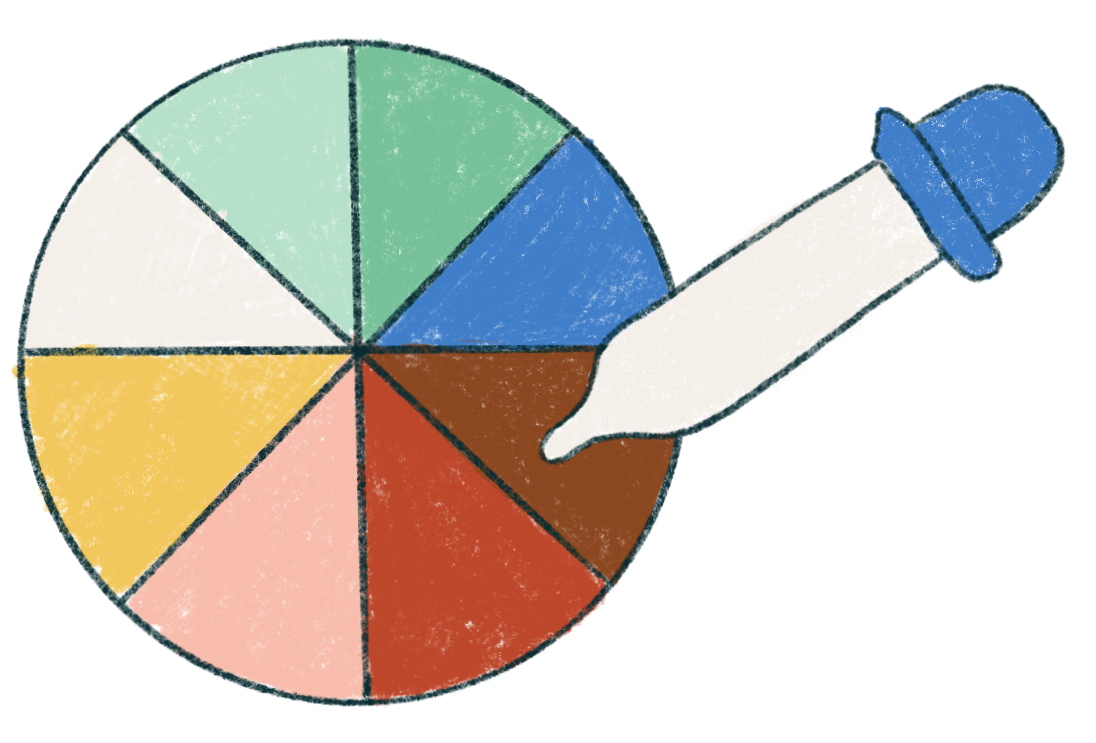
How to Choose a Memorable, Flexible Color Palette
Your brand is too important to rely on personal tastes to inform its color choices. By collaborating with a design partner, your organization gains a robust set of options through the following steps:
- Focus on the primary palette: These central colors should reflect your brand’s personality. Choosing a recognizable primary color palette plays a crucial role in how well your brand is remembered.
- Develop a secondary palette: These colors should complement the primary colors but provide your brand with more range. Establishing the right tones, tints, and neutrals to pair with these secondary colors will further ground your brand’s overall color palette.
- Ensure your palette has a balanced tonal range: Your creatives should have enough color options to add emphasis and guide focus. At Position, we often convert palettes to grayscale to ensure a wide tonal variety.
- Consider ADA compliance: Test color pairings for appropriate contrast or optical strain. Your color choices should not compromise readability or usability.
- Strike a balance between too few and too many options: Sophisticated member-driven organizations should have a palette consisting of 12 to 16 colors, including neutrals and tones. More limited palettes are distinct and bold, but larger palettes are more flexible.
If your organization hasn’t considered the impact of its color choices, we should talk. We’ll ensure your brand has the right palette in place to serve your members and their needs.
7 Website Features That Empower Associations to Serve Members at a Higher Level
As the next generation takes over the workforce, you need to rethink your website to serve a new audience of digital natives. Member-driven associations like yours are vital in bringing together businesses, professionals, and stakeholders within your industry. A well-crafted website is a digital hub for your members and a powerful tool for demonstrating the value of membership.
We’ve found that every member-driven website thrives with the support of several core features. While the use cases for the following elements may vary depending on the size of your association or its focus, each offers a crucial opportunity to empower members and make a positive impact on your industry.
Core Elements of Every Website Experience
Your website often gives the first impressions of your organization. Given its importance, every element of your website must look, feel, and function in a way that attracts and engages your members. For associations, that effort begins with ensuring your brand draws a strong connection between your organization and its audience.
Once your brand and messaging are aligned, every association website begins with the following foundational elements:
- A clear and compelling design
An appealing and user-friendly design is essential to ensuring your site’s visitors have a positive experience. - Intuitive navigation
A logically structured and easy-to-understand menu is necessary to ensure your site visitors can find what they need. - Responsive and ADA accessible
A design optimized for all devices and tailored to your audience’s diverse needs ensures your website offers an inclusive experience. - Seamless integrations with external systems
Real-time integrations with outside data sources are essential to providing streamlined functionality that builds user trust. - Flexible and functional CMS
Your site editors need an easy way to create, edit, and update your website.
7 Powerful Features for Every Association Website
When your website is built on a system tailor-made for associations, you can access a suite of features to serve your current generation of members — and the next one.
With proven design and seamless integrations, your site can operate at a higher level by utilizing the following seven features.
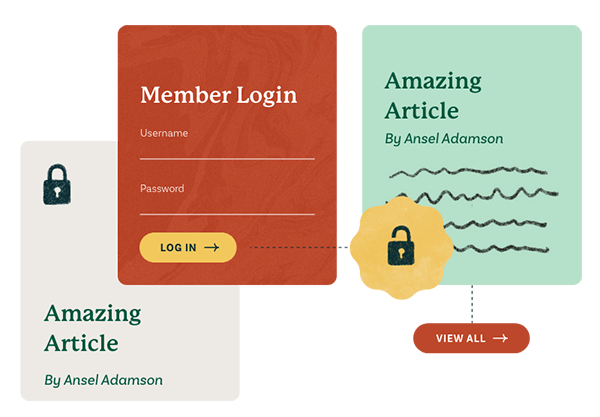
1. Member Login and Member-only Content
Create a custom user experience by determining the sections of your website that should be accessible to the public and vital information exclusive to your members. By incorporating single-sign-on (SSO) capabilities between your website and your AMS, your members will be able to log in once and have access to managing their membership, signing up for events, as well as member-only content across your site based on their level of membership (member, associate, committee, board, etc.)

2. Events
Events are the heartbeat of most associations. They’re often the primary way for members to connect with each other and the organization. Every conference, seminar, and convention should be branded in a way that elevates the attendee experience and draws a positive connection to your organization. Incorporating a dynamic and easy-to-use event section into your website allows members to find and engage with these events, purchase tickets utilizing the AMS, and streamline the registration process. Plus, it builds excitement for what’s ahead.
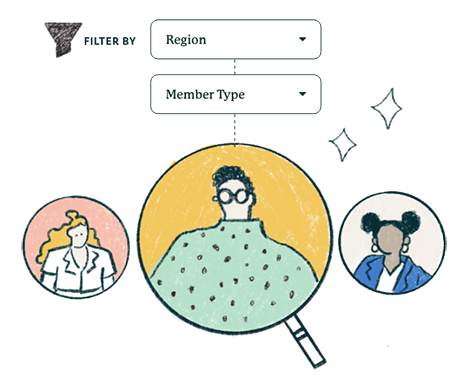
3. Member Directory
Nurture the bond between members by offering a full directory of their peers. Users should be able to browse membership by whatever category suits their needs (region, role, etc.) By syncing your website member directory with your existing member database, you can ensure information about your organization’s most important audience is current and accurate.
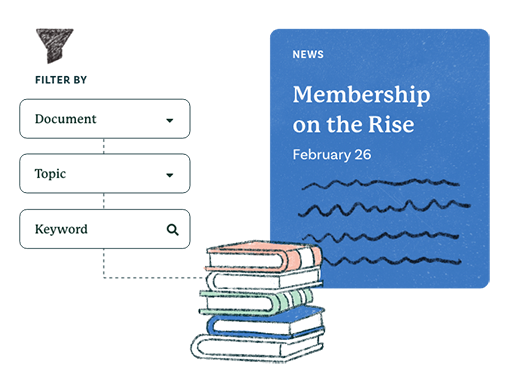
4. Resource Library
Tap into your website’s potential as an educational resource by offering a library of articles, white papers, toolkits, webinars, and other content vital to your members and their industry. Organize the resources by categories and implement robust filters that allow users to find what they need quickly and easily.
5. Automated Job Board
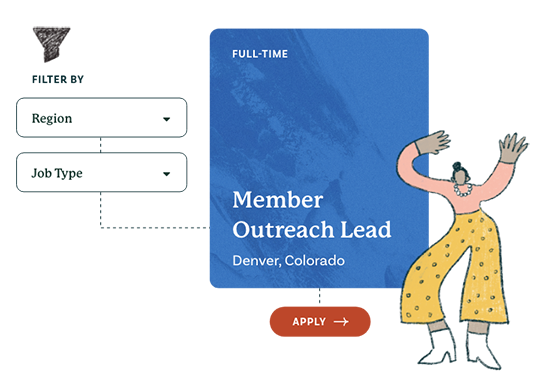
Manually managing job board submissions is both tedious and inefficient for your members and staff. A modern website enables members to submit (and pay for) job postings on their own. An approval process allows your staff to review and approve each posting with ease before it’s published, and the posting will automatically expire at the end of its contracted time. This process will not only empower your members to more efficiently and readily use this important resource, but you’re also saving your team’s time from managing these details manually.

6. Testimonials and Success Stories
Your membership is a community. Strengthen those bonds by publishing stories and updates from your members that highlight the positive impact of your association. Real-life examples and testimonials inspire current members and encourage new members to join.
7. Committee and Working Group Pages
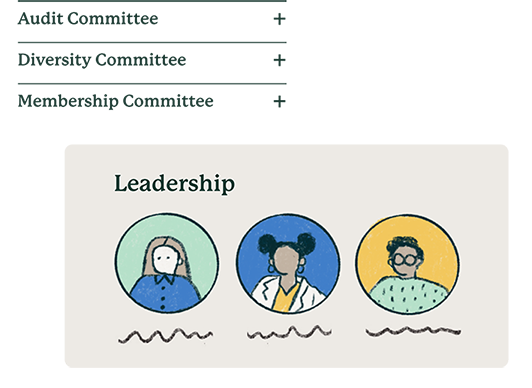
Volunteer engagement is critical to most associations. Highlight the various groups and committees within your organization on their own pages. Your website should include details about these groups as well as their leadership and objectives to encourage member involvement. When integrated with the single-sign-on (SSO) functionality, you can give board and committee members tiered access to protected documents.
Strong Websites Are Essential to Associations
Association websites are much more than digital brochures or informational archives. They’re the lifeblood of the industries they serve. Implementing these features empowers your organization to connect with its audience and deliver education and advocacy for your overall mission. If these sound like features that will enable your organization to function at a higher level, we should talk.