But like many strong positioning ideas, it came with a lingering challenge.
Farm-to-fork is a compelling story. But it’s not exclusive to Sacramento. For some audiences, it still felt more like a marketing narrative than a globally recognized truth.


Visit Sacramento has spent more than a decade building its position as America’s Farm-to-Fork Capital. It’s a claim backed by real assets, from the region’s agricultural abundance to a growing roster of culinary events. Over time, that work has shaped perception and driven visitation.
But like many strong positioning ideas, it came with a lingering challenge.
Farm-to-fork is a compelling story. But it’s not exclusive to Sacramento. For some audiences, it still felt more like a marketing narrative than a globally recognized truth.
“
Position has a rare ability to step into ambiguity and create something that feels fully realized. Their work on Terra Madre Americas captured the essence of the event before it ever existed.”

Terra Madre Americas was an opportunity to change that.
Originally founded by Slow Food International and held in Turin, Italy, Terra Madre is one of the most respected food events in the world, drawing hundreds of thousands of attendees and convening a global community around food, sustainability, and culture.
Bringing that event to the United States was more than a programming decision. It was a strategic move to elevate Sacramento’s position on an international stage.
It was also a significant risk.
Launching a brand-new, large-scale event with global expectations requires more than logistics and promotion. It demands a brand that can carry credibility from day one and a campaign that can quickly communicate why this event matters.
Position helped Visit Sacramento develop both.
From the outset, the challenge was not simply to make the event feel exciting. It needed to feel credible.
Terra Madre Americas had to reflect the depth and ethos of the Slow Food movement while also capturing the energy of a large-scale public experience. It needed to resonate with chefs, thought leaders, and industry insiders, while remaining accessible to a broader audience drawn by food, music, and culture.
That balance became the foundation of the brand system.
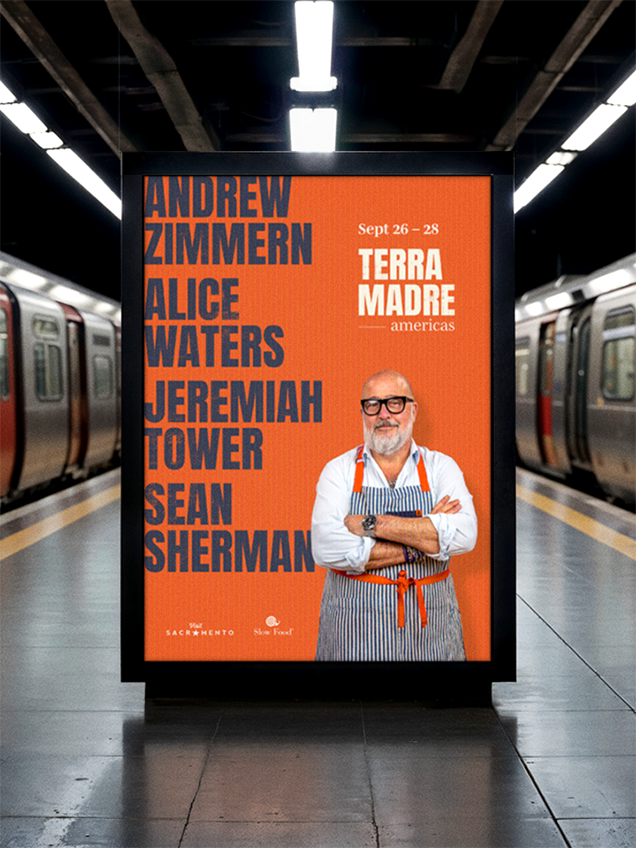
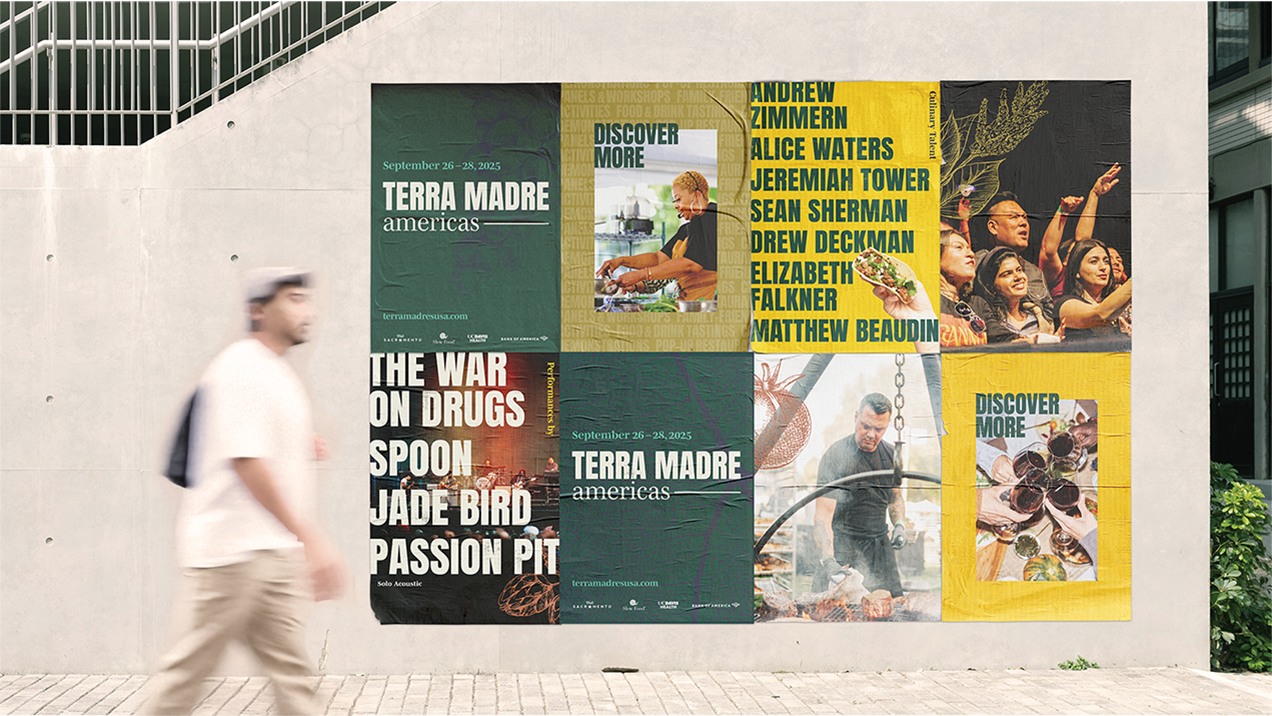
The identity was designed to connect to the global Terra Madre brand while establishing a distinct presence for the Americas. A simple, recognizable mark anchored the system, supported by a broader visual language that introduced depth and texture. Hand-inked produce stamp graphics, botanical illustrations, layered typography, and a rich color palette worked together to create something that felt both grounded and expressive.
This was not a one-off identity. It was a system designed for range, built to scale across digital campaigns, environmental graphics, merchandise, and on-site activations without losing cohesion.
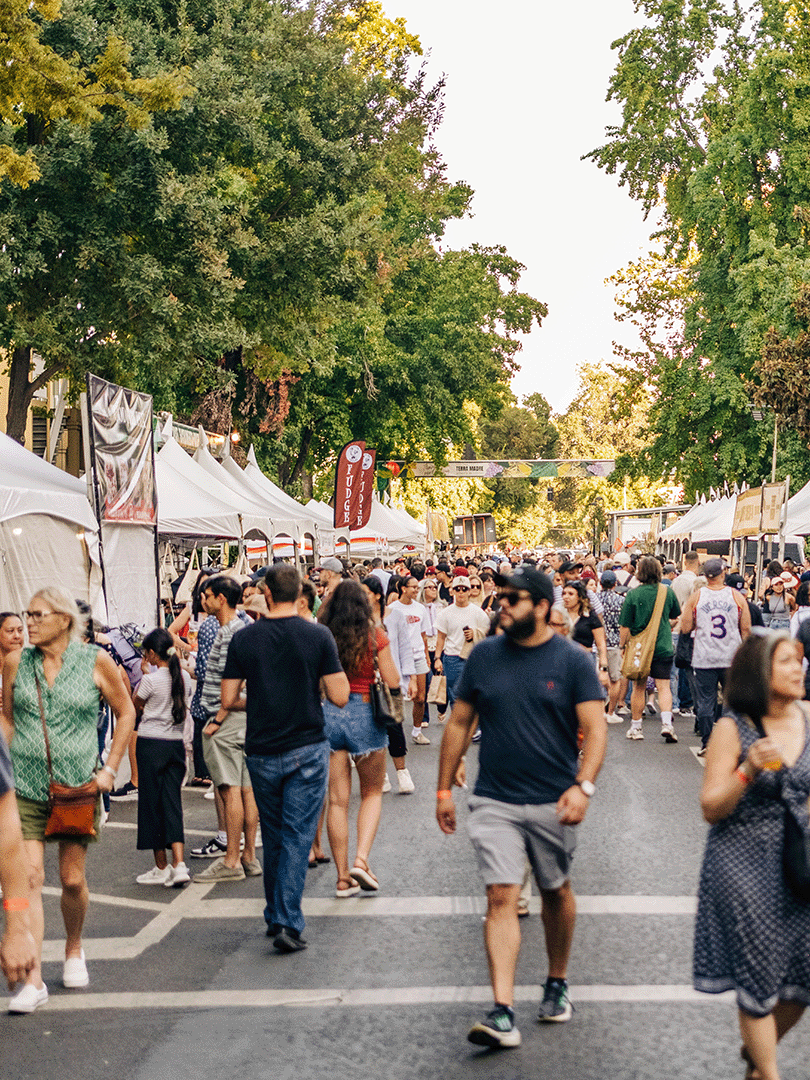

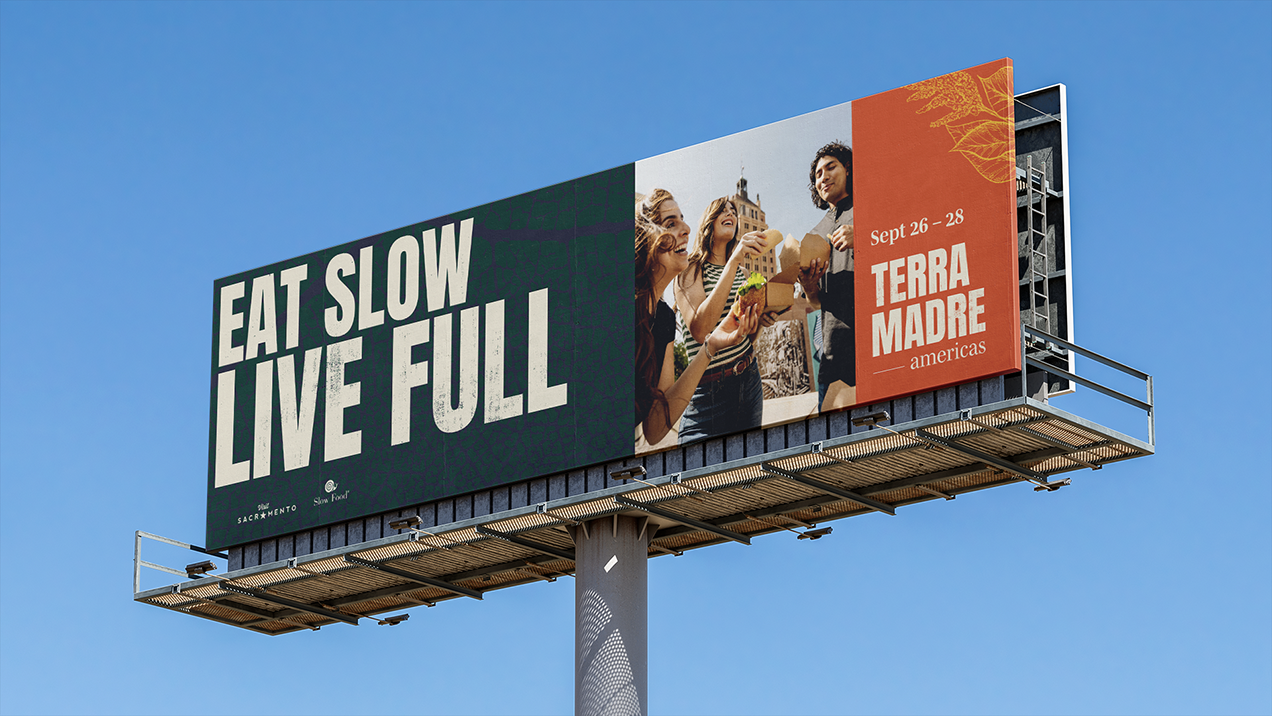
Launching a new event at this level requires more than visibility. It requires clarity. People need to understand not just what the event is, but why it’s different and why it’s worth their time. The campaign centered on a simple but expansive idea: Eat Slow. Live Full.
It translated the philosophy of Slow Food into something immediate and human, while opening the door to the full experience of the event. Terra Madre Americas was positioned not just as a food festival, but as a convergence of culinary excellence, cultural expression, and live entertainment.
Celebrity chefs and major musical acts were treated as equally essential parts of the experience, reinforcing the idea that this was both meaningful and celebratory.
That positioning carried consistently across a broad media mix, including out-of-home, transit, streaming video and audio, paid social, digital placements, and strategic partnerships. Each touchpoint reinforced the same messaging, building familiarity and momentum for an event that had no prior awareness.
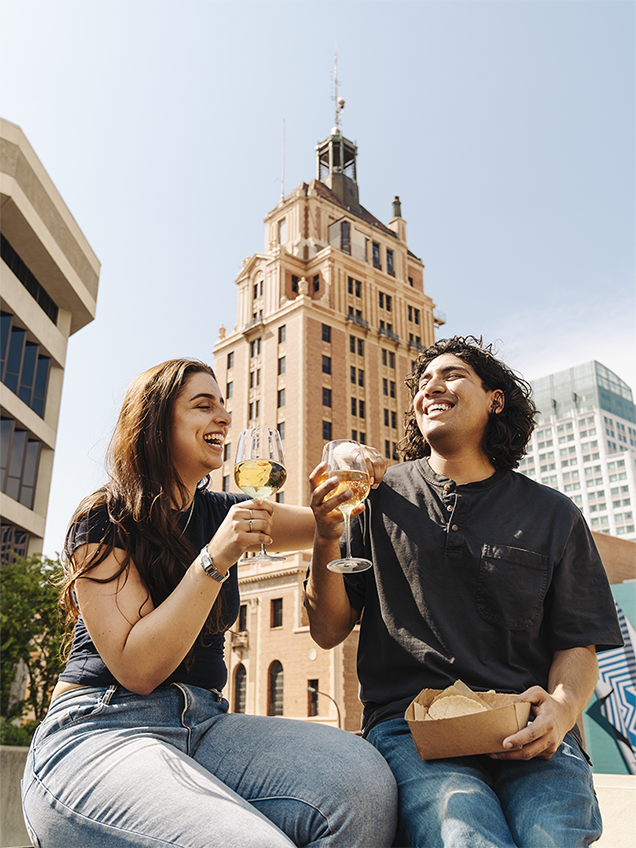
When Terra Madre Americas launched, the response made it clear that the strategy had landed.
Over the course of three days, the event drew 165,000 attendees, exceeding expectations and selling out most ticketed experiences. The campaign generated 28.6 million impressions and more than 141,000 clicks, driving both awareness and action.
More importantly, it began to shift perception.
Among food-focused audiences, 93% reported that the event positively impacted their perception of Sacramento as a culinary destination. Awareness reached 36% within that audience, a strong result for a first-year event. Those who were aware of Terra Madre Americas rated Sacramento significantly higher as a food destination than those who were not.

These results point to something deeper than a successful event launch. They reflect a shift in how Sacramento’s story is received.
Terra Madre Americas did not introduce a new narrative. It reinforced an existing one with credibility and scale. By aligning a globally recognized event with a locally established position, Visit Sacramento moved its farm-to-fork identity from a regional point of pride to something with international weight.
Some events are designed to attract attention. Others are built to change perception. Terra Madre Americas did both, demonstrating how the right combination of brand, strategy, and execution can turn a long-held claim into something that feels undeniable.
Let’s talk.